WEATHER ALERT

Opinion

Opinion

A first step toward boosting health care

4 minute read Yesterday at 10:03 PM CDT

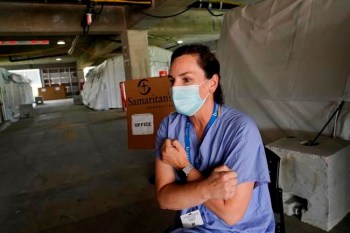
Manitoba has taken an important step toward strengthening its health-care system by passing legislation that will establish nurse-to-patient ratios across hospitals, long-term care facilities and other areas of care.

The recommendations have now been delivered. The framework is in place. What remains is the most difficult part: making it happen.

The province cannot afford to let this initiative become another well-intentioned health-care reform that spends years trapped in planning and consultation. Manitoba needs a clear implementation plan, a recruitment strategy and the resources necessary to ensure nurse-to-patient ratios become a reality as quickly as possible.

For years, Manitoba nurses have been working in an environment defined by shortages, excessive workloads and chronic overtime. Many have been asked to care for more patients than is reasonable or safe. Others have left the profession altogether or moved to jurisdictions that offer better working conditions.

Advertisement

Advertise With Us

Weather

WEATHER ALERT Jun. 10, 12 AM: 16°c Cloudy with wind Jun. 10, 6 AM: 14°c Windy

Brandon MB

26°C, Light rain with wind

Full Forecast

Opinion

Driver Inc. is about more than taxes — it’s about trust

By Aaron Dolyniuk 7 minute read Preview

Driver Inc. is about more than taxes — it’s about trust

By Aaron Dolyniuk 7 minute read Yesterday at 9:55 PM CDT

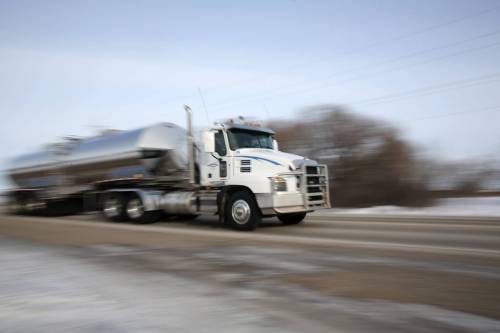
The Manitoba Trucking Association extends its deepest condolences to the family and loved ones affected by the recent fatal collision in Brandon.

When Canadians see a transport truck on the highway, they assume the company behind it is following the law. They assume the driver has been properly trained, the vehicle has been properly maintained, the company carries adequate insurance and the business is meeting its obligations as an employer. Most trucking companies do exactly that; they invest in safety, comply with regulations and understand that public trust must be earned every day.

Unfortunately, not everyone operates that way. That is why Canadians need to understand a growing problem in the trucking industry known as Driver Inc.

Many people have never heard the term, while others assume it is simply a dispute about taxes. In reality, Driver Inc. is best understood as a worker misclassification scheme in which company drivers are treated as independent contractors rather than employees, allowing some carriers to avoid costs and obligations that legitimate employers are required to pay.

Read
Yesterday at 9:55 PM CDT

Opinion

Sales-tax break a confusing mess

4 minute read Preview

Sales-tax break a confusing mess

4 minute read Yesterday at 12:19 AM CDT

With less than 30 days to go before provincial sales tax is removed from a broad array of snacks and ready-to-eat meals, there remains little clarity on what exactly the NDP government of Manitoba is trying to achieve.

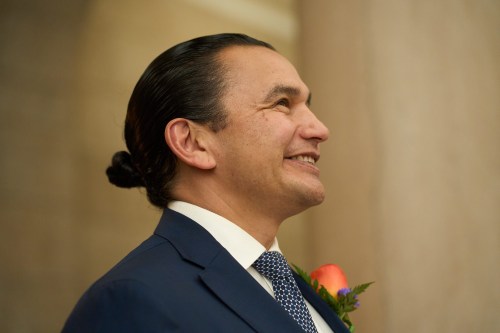
Grocery retailers — the original target group for Premier Wab Kinew’s confusing affordability measure — are reporting that they are still confused about what should be tax-free starting July 1 and what products will still be subject to the seven per cent PST.

There is a good reason for the confusion: the information available from the province about the new tax policy is incredibly vague.

In response to queries from the Winnipeg Free Press about confusion at the retail level, a provincial spokesman said all the information needed to implement the changes is available through a three-page document posted on the finance department’s website.

Read
Yesterday at 12:19 AM CDT

Opinion

How to actually fight separatism

By Trevor Tombe 5 minute read Preview

How to actually fight separatism

By Trevor Tombe 5 minute read Yesterday at 12:16 AM CDT

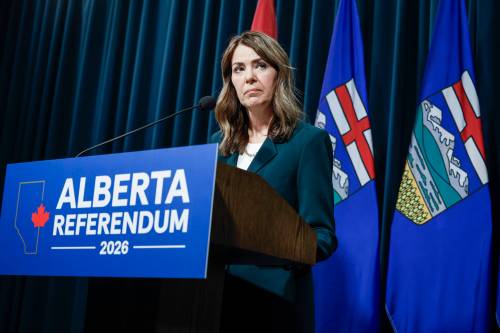
The debate over national unity in Alberta often focuses on the fairness of federal transfers: Is equalization broken? Is Quebec gaming the system? And so on.

These are real questions, and the formulas really are in need of reform. But this frames confederation as a financial ledger, where one side pays, and another receives. The argument is about how to divide a fixed pie.

And much of the separatist case in Alberta rests on the claim that the federation does not deliver enough value to justify membership.

This isn’t new, of course, and is a common feature of regional disputes throughout Canada’s history. But the value of Canada’s federation is not only in the financial transfers it moves between governments. It is also in the economic union itself.

Read
Yesterday at 12:16 AM CDT

Opinion

The world’s breadbaskets are vulnerable

By Ekamjot Dhillon 6 minute read Preview

The world’s breadbaskets are vulnerable

By Ekamjot Dhillon 6 minute read Yesterday at 12:16 AM CDT

Agriculture today is a massive, globally interconnected industry. That interconnectivity has brought jobs and varied foods to people who might not otherwise be able to access them.

However, like many other industries today, agriculture is dependent on a small number of key regions that support a vast network.

What made the modern food system seem resilient was never abundance alone. It was geography. Regions like the North American Prairies, Ukrainian Steppe and northern India grow much of the crops that feed humans and livestock.

The system works because crop failures are expected to be local, not simultaneous. If one breadbasket region fails to produce one year, another could cover the shortfall. The Earth itself provides a kind of buffer, but that buffer is thinning.

Read
Yesterday at 12:16 AM CDT

Opinion

The electric SUV boom is a problem

By Keyvan Hosseini and Dawn-Marie Walker 4 minute read Preview

The electric SUV boom is a problem

By Keyvan Hosseini and Dawn-Marie Walker 4 minute read Yesterday at 12:15 AM CDT

Governments and car manufacturers sell electric cars as the future of green transport. But a less visible trend is challenging this story: many electric cars are getting bigger.

The International Energy Agency recently reported that larger models, including sports utility vehicles (SUVs), are taking up a major share of electric car markets.

In China, electric SUVs accounted for more than 60 per cent of electric car sales in 2025. In Europe, SUVs accounted for almost 75 per cent of electric models in 2025. In the U.S., the figure was even higher, at more than 85 per cent.

SUV emissions are now so large that, if all SUVs were a country, they would be one of the world’s five biggest CO₂ emitters. The problem with SUVs is not only their tailpipe emissions. It is also their size, weight, cost and the way they reinforce car-dependent lifestyles.

Read
Yesterday at 12:15 AM CDT

Opinion

Celebrate diversity on Race Unity Day

By Madeleine Brown 3 minute read Yesterday at 12:14 AM CDT

Race Unity Day falls on June 8 and is an annual celebration dedicated to promoting harmony among all races. This day is a wonderful reminder that no matter what race you are, we can all co-exist happily. It encourages everyone to embrace their unique differences and adopt a respectful and inclusive society.

Race Unity Day was started in 1957 in the United States by the Bahá’i National Spiritual Assembly. This Assembly was founded in 1909 and was a nine-member council that was responsible for co-ordinating, guiding and reviving the affairs of both the local spiritual assemblies and the Bahá’i community’s individual members in the country. The Bahá’i understood that racism was a barrier to peace, so they created this day to promote racial unity.

Race Unity Day is celebrated globally. Although Bahá’i National Spiritual Assembly created the holiday, it is not a religious holiday or a Bahá’i event. The day is celebrated as a universal call to unity and is meant to recognize and appreciate everyone’s diversity, making the world a more inclusive and better place.

This year, on Race Unity Day, you can celebrate by educating yourself and others: read books and watch videos that explore different cultures and the history of race relations. You can also support diverse communities, engage in meaningful conversations surrounding race, advocate for change, and celebrate cultural diversity, attend cultural festivals or try new cuisines.
Opinion
Pipeline appears to be far from a done deal

4 minute read Preview

Pipeline appears to be far from a done deal

4 minute read Saturday, Jun. 6, 2026

Premier Wab Kinew would be wise not to count his pipelines before they’re built.

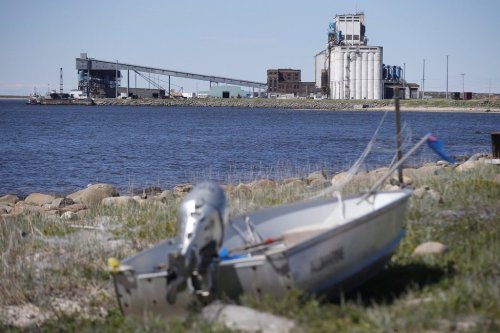
Earlier this week, Kinew told the CBC that there is no opposition among Indigenous leaders in northern Manitoba to the construction of a liquefied natural gas pipeline to the Port of Churchill.

The premier said he wants the pipeline to be built as part of an effort to expand the port’s capabilities.

“No, I don’t think there is Indigenous opposition,” Kinew told the CBC News podcast “Front Burner” on Wednesday, adding that the northern Manitoba chiefs are well aware that the port expansion includes a liquefied natural gas pipeline. Included among those chiefs are the members of Port of Churchill owner Arctic Gateway Group.

Read
Saturday, Jun. 6, 2026

Opinion

In divided world, teachers must connect with each other

By Jordan Laidlaw 5 minute read Preview

In divided world, teachers must connect with each other

By Jordan Laidlaw 5 minute read Friday, Jun. 5, 2026

As an educator, I attest to the remarkable aspects of the teaching profession. Teachers truly have the capacity to be agents for positive change in this troubled world.

That said, a myriad of factors have left the teaching field in a global state of occupational precarity.

Factors include strenuous impacts from the COVID-19 pandemic, inadequate funding and limited resources, escalating school violence, increased public surveillance as well as parental distrust often amplified by social media hostility.

While teachers’ primary responsibility is to teach, the profession is ever-evolving and more socially complex than is often publicly understood.

Read
Friday, Jun. 5, 2026

Opinion

Treating the fever while ignoring the infection

By Dr. Rafiq Andani 6 minute read Preview

Treating the fever while ignoring the infection

By Dr. Rafiq Andani 6 minute read Friday, Jun. 5, 2026

At any moment in Manitoba’s hospital system, three patients may be waiting.

One is in the emergency room, waiting to be assessed.

A second has been assessed, admitted to hospital, and is waiting in the emergency department for an upstairs bed.

A third sits upstairs in that hospital bed. Their acute problem has resolved, but they cannot safely go home because home care, supportive housing, rehabilitation or long-term care is not ready.

Read
Friday, Jun. 5, 2026

LOAD MORE OPINION ARTICLES