
Gone Gardening — Ornamental grasses add wonderful effects to landscape
Advertisement
Read this article for free:
or
Already have an account? Log in here »
We need your support!
Local journalism needs your support!
As we navigate through unprecedented times, our journalists are working harder than ever to bring you the latest local updates to keep you safe and informed.
Now, more than ever, we need your support.
Starting at $15.99 plus taxes every four weeks you can access your Brandon Sun online and full access to all content as it appears on our website.
Subscribe Nowor call circulation directly at (204) 727-0527.
Your pledge helps to ensure we provide the news that matters most to your community!
To continue reading, please subscribe:
Add Brandon Sun access to your Free Press subscription for only an additional
$1 for the first 4 weeks*
*Your next subscription payment will increase by $1.00 and you will be charged $20.00 plus GST for four weeks. After four weeks, your payment will increase to $24.00 plus GST every four weeks.
Read unlimited articles for free today:
or
Already have an account? Log in here »
Hey there, time traveller!
This article was published 20/06/2013 (4548 days ago), so information in it may no longer be current.
In the last few years ornamental grasses have appeared on the gardening scene in a big way.
Whether you use only hardy perennial grasses, or decorative grasses that are not hardy in our region, or a combination of both, you can create interesting effects by using these wonderful plants in your landscape.
Grasses make great container plants, whether combined with other plants or exhibited on their own. Purple fountain grass is often used to give height and texture to a mixed container, while unique grasses, such as fibre optic grass, create great spots of interest when exhibited in containers all by themselves.
When you use grasses exclusively in containers, you might consider using rather exotic grasses that have unusual colour or texture and planting them in vibrant containers that will add to the total effect. A golden tufted grass in a cobalt blue jardinière, for example, would certainly make a statement.
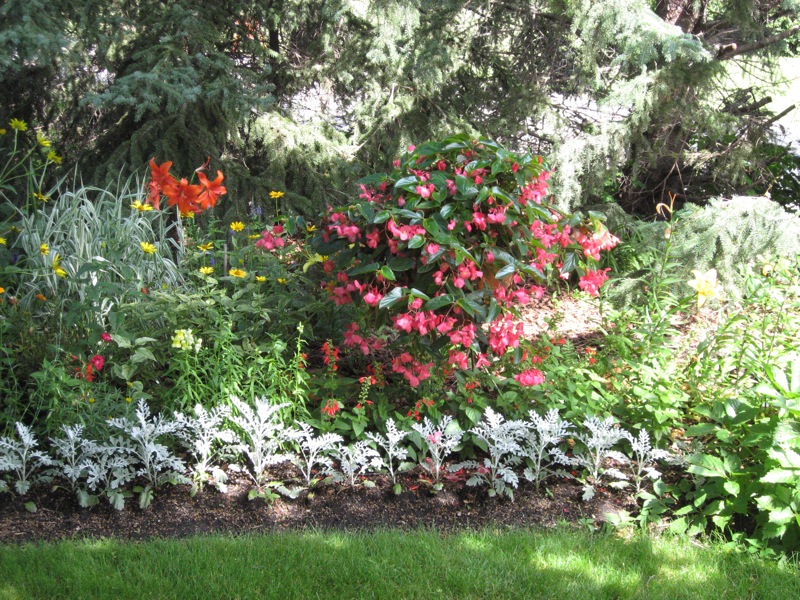
Clumps of grasses here and there in beds and borders add interest and texture. Their grassy foliage contrasts to the mounded forms of nearby plants whose foliage usually consists of more rounded shapes.
Grasses with an upright growth habit, such as Karl Forrester feather reed grass, give a vertical dimension to a border while providing textural counterpoints to nearby plants.
Clumps of softly textured grasses near the front of a border will soften the front edge of the bed while also providing contrasting texture and drawing the eye further into the border.
Many of our homes have extensive hardscapes, whether they are driveways, wide pathways, patios or pool areas. Grasses, whether planted in the ground or in containers, will help to soften the effect of the hardscape because of their softly textured foliage.
Pots of ornamental grasses will dress up patios and poolside decks and have the advantage of creating very little litter compared to other plants.
You might like to experiment creating a formal flair to part of your garden by planting a clump of stunning tall grass in each of two matching and equally stunning containers. Using these containers as “gateposts” to a garden room or to an entranceway will give a formal and rather exotic touch to that part of the landscape.
Grasses are valuable plants for use as edging and accent plants. Grasses such as blue fescue make wonderful edging plants for beds and borders, while clumps of taller grasses such as overdam feather reed grass and ribbon grass, make great focal points for accents in a border.
No plants in our gardens perform as well to create autumn and winter accents. Left intact, clumps of ornamental grasses will grace the garden with their tawny seed heads well into the fall and during the winter will provide vivid accents in the snowy landscape.
Grasses are good plants to use to accentuate garden art; a clump of upright grass situated beside a garden sculpture acts as a perfect foil for the art piece. Perfect tableaus are easily created by using a combination of grasses and garden art.
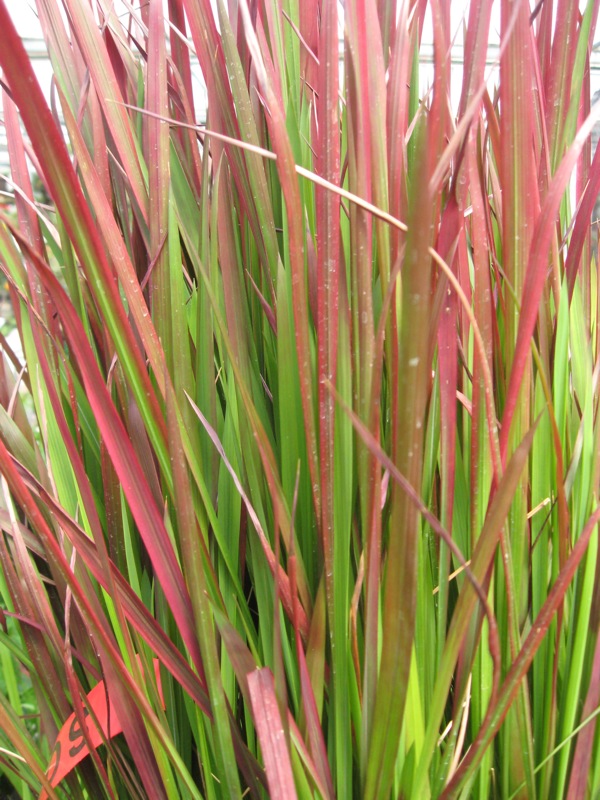
Grasses make the garden appear more natural, not only to us but to wildlife. Ornamental grasses are therefore valuable in attracting birds to the garden. Birds will also appreciate the clumps of grasses left in the garden during the winter; they will feed on the seed heads and perch on the stalks.
If your vegetable patch is adjacent to the rest of the garden, grasses make a perfect screen to separate this mostly utilitarian area of the garden from the rest of the landscape. The grasses need not be a solid row — a few well-placed clumps will act to stop the eye from focusing beyond the clumps of grasses in the foreground.
Shorter grasses — some of them with tawny, blue or even variegated foliage — make wonderful ground covers. A mass planting of a medium height grass, such as ribbon grass, provides a superior ground cover that is easy care and drought tolerant. Interesting patterns can be created by using two or three shorter, different coloured clumping grasses, creating what might resemble a knot garden.
Xeriscapes are perfect settings for grasses — particularly the clumping types. Tall or short, ornamental grasses add texture, colour and interest to a Xeriscape in combination with decorative rock or bark chips.
Finally, if you are interested in creating a meadow garden, grasses will of course be an integral part of such a garden area. Choosing native grasses to accompany the indigenous flowering plants will add authenticity to the meadow.
Ornamental grasses are useful landscape plants. As you can see, they can be used in a variety of ways to add wonderful effects to the landscaper.