
Best athletes have strong mind games
Advertisement
Read this article for free:
or
Already have an account? Log in here »
We need your support!
Local journalism needs your support!
As we navigate through unprecedented times, our journalists are working harder than ever to bring you the latest local updates to keep you safe and informed.
Now, more than ever, we need your support.
Starting at $15.99 plus taxes every four weeks you can access your Brandon Sun online and full access to all content as it appears on our website.
Subscribe Nowor call circulation directly at (204) 727-0527.
Your pledge helps to ensure we provide the news that matters most to your community!
To continue reading, please subscribe:
Add Brandon Sun access to your Free Press subscription for only an additional
$1 for the first 4 weeks*
*Your next subscription payment will increase by $1.00 and you will be charged $20.00 plus GST for four weeks. After four weeks, your payment will increase to $24.00 plus GST every four weeks.
Read unlimited articles for free today:
or
Already have an account? Log in here »
Hey there, time traveller!
This article was published 30/01/2025 (310 days ago), so information in it may no longer be current.
The world’s best athletes make it look so easy. They are young, strong, agile and have a special talent and love for their specific sport. In most cases, they’ve concentrated on their primary athletic endeavour from a young age, been instructed by the best coaches, received proper nutrition advice and spent their youth perfecting their specialty. Or maybe they’re just prodigies, fulfilling their destinies.
Summer McIntosh is a Toronto swimmer who covers 400 metres in the pool in less than four minutes. It might take the average adult that long to run 400 metres.
It’s generally accepted that Connor McDavid stands out as the best all-around player in hockey. His skating speed is incomparable, as is his ability to control the puck in a tight group, and to spot an open teammate, threading him a pass that often leads to a goal.
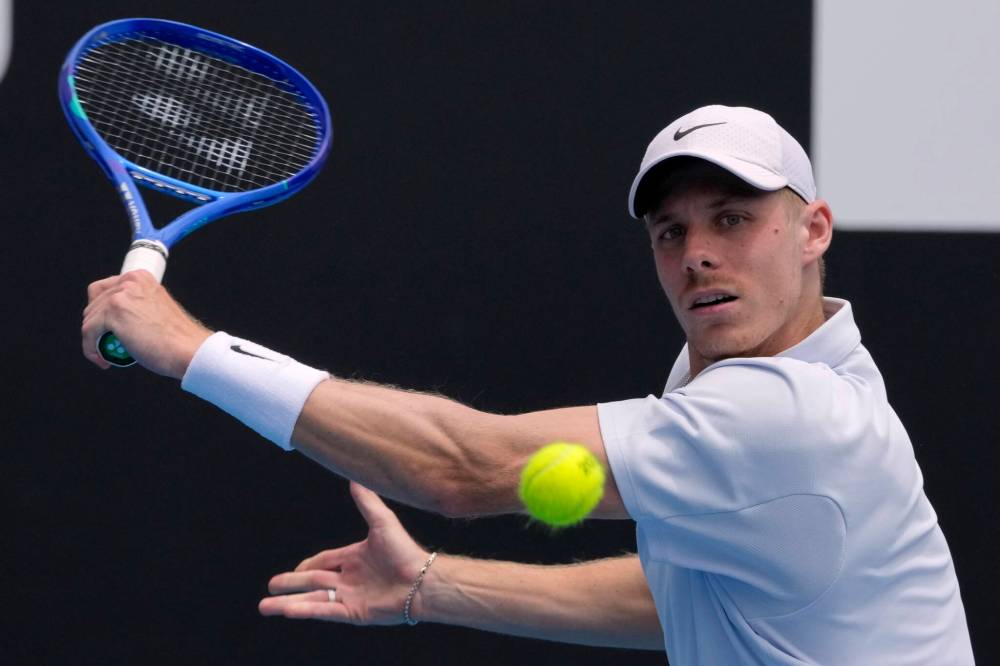
Denis Shapovalov is somehow able to blast a tennis serve more than 140 miles per hour and have it land in a 21 x 14 foot rectangular square, probably with a lot of spin that makes it extremely challenging for his opponent to make a solid return.
Why do these athletes, and hundreds more like them, stand out in a crowd of millions? Are they smarter? Faster? Just plain more skillful? Better able to handle pressure? In many cases, it’s having a strong mind. Today, an athlete having a mental coach is just as important as having a strength and conditioning coach.
“Sports psychology is sometimes criticized as a phoney science,” said a narrator on a YouTube video studying the concept. “But many sports teams and personalities now use psychologists and there’s a growing acceptance that this boosts performances. A mental edge can bring a winning one,” the report concluded.
Shapovalov, ranked No. 56 in the world of men’s tennis, is quick to credit his mental coach for on-court successes. “He’s definitely given me a lot of exercises and things to do that just kind of bring my focus away from mistakes and stuff like that,” he said. “He has given me ways to get rid of the anger or emotions I have inside of me, I think it’s just been amazing and obviously I’m really happy that it happened and that we are working together.”
Strength and technique are important in the pool, says McIntosh, “but mental almost tops physical in some ways,” she said. “It’s super important because the body does what the mind believes, for sure.”
George Mumford is a sports psychologist who has worked with many top athletes, including McDavid and his Oilers teammates, basketball superstars Michael Jordan and Kobe Bryant. Mumford, 72, played an important role in the Oilers’ run to the Stanley Cup final last year. “He was brought in for this reason — to help in these big moments,” McDavid said. “He’s done a great job of being there for guys, talking about the mindset in these pressure situations.”
Mind over matter can often be the winning edge.
• A chat about baseball from two golf writers: Kyle Porter of Normal Sport and Sean Martin of PGA Tour: Porter: “Be honest. Would you trade Ohtani for Soto?” Replied Martin: “Can Soto pitch?’”
• Scott Lincicome, a business trade scholar at the Cato Institute, on Donald Trump’s proposed tariffs: “I can’t imagine the president tariffing guacamole right before the Super Bowl.”
• Pro golfer Max Homa after his TGL team of Tiger Woods and Kevin Kisner suffered a series of bad shots leading to penalty strokes: “Here’s what we’ve learned — we need to work on our drops.”
• From The Athletic’s story quoting the beloved baseball announcer/actor Bob Uecker, who died Jan. 16, on getting into baseball: “I signed with the Braves in 1954 for $3,000. That bothered my dad at the time because he didn’t have that kind of dough to pay out. But eventually, he scraped it up.”
• Comedy guy Steve Burgess of Vancouver, on X: “The whole ‘51st state’ thing just has to be sold to Canadians the right way: Think of it — only one anthem, then the puck drops!”
• Janice Hough of leftcoastsportsbabe.com: “The signing of Roki Sasaki reminds us of one thing. With these horrific fires you can love and feel sympathy for Los Angeles, and still hate the Dodgers.”
• Mike Bianchi of the Orlando Sentinel, on X: “Can you imagine what it would be like if the Dallas Cowboys actually did hire Deion Sanders as their head coach? The combined egos of Coach Prime and Jerry Jones would need their own salary cap!”
• Another one from Bianchi: “The way the New England Patriots made such a joke out of interviewing minority candidates before they hired Mike Vrabel as their new head coach, I’m starting to think the Rooney Rule was named after Andy Rooney.”
• RJ Currie of sportsdeke.com: “The announcer early in yesterday’s Chargers-Texans tilt called it a ‘chess match’ between the coaches. Isn’t the NHL a better place to find a sporting chess match — like when the Knights take on the Kings.”
• Headline at the onion.com: “Cooper Flagg out two weeks due to family trip to Hilton Head”
» Care to comment? Email brucepenton2003@yahoo.ca