
Congo’s Ebola outbreak rises to 100 deaths out of 550 cases as conflict slows response
Advertisement
Read this article for free:
or
Already have an account? Log in here »
We need your support!
Local journalism needs your support!
As we navigate through unprecedented times, our journalists are working harder than ever to bring you the latest local updates to keep you safe and informed.
Now, more than ever, we need your support.
Starting at $15.99 plus taxes every four weeks you can access your Brandon Sun online and full access to all content as it appears on our website.
Subscribe Nowor call circulation directly at (204) 727-0527.
Your pledge helps to ensure we provide the news that matters most to your community!
To continue reading, please subscribe:
Add Brandon Sun access to your Free Press subscription for only an additional
$1 for the first 4 weeks*
- Enjoy unlimited reading on brandonsun.com
- Read the Brandon Sun E-Edition, our digital replica newspaper
*Your next Free Press subscription payment will increase by $1.00 and you will be charged $20.95 plus GST for four weeks. After four weeks, your payment will increase to $24.95 plus GST every four weeks.
Read unlimited articles for free today:
or
Already have an account? Log in here »
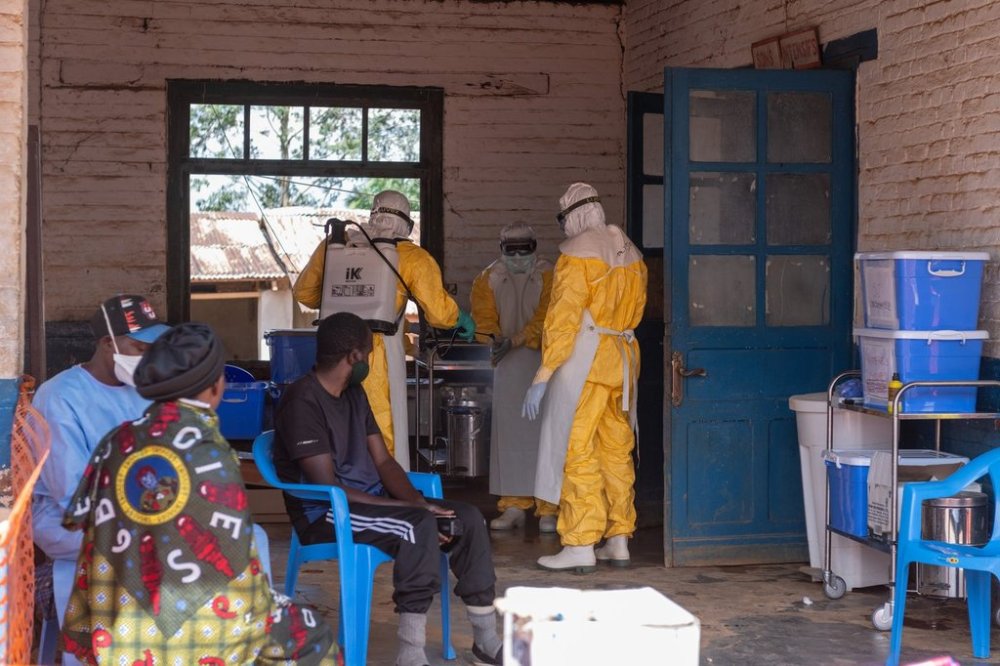
BUNIA, Congo (AP) — At least 100 people have died from Ebola less than a month after authorities declared an outbreak of the disease in eastern Congo, authorities said, a grim toll as officials intensify efforts to slow the disease discovered weeks late.
Attacks on health workers from angry residents, skepticism among some locals and armed conflict in hot spots continue to challenge efforts to stop the outbreak declared on May 15, which has been caused by a severe form of Ebola disease.
Out of the 550 cases of the disease confirmed as of Sunday, there have been 101 deaths and 19 recoveries, according to the latest situation report late Monday. The outbreak is concentrated in Congo’s eastern province of Ituri, which accounts for more than 90% of the cases. Cases have also been recorded in the North Kivu and South Kivu provinces, and has spread across the border to Uganda.
The number of cases in Congo is believed to be higher because the outbreak was confirmed weeks late and the contact tracing coverage rate, which has improved in recent days, is still at 64%.
The latest Ebola disease outbreak is caused by the rare Bundibugyo virus, which does not have an approved vaccine or treatment unlike the “Zaire virus,” another name for the Ebola virus, responsible for most of Congo’s past 16 outbreaks of the disease.
The rapid increase in the number of cases is in part due to the scale up of diagnostic capacities, enabling testing of the backlog of previously collected samples, authorities said.
Capital of Ituri province disrupted by outbreak
Health measures put in place to limit the spread of Ebola have disrupted daily life in Bunia, the bustling capital of Ituri province.
“The authorities have asked us not to carry two customers on the same motorbike anymore. We are now only allowed to carry one customer per motorbike,” motorcyclist Justin Abekani said.
There is still widespread skepticism and disregard for health protocols in some parts of the province. Survivors of Congo’s 2018 Ebola outbreak, the second-biggest in history, have warned that a repeat of past mistakes could lead to a high number of preventable deaths.
Front line health workers, with little pay or rest, have been attacked multiple times by angry residents and have not been able to reach some communities due conflict involving armed rebel groups.
Eastern Congo has for years seen attacks by dozens of separate rebel and militant groups, some of them with links to foreign countries or to the extremist Islamic State group.
Conflict and movement complicate disease tracing
Conflict is “constraining access for the response, disrupting surveillance and response activities, and increasing the risk of undetected transmission,” the World Health Organization said Monday. “Such incidents underline the challenges of the context and the importance of working closely with local leaders and communities,” WHO added.
Nearly a million people have been displaced by conflict in Ituri, according to the U.N. humanitarian office, making contact tracing difficult as people flee attacks or move frequently in the vast province with dense forests, poor roads and remote villages that can take days to reach.
Tracing also is difficult among the thousands of artisanal miners who regularly move between remote sites in the mineral-rich region.
WHO currently asseses the risk of spread for the rest of Africa and at the global level as low.
“(Ebola) patients can recover if they get the medical support they need,” WHO Director-General Dr. Tedros Adhanom Ghebreyesus said Monday during a visit to Uganda.
___
Asadu reported from Abuja, Nigeria.
___
For more on Africa and development: https://apnews.com/hub/africa-pulse
The Associated Press receives financial support for global health and development coverage in Africa from the Gates Foundation. The AP is solely responsible for all content. Find AP’s standards for working with philanthropies, a list of supporters and funded coverage areas at AP.org.