
Marketing monopoly angers fishermen
Advertisement
Read this article for free:
or
Already have an account? Log in here »
We need your support!
Local journalism needs your support!
As we navigate through unprecedented times, our journalists are working harder than ever to bring you the latest local updates to keep you safe and informed.
Now, more than ever, we need your support.
Starting at $15.99 plus taxes every four weeks you can access your Brandon Sun online and full access to all content as it appears on our website.
Subscribe Nowor call circulation directly at (204) 727-0527.
Your pledge helps to ensure we provide the news that matters most to your community!
To continue reading, please subscribe:
Add Brandon Sun access to your Free Press subscription for only an additional
$1 for the first 4 weeks*
- Enjoy unlimited reading on brandonsun.com
- Read the Brandon Sun E-Edition, our digital replica newspaper
*Your next Free Press subscription payment will increase by $1.00 and you will be charged $20.95 plus GST for four weeks. After four weeks, your payment will increase to $24.95 plus GST every four weeks.
Read unlimited articles for free today:
or
Already have an account? Log in here »
Hey there, time traveller!
This article was published 09/10/2012 (4991 days ago), so information in it may no longer be current.
Tension is building in a running battle between Manitoba fishers and the federal agency that holds a monopoly on fish sales in the province.
Manitoba fishers want Freshwater Fish Marketing Corporation’s monopoly marketing power revoked in the same way Ottawa took away the Canadian Wheat Board’s marketing monopoly over wheat and barley sales.
Charlie Simard, a Métis fisherman from Manigotagan, has drawn nets on the east side of Lake Winnipeg for 50 years. He said the marketing corporation isn’t listening to those who are bringing in the fish.
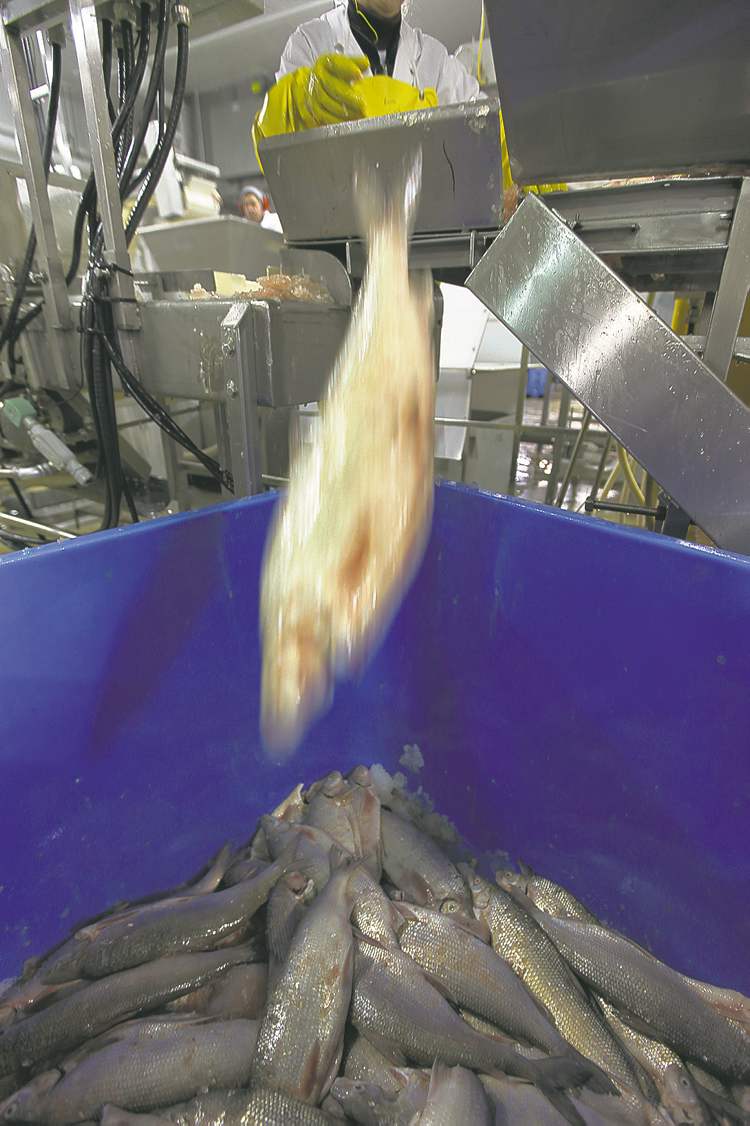
“For one thing, they’re not finding markets for all the fish,” Simard said. “There’s drum, there’s burbot, there’s carp and they don’t buy them. We have to throw them away.
“The other thing that’s wrong is the top people on the board, they don’t have a clue about fishing,” he said. “They don’t even buy pickerel cheeks. And that’s a big market.”
Earlier this month, WMM Fisheries, a Manitoba co-op of 40 fishers, threatened to sell their fish fillets at a food bank in Yorkton, Sask., where Freshwater no longer has monopoly marketing powers.
WMM’s move was in retaliation to a fine Freshwater levied earlier this year against the co-op for pushing the limits of its export licence.
Freshwater also yanked WMM’s licence.
Also this spring, 450 fishers from the Lake Manitoba Commercial Fisherman’s association voted to pull out of the Freshwater monopoly.
Freshwater insists fish — pickerel, sauger and whitefish — be delivered daily to its only processing plant in Manitoba, in Winnipeg.
“Gas prices are killing us,” Simard said.
Freshwater won’t look at solutions, he said, like local ice sheds or replacing the aging Winnipeg processing plant with smaller plants closer to fishing communities that would generate jobs.
Ottawa set up the Freshwater Fish Marketing Corp. in 1969 to lend independent fishers marketing strength in global markets. The Canadian Wheat Board served as its model.
However, Canada’s inland fishery, with just 2,000 fishers and $65 million in annual revenue, is too small to satisfy the appetites of global customers, like China.
Last week, the Frontier Centre for Public Policy released a study, Free to Fish, that is the latest report to criticize the monopoly.
“The FFMC is in trouble. Saskatchewan and northwestern Ontario withdrew… NWT is considering a similar move. Aboriginal communities in the north are mobilized in opposition and aboriginal fishers can make much more money using their export markets,” the report’s summary said.
The report showed falling revenues, aging fishers and an industry on the brink of extinction.
Eighty per cent of Freshwater’s fishers are drawn from Métis and First Nations in Manitoba and the north, and without reform, there may not be a future to inland fishing, concluded study author Joseph Quesnel, a policy analyst with Frontier.
Freshwater president John Wood conceded criticisms such as rising costs, the high Canadian dollar and falling prices have hit the industry hard. But those factors affect the industry with or without Freshwater, he said.
“I don’t agree with this whole idea that we’re not good at marketing fish,” he said.
As for the other criticisms, the Freshwater boss dismissed them one by one.
Saskatchewan, as a province, pulled out but Freshwater still handles 99 per cent of its fish in private contracts with co-ops, he said.
Northwestern Ontario has also pulled out, but its commercial fishery has given way to sport fishing, Wood said.
The Northwest Territories withdrew, but they’re back in the Freshwater fold, working on a deal with the agency.
“I seriously believe if Freshwater was not here, there’s be a lot more fishers have a lot more difficulty than there are today,” Wood said.
alexandra.paul@freepress.mb.ca
Manitoba stands out for its loyalty to Freshwater Fish Marketing Corp. and its monopoly on Canada’s inland fishery.
But even this province would make changes.
“The province continues to support strong central processing and marketing system though the federal government’s FFMC and encourages greater flexibility in the system because this means more jobs for Manitobans,” a Manitoba Conservation spokesman said in an email.
The commercial fishery in Manitoba generates more than $50 million annually — $22 million of which is returned to fishers in profits.