
BU conference offers rare chance to connect with musical history
Clinicians eager to share Kodaly Method
Advertisement
Read this article for free:
or
Already have an account? Log in here »
We need your support!
Local journalism needs your support!
As we navigate through unprecedented times, our journalists are working harder than ever to bring you the latest local updates to keep you safe and informed.
Now, more than ever, we need your support.
Starting at $15.99 plus taxes every four weeks you can access your Brandon Sun online and full access to all content as it appears on our website.
Subscribe Nowor call circulation directly at (204) 727-0527.
Your pledge helps to ensure we provide the news that matters most to your community!
To continue reading, please subscribe:
Add Brandon Sun access to your Free Press subscription for only an additional
$1 for the first 4 weeks*
- Enjoy unlimited reading on brandonsun.com
- Read the Brandon Sun E-Edition, our digital replica newspaper
*Your next Free Press subscription payment will increase by $1.00 and you will be charged $20.95 plus GST for four weeks. After four weeks, your payment will increase to $24.95 plus GST every four weeks.
Read unlimited articles for free today:
or
Already have an account? Log in here »
Hey there, time traveller!
This article was published 28/08/2018 (2826 days ago), so information in it may no longer be current.
It may be the opportunity of a lifetime.
For musicians, educators, or those just interested in broadening their horizons, an upcoming symposium on the Kodaly Method will offer sessions led by longtime luminaries that, generally speaking, involve bringing music into people’s lives.
“It’s never too early and it’s never too late and anyone is capable of making music,” said Edna Knock, Brandon University School of Music professor emeritus — one of five clinicians who will present at the conference, which will take place Sept. 14-15 at BU.
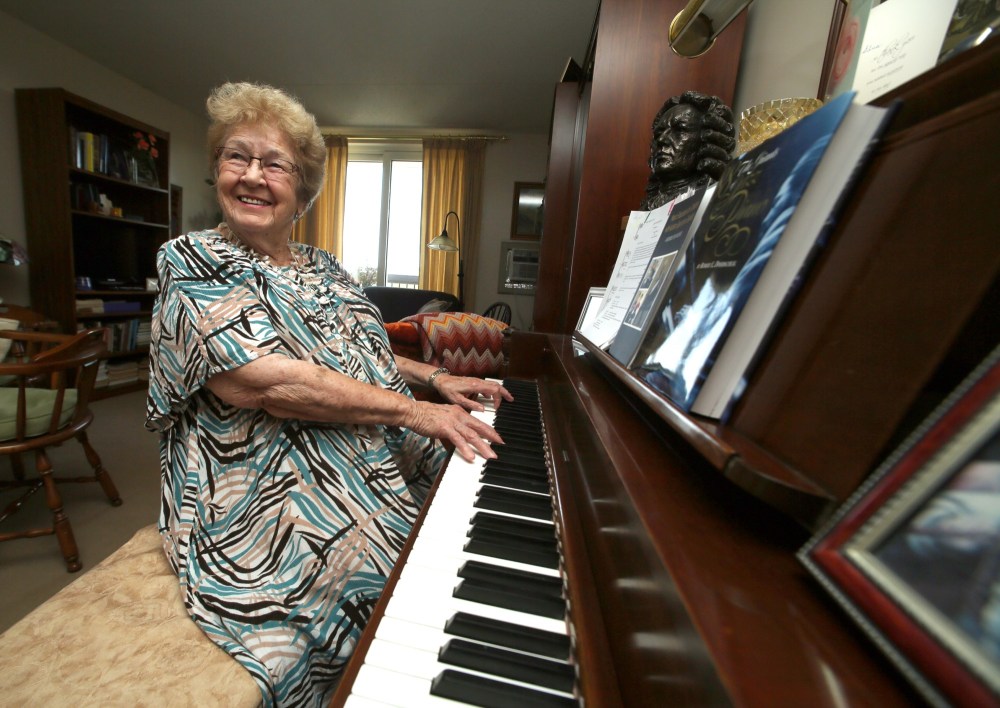
“And that’s because music belongs to everybody,” added BU music professor Sheila Scott, who organized the hands-on and participatory conference.
Kodaly Music Education in Canada: Historical Perspectives and Current Implications will feature Knock and Scott, along with Beatrix Finta, originally of Hungary but now hailing from Ottawa, as well as Jody Stark and David Stark of Winnipeg.
While the Friday night session is for all comers, the Saturday presentations will be geared more toward music teachers. And Knock and Scott, both certified Kodaly teachers, are excited to share their experience with those who attend.
The Kodaly Method began in Hungarian schools after Zoltan Kodaly, a composer and ethnomusicologist, determined that Hungary was overly influenced by music from Germany and Austria. He started to research and document music from the rural areas of Hungary, and found much value in those folk songs. The development of his method, according to Knock, was a slow, organic process that ended up in a state-approved curriculum.
“And it’s wonderful,” Knock said. “The music is amazing. And I don’t think people that I observed in Hungary at 28 different institutions all taught the same way. But they based their teaching on a few principles, and they’re very simple: One being every child is educable musically. The second is only the best is good enough for a child. The third is children can be led to music by means of masterpieces. And Kodaly thought these lovely folk songs were masterpieces.”
“The music connects with their heritage and connects with the way that they learn,” Scott added.
Others around the globe have adapted the Kodaly Method to build music curricula using their own countries’ music.
“When I was in Hungary studying, there were professors from all over the world attending institutions in Hungary, especially Budapest, finding out what it was all about,” Knock said. “And also the teachers that worked with Kodaly went to all these countries to introduce people, especially teachers, to the music and to the approach.”
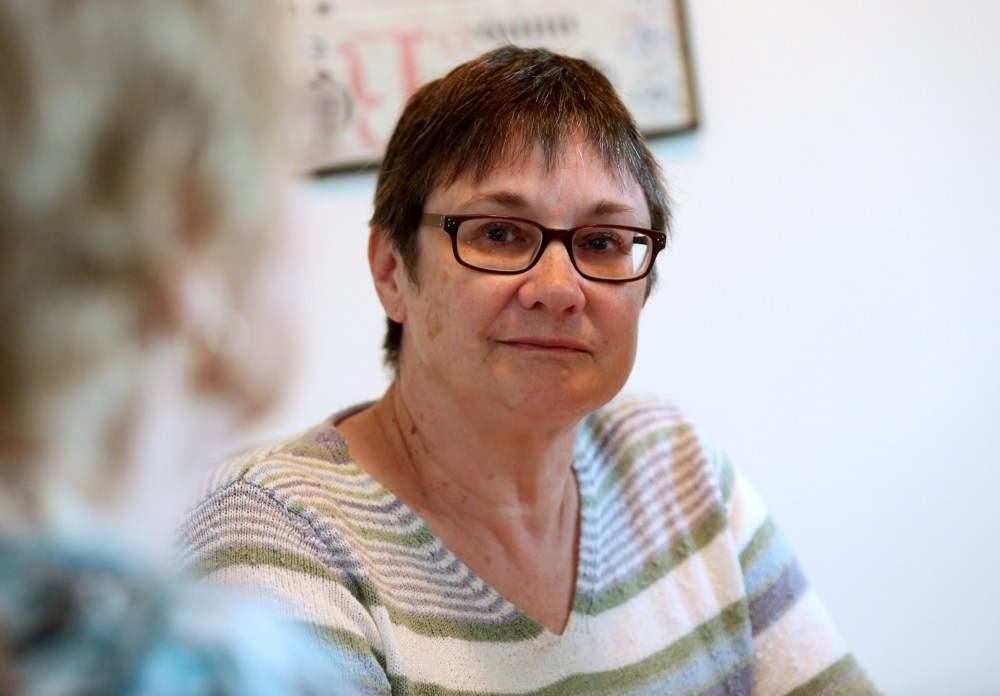
As well, Scott added, Kodaly’s system for reading music notation is inventive and adaptable to all sorts of situations. She hopes people will take advantage of all the symposium has to offer.
“It’s important for people who are interested to come, especially for the Friday night, because you’re going to be hearing about the roots of the method from people who lived it,” Scott said. “And for how long will we have that kind of opportunity? And on Saturday, for people who are interested in learning more about the method, you’ll be learning about the evolution of folk music and you’re hearing about the method from people who have the first-person experience.”
Knock studied the Kodaly Method in Hungary. Finta got her master’s degree at the Ferenc Liszt University of Music in Budapest, where many of her professors were close associates of Kodaly. Finta also attended the first music primary school of Budapest, which Kodaly visited often. Among others, Knock and Finta brought what Scott termed Kodaly’s “progressive ideas for music education” to Canada.
Jody Stark studied music education at the Zoltan Kodaly Pedagogical Institute in Hungary, and is the director of the University of Manitoba’s summer Orff and Kodaly programs. David Stark studied Kodaly music education at the University of Calgary under the tutelage of Lois Choksy, with whom Scott also studied.
Scott will begin the weekend’s workshops, all of which take place in the School of Music’s Kinsmen Rehearsal Hall, with a free pre-conference presentation from 2-3:30 p.m. on Friday, Sept. 14. She’ll provide a summary of issues around anxiety in children with autism spectrum disorder, and share materials and teaching suggestions for helping children with autism to focus and relax through listening, moving and interacting with others through music.
At 7 o’clock that evening, Knock and Finta will, in a conversational setting, highlight their musical paths and acquaint attendees with the main ideas of the Kodaly concept. Audience participation will be encouraged and will revolve around the impact Kodaly-inspired music education has made on Canada’s music programs since it was introduced in the nation 50 years ago. The evening will close with singing in harmony.
The Saturday, Sept. 15 portion of the conference begins at 8:30 a.m., when David Stark will lead participants in a series of musical challenges that will develop their own musicianship, and those who attend should be prepared to move, to sing, to think, and to be inspired.
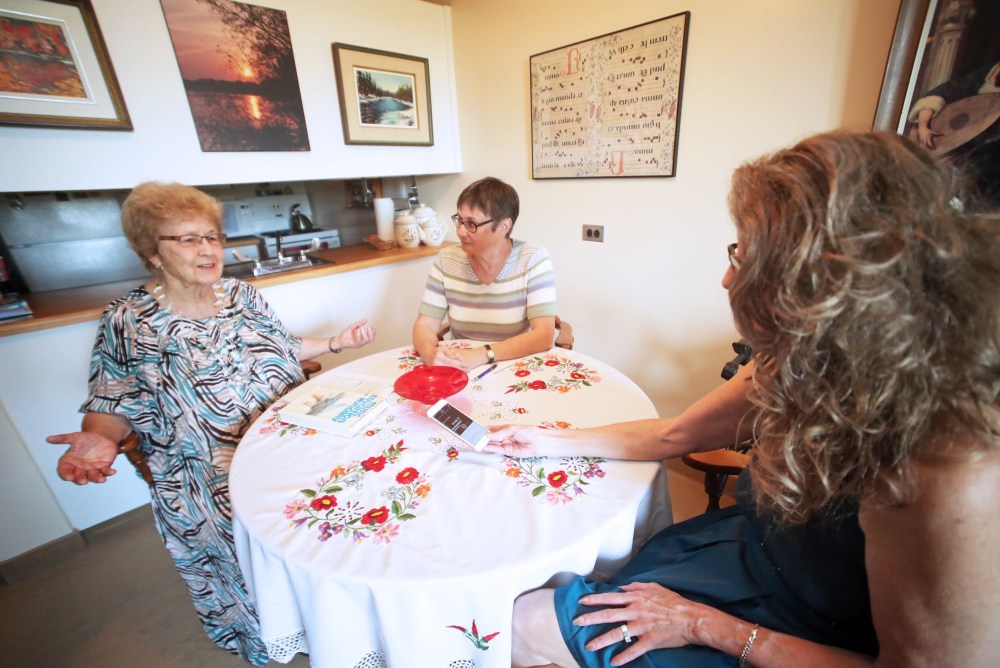
Knock’s Saturday presentation, Sing We and Chant It, will feature vocalist Alexis Budyk. The session will examine how to nurture and develop a child’s natural love for music through songs and procedures appropriate to the growth potential of the unchanged voice. Knock will strive to promote musicality through the training of the inner ear and laying a foundation for polyphonic experience.
Finta will present A Taste of the Kodaly Concept in Practice I and II. She’ll introduce the main principles of the Kodaly Method, and offer practical and methodical examples for teachers to use to establish the basics of musical literacy. The first session will emphasize the melodic, the second the rhythmic element.
The symposium will close with Jody Stark’s examples of how music teachers can encourage both musical skill and cultural understanding. With commonly used songs for early years music, she will demonstrate a possible approach for deepening students’ understanding of music and its importance to the humans who make it.
The cost to attend the Friday evening session is $15, while the fee for Saturday is $30. To ensure space for everyone, pre-registration is strongly encouraged. To register or for more information, call the School of Music at 204-727-7388 or email music@brandonu.ca.