
Open house hijacked by irate citizens
Advertisement
Read this article for free:
or
Already have an account? Log in here »
We need your support!
Local journalism needs your support!
As we navigate through unprecedented times, our journalists are working harder than ever to bring you the latest local updates to keep you safe and informed.
Now, more than ever, we need your support.
Starting at $15.99 plus taxes every four weeks you can access your Brandon Sun online and full access to all content as it appears on our website.
Subscribe Nowor call circulation directly at (204) 727-0527.
Your pledge helps to ensure we provide the news that matters most to your community!
To continue reading, please subscribe:
Add Brandon Sun access to your Free Press subscription for only an additional
$1 for the first 4 weeks*
- Enjoy unlimited reading on brandonsun.com
- Read the Brandon Sun E-Edition, our digital replica newspaper
*Your next Free Press subscription payment will increase by $1.00 and you will be charged $20.95 plus GST for four weeks. After four weeks, your payment will increase to $24.95 plus GST every four weeks.
Read unlimited articles for free today:
or
Already have an account? Log in here »
Hey there, time traveller!
This article was published 21/03/2024 (810 days ago), so information in it may no longer be current.
The City of Brandon’s open house for a proposed 30-year plan was hijacked by irate citizens who stood up Wednesday evening to complain about high property taxes and run-down infrastructure.
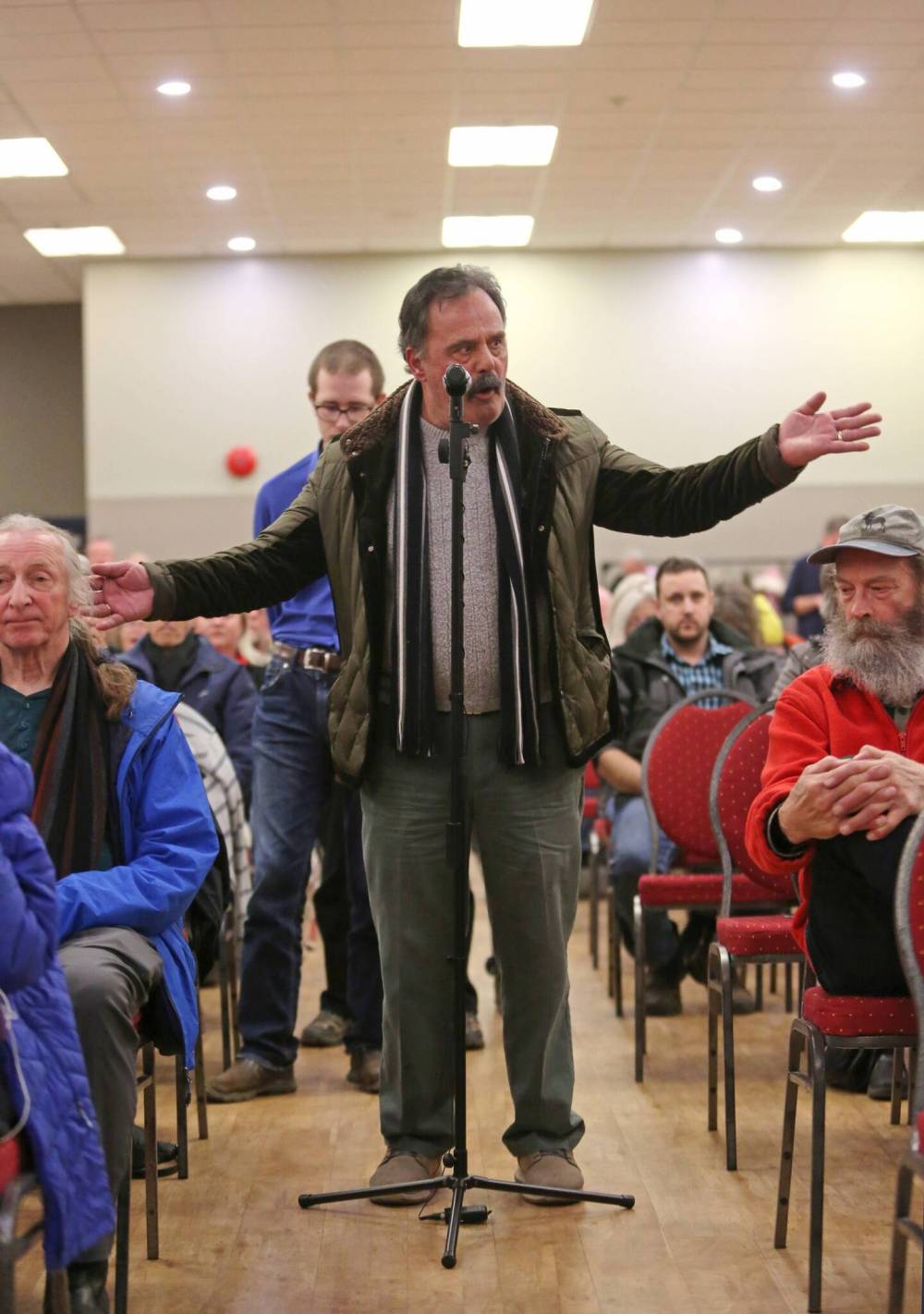
More than 130 people filled the Keystone Centre’s MNP Hall, taking turns at an open microphone to air grievances about the state of the city as much or more than the actual contents of the plan.
Most speakers were respectful but passionate, though some called out city staff or even fellow audience members in the first public meeting about the plan since early 2023, when the engagement process was derailed due to some residents’ complaints over what they saw as the implementation of 15-minute city ideas.
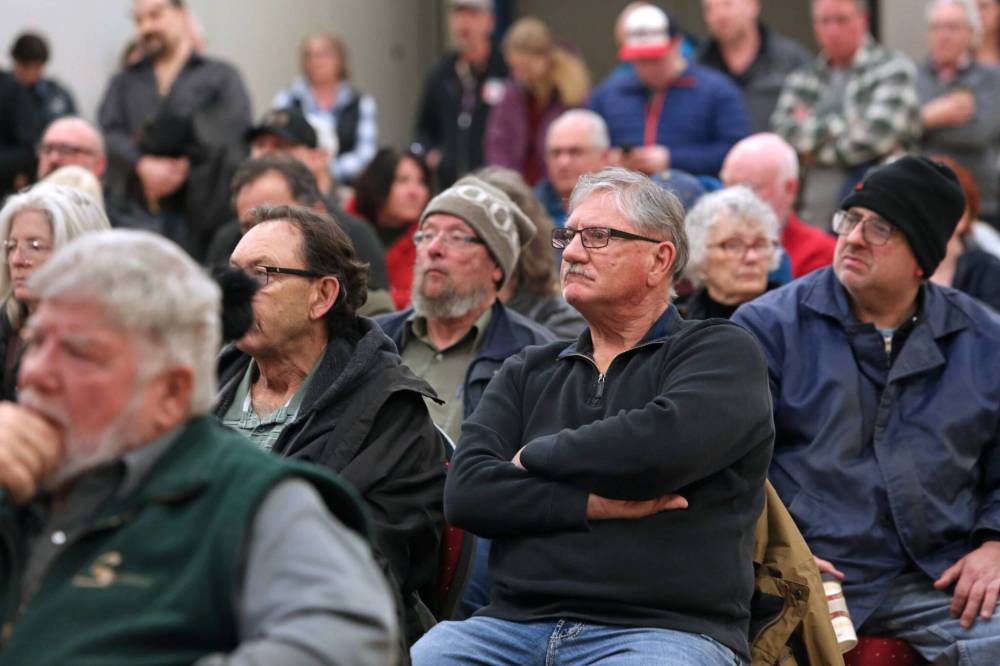
More than 130 people attended a “come and go” open house at the Keystone Centre late Wednesday afternoon that was scheduled to unveil Brandon’s draft 30-year city plan. Instead, most of the people who went up to speak at the microphone questioned the city’s panelists on council’s decision to increase taxes and administration’s seeming inability to repair city streets and other infrastructure. (Photos by Matt Goerzen/The Brandon Sun)
The most frequently articulated concern from residents was that the city is looking to expand its infrastructure without adequately taking care of its existing infrastructure.
Longtime Brandon business owner Paul Spiropoulos said he was concerned that there hadn’t been discussions during the open house about fixing Brandon’s crumbling streets or dealing with the proliferation of needles and homelessness in the downtown.
He said Brandon needs a place for people to go in and use drugs safely while being supervised by nurses instead of giving them needles to use anywhere they like.
With the city approving a 9.4 per cent property tax hike and implementing several years of water and wastewater utility rate hikes, he said residents aren’t seeing that money being spent on the community.
“We keep raising the taxes,” Spiropoulos said. “What are we getting for that?”
He said it should have been city council on stage answering questions, not staff members. Many members of city council were in the room and spoke with residents before and after the presentation.
Former police chief Richard Bruce said with the way the city has spent money and barely raised taxes over the past decade, he did not believe Brandon would be able to afford the goals set out in the plan.
Posters outlining the key facts of the city plan lined the sides of the hall as city staff answered questions. When it came time for the presentations, some staff members took to a stage at the front of the room as residents took seats in the centre.
Principal planner Sonikile Tembo said in her introduction that while there was a 2013 plan for the Brandon and Area Planning District, the district was dissolved in 2020 and that plan needed to be replaced.
While a basic plan outlining development objectives could have been completed based on provincial requirements under the Planning Act, Tembo said the city wanted to engage residents to figure out what they wanted for physical, social and environmental initiatives as well.
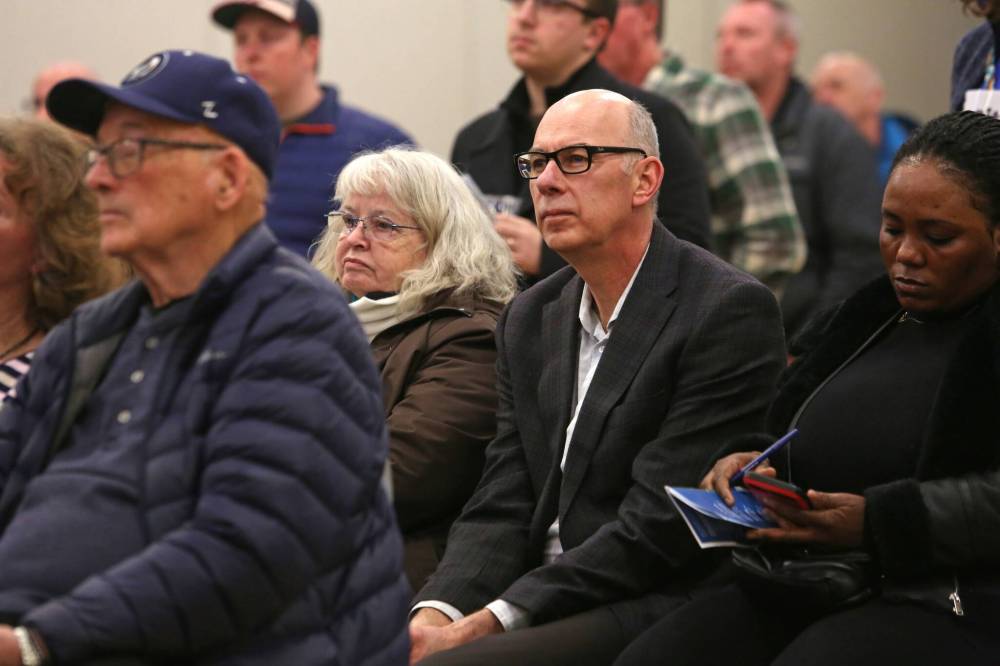
The initiatives in the plan are viewed through three sections: “Growing City,” “Healthy City” and “Moving City.”
On growth, Tembo said exploring how the city grows is important because Brandon has around 2,000 immigrants arriving each year. The established area in the centre of the city as well as the south are considered to be the highest growth areas.
A variety of housing at different pricing levels is needed for both existing and new residents, as well as infrastructure to serve those residents. One thing the city has noticed is a reduced desire for single-family homes.
The city plan attempts to set high-level initiatives to meet those goals. Tembo added that some of the initiatives are aimed at helping the city access funds from the federal Housing Accelerator Program and then spend those funds to improve a continuum of housing.
Some of the city plan’s initiatives aim to support existing programming, like the construction of a joint transitional housing/sobering centre project on 16th Street North.
Moving on to the transportation section, Tembo said she’s had some people express concerns that by improving access to things like biking and walking paths, the city is trying to stop people from using their vehicles.
She said that’s not the case, that Brandon just wants to make sure residents have the option to move around the city the way they want. That includes improving Brandon Transit, which is currently carrying out a service review.
On top of the city plan documents displayed along the sides of the room were potential designs for the reconstruction of 26th Street between Victoria and Park avenues.
That area is considered a “missing link” when it comes to active transportation, so the city is looking into the addition of walking paths and cycling lanes as part of the work. When the project was discussed at city council earlier this year, the idea of building protected bike lanes on both sides of the road was floated as one option.
When it came time for audience questions, one resident wanted to know why the city is moving forward with reducing parking requirements under the zoning bylaws to 0.5 parking spots per unit in some cases, because it might force some people to park their cars on the streets.
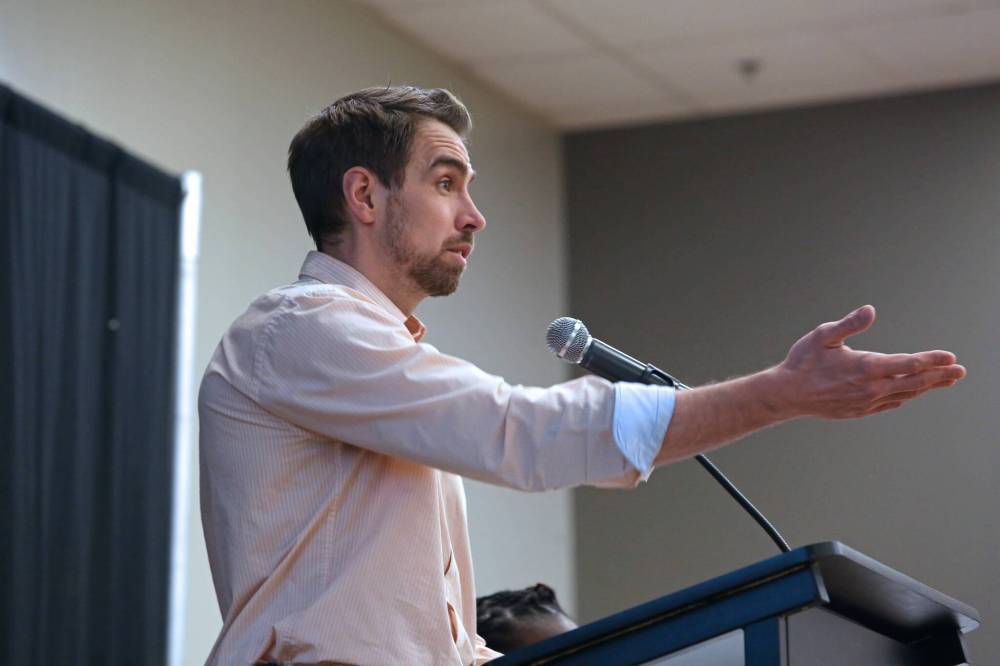
“As you squeeze people together more and more, there are problems with that,” the resident said, garnering a smattering of applause. “You’re going to need more police and more services to maintain the situation.”
Ryan Nickel, the city’s director of planning and buildings, said the cost of building housing and borrowing money is going up as the demand for housing is going up. The reduction of parking requirements, he said, is based on a national discussion on how to increase housing developments.
The reduced parking requirements are for developments with smaller units in an attempt to create the opportunity for more units to be built. Nickel said he suspected some developers would still build a greater ratio of units to parking spaces.
Shawn Wood, the executive director of the Construction Association of Rural Manitoba, came to the microphone to say that his industry is actually asking for the removal of parking minimums and that developers are already building complexes with greater parking ratios.
A woman coming to the microphone said she likes the idea of the city plan proposing greater housing density. She said the idea of people from multiplexes parking on the street appeals to her, because then it will be less obvious when she is away from her home.
Rick Macl, who was vocal during last year’s public engagement sessions, said the city isn’t taking care of existing infrastructure like clearing sidewalks, let alone these new bike paths being proposed.
He alleged that research he had done showed that clearing the new bike paths over the next three decades would cost hundreds of millions of dollars, though he did not reveal how he reached this conclusion.
Macl called bike paths a “vanity project” and complained that the city does not do enough to provide residents with tax relief.
He incorrectly referred to the city following vision zero traffic design philosophies as a federal project that Brandon is required to follow. Vision zero is an international philosophy that aims for a given road network to see zero fatalities or serious injuries in a year.
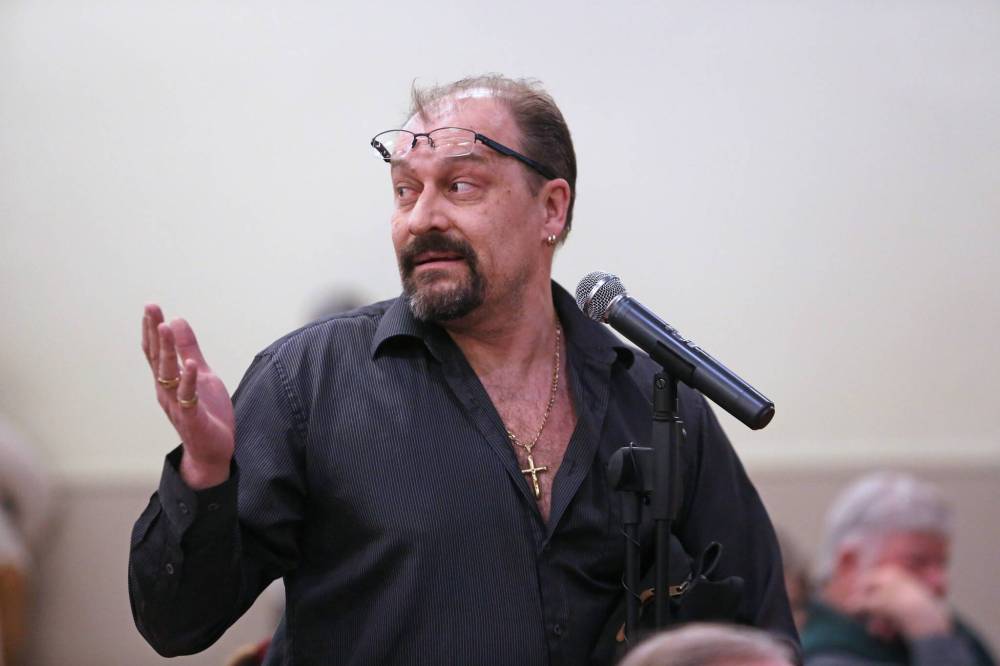
After Macl spoke at length, city manager Ron Bowles approached to ask him to give someone else a chance at the microphone. However, multiple other residents raised the idea that Brandon should do a better job of maintaining its current infrastructure before building new items.
Responding to Macl about the new bike lanes was Mark Allard, the city’s manager of engineering services. He said the total width of pavement for the 26th Street project including bike lanes will not drive up the cost.
Dave Barnes, the founder of Assiniboine Food Forest, said residents should work together to help each other in situations like snow clearing not being done instead of downloading costs onto government, and talked about the importance of tackling climate issues.
A later speaker, in the midst of talking about infrastructure deficits, leaned toward a seated Barnes and aggressively challenged him to prove the science behind climate change, spurring Nickel to ask the audience to be respectful to one another.
Quentin Robinson, a retired United Church minister who ran for the NDP in Brandon West in last year’s provincial election, said he would have travelled to Wednesday’s event by bike, but there wasn’t a safe way to do so.
He said the 26th Street project would be a game-changer for him and reduce his costs by allowing him to travel more frequently by bicycle, arguing that providing more opportunities like that would be beneficial to both residents’ health and the climate.
Grant Hamilton, a local cycling activist who lost a finger after he was hit by a car while cycling, said he believed a separated bike lane might have prevented his accident.
He said a lot of people take for granted that they can hop in a vehicle and travel while some people without them are forced to walk on sidewalks in poor condition or cycle on poorly maintained paths.
Eva Cameron, the president of the board for the Spruce Woods Housing Co-op, asked about the plan’s goal of providing equitable access to recreation. She said on the North Hill, where her development is located, there are a lot of families who don’t have access to things like spray parks, unlike their peers in other neighbourhoods.
One woman said she didn’t believe Brandon does enough to advertise itself to tourists. She said other communities like Melita have giant bananas and big signs beckoning people to visit off the highway, but Brandon has tiny signs out on the Trans-Canada Highway. Things like the Riverbank Discovery Centre should be developed as attractions, she said.
Sun columnist Deveryn Ross said while there were a lot of grievances being aired on Wednesday, a lot of them weren’t actually related to the contents of the city plan.
Leila Praznik said she had been involved in the early stages of the city plan development and praised staff for addressing items like exclusionary zoning and active transportation.
For those who were unable to attend in person, residents can find the complete city plan as well as ways to provide feedback at brandon.ca/cityplan.
After reviewing the last round of feedback, city staff are anticipated to present the final plan to city council sometime this spring.
» cslark@brandonsun.com
» X: @ColinSlark