
Licence dispute requires correct, quick resolution
Advertisement
Read this article for free:
or
Already have an account? Log in here »
We need your support!
Local journalism needs your support!
As we navigate through unprecedented times, our journalists are working harder than ever to bring you the latest local updates to keep you safe and informed.
Now, more than ever, we need your support.
Starting at $15.99 plus taxes every four weeks you can access your Brandon Sun online and full access to all content as it appears on our website.
Subscribe Nowor call circulation directly at (204) 727-0527.
Your pledge helps to ensure we provide the news that matters most to your community!
To continue reading, please subscribe:
Add Brandon Sun access to your Free Press subscription for only an additional
$1 for the first 4 weeks*
- Enjoy unlimited reading on brandonsun.com
- Read the Brandon Sun E-Edition, our digital replica newspaper
*Your next Free Press subscription payment will increase by $1.00 and you will be charged $20.95 plus GST for four weeks. After four weeks, your payment will increase to $24.95 plus GST every four weeks.
Read unlimited articles for free today:
or
Already have an account? Log in here »
Hey there, time traveller!
This article was published 15/08/2024 (647 days ago), so information in it may no longer be current.
It’s a dispute that must be resolved before there are too few moose left to make it matter.
On July 11, the provincial government announced that it is reducing the number of moose hunting licences available to non-Indigenous hunters in four game hunting areas in northern Manitoba. Instead of 400 moose tags being issued for those areas, just 100 will be available this year.
In response, the Manitoba Wildlife Federation complains that the reduction is “unjustifiable and unlawful” and that it “will virtually strip non-Indigenous hunters of the chance to hunt moose in northern Manitoba.”
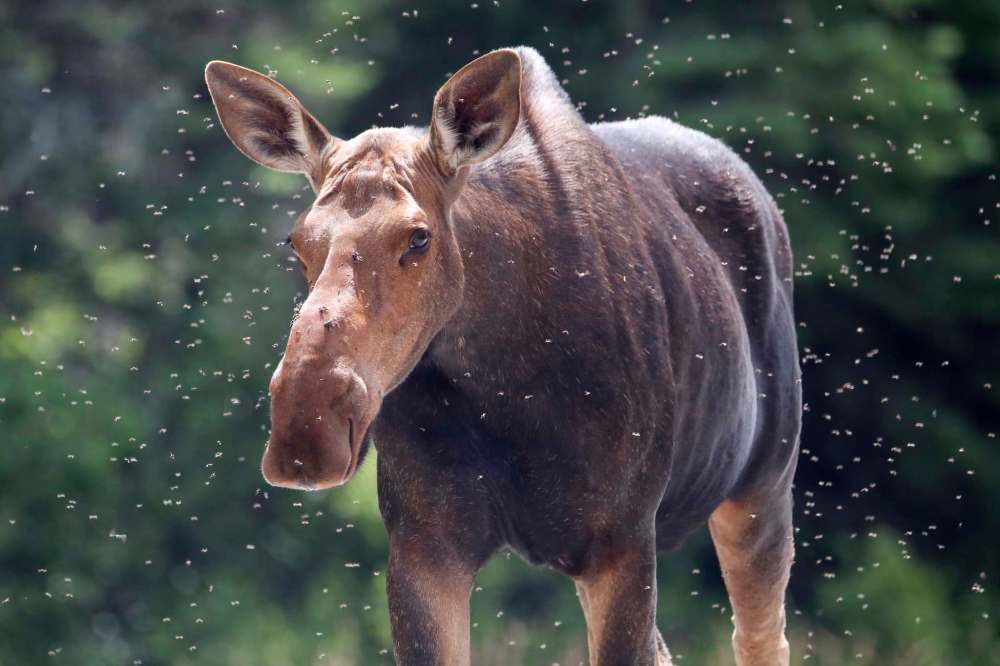
The federation accuses the provincial government of taking direction from political organizations like Manitoba Keewatinowi Okimakanak, which represents northern First Nations. The MKO has reportedly requested that hunting by non-Indigenous people be prohibited in its members’ territories, where they say the moose population appears to be in decline.
Chief David Monias leads one of those northern First Nations — Pimicikamak Okimawin. “We stated to Manitoba by letter that they’re not to issue any licences or permits for hunting or fishing in our territory,” he says. “We have to ensure there’s conservation of hunting and fishing. We have treaty rights.”
The government explains that the reduction of the number of licences is in order to “balance population sustainability and the needs of harvesters while still offering hunting opportunities.” The MWF claims, however, that there are no studies, aerial surveys or data to support the reduction. It threatened legal action last month if the government did not reverse its decision.
The situation was further escalated by an Aug. 2 letter to Premier Wab Kinew and several Manitoba government cabinet ministers from the Nisichawayasihk Cree Nation. It demanded that the government end a 12-year-old agreement that granted Métis harvesting rights on part of the First Nation’s traditional territory.
The letter says there are no persons who can claim to hold rights as Métis persons to hunt, fish, trap or harvest within the First Nation’s traditional territory because “There has never been — and there is not now — an historic Métis community or a separate Métis territory within Nisichawayasi N’tuskenan.”
This past Monday, the MWF carried out its threat of legal action, asking the Court of King’s Bench to review the provincial government’s decision to reduce the number of moose tags. It wants the court to declare the decision unlawful, and to order that hunting licences be issued to unsuccessful applicants based upon the original number of 400.
In support of his organization’s application, MWF senior policy adviser Chris Heald says that stakeholders like his organization had not been consulted about this policy change when they should have been.
The MWF appears to be relying upon the Hunting, Fishing and Trapping Heritage Act, which acknowledges that hunting and fishing activities “have played important roles in shaping Manitoba’s social, cultural and economic heritage,” and confirms that a person has a right to hunt, fish and trap in accordance with the law.
The challenge facing the MWF, however, is that the Act also makes clear that it is not to be interpreted so as to abrogate or derogate Indigenous and treaty rights recognized and affirmed by section 35 of the Constitution Act.
The right to harvest wildlife within the traditional territories for First Nations is one of those constitutionally protected rights. The exercise of that right is subject to there being sufficient numbers of wildlife present within those territories, however.
Indeed, Misipawistik Cree Nation Chief Heidi Cook says that the moose population near her First Nation has declined to the point where her community’s members are having trouble finding the animals, which are an important food source for Indigenous communities. One of the four hunting areas in question is north of Misipawistik, while two of the areas are to located the south.
The MWF argues it has a right to be consulted regarding changes to the number of moose hunting licences issued by the province. The Manitoba Métis Federation appears to claim hunting rights on Indigenous lands that the Métis have no apparent historical connection to. In the meantime, First Nations are seeing the moose population steadily decline, to the point that it jeopardizes their constitutionally protected hunting rights, and their ability to feed their people.
With so many rights at stake, this is a dispute that needs to be conclusively resolved by the courts, and the sooner the better.