
AI no replacement for real learning
Advertisement
Read this article for free:
or
Already have an account? Log in here »
We need your support!
Local journalism needs your support!
As we navigate through unprecedented times, our journalists are working harder than ever to bring you the latest local updates to keep you safe and informed.
Now, more than ever, we need your support.
Starting at $15.99 plus taxes every four weeks you can access your Brandon Sun online and full access to all content as it appears on our website.
Subscribe Nowor call circulation directly at (204) 727-0527.
Your pledge helps to ensure we provide the news that matters most to your community!
To continue reading, please subscribe:
Add Brandon Sun access to your Free Press subscription for only an additional
$1 for the first 4 weeks*
*Your next subscription payment will increase by $1.00 and you will be charged $20.00 plus GST for four weeks. After four weeks, your payment will increase to $24.00 plus GST every four weeks.
Read unlimited articles for free today:
or
Already have an account? Log in here »
Students in one Winnipeg school division will likely be pleased to hear they will be receiving less homework — though by the sound of things, they were not doing it anyway.
The Division scolaire franco-manitobaine shared new guidelines with teachers on Nov. 10 regarding obligatory after school assignments.
In short, the focus will be on promoting nightly reading routines rather than assigning homework, with students from Grade 7 to 12 only moderately receiving assignments.
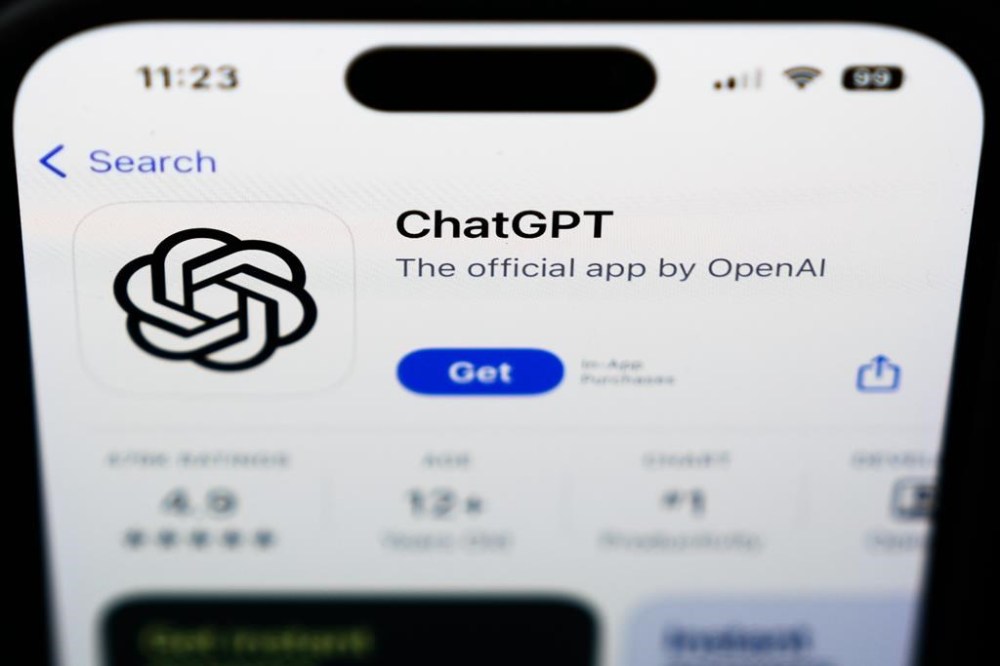
The reason? Student usage of artificial intelligence to complete homework assignments has become so common it is not proving to be a productive use of anyone’s time.
The launch of ChatGPT in 2022 has, in general, been a disaster for educators at all levels, and it is no different at the Winnipeg francophone division. DSFM superintendent Alain Laberge told the Free Press on Wednesday that “most of the submissions,” received from students are “coming from AI.”
For students from kindergarten to Grade 6, meanwhile, the division has recommended teachers assign simple homework, such as reading.
This effort to hinder reliance on AI is just one of several measures the school has taken to limit modern technology’s interference with learning; it was an early adopter of cellphone bans, and has instructed its teachers to limit screen time, encouraging the use of more tactile information sources — such as encyclopedias — instead.
Students’ use of AI to finish homework assignments is a frustrating development, although not because the concept of homework is universally beloved. Calls to ban the practice of homework have emerged in multiple jurisdictions across Canada, the U.S. and elsewhere for years. One recent example comes from Ireland, in 2023, when then-president Michael D. Higgins suggested a ban on homework.
But for homework practices to be changed because of abuse of AI technology is yet more reason to implement restrictions on that technology entirely.
Artificial intelligence is, as it regards learning, anti-intellectual. AI platforms are not infallible sources of information. In fact, they are far from it — a Purdue University study found ChatGPT’s answers were wrong 52 per cent of the time.
But even if we could be assured the chatbots were providing correct information 100 per cent of the time, it would still be a bad idea for people, especially young and developing ones, to be constantly consulting them.
If it were a simple matter of using the platforms to answer simple queries, that would be one thing. However, using them to write essays and solve equations subverts the intention of a formal education, which is to equip growing minds with tools to work out problems — mathematical or otherwise — analyze information, and employ critical thinking.
Relying on ChatGPT or other AI platforms to do everything is a surefire path to intellectual atrophy.
AI’s proponents have invested billions, and encouraged governments around the world to do the same, and yet its drawbacks only continue to pile up. The pervasive use of the tech by students of all types to avoid actually doing the work they are assigned is merely one more.
While the efficacy of assigning homework to students may be an ongoing debate, it is a shame DSFM has had to change tactics as a result of this inaccurate, environmentally disastrous and unproven technology.
The division and hardly be blamed for doing so — if the pre-existing homework policy was not ultimately serving to educated students, there was not much point in keeping it. The division’s educators do, however, still have their most important tool available: hours upon hours of every week in which to instruct and inspire students in the classroom, face to-face, providing knowledge and perspective far more reliable than what a chatbot will spit out.
» Winnipeg Free Press