
Driver Inc. is about more than taxes — it’s about trust
Advertisement
Read this article for free:
or
Already have an account? Log in here »
We need your support!
Local journalism needs your support!
As we navigate through unprecedented times, our journalists are working harder than ever to bring you the latest local updates to keep you safe and informed.
Now, more than ever, we need your support.
Starting at $15.99 plus taxes every four weeks you can access your Brandon Sun online and full access to all content as it appears on our website.
Subscribe Nowor call circulation directly at (204) 727-0527.
Your pledge helps to ensure we provide the news that matters most to your community!
To continue reading, please subscribe:
Add Brandon Sun access to your Free Press subscription for only an additional
$1 for the first 4 weeks*
- Enjoy unlimited reading on brandonsun.com
- Read the Brandon Sun E-Edition, our digital replica newspaper
*Your next Free Press subscription payment will increase by $1.00 and you will be charged $20.95 plus GST for four weeks. After four weeks, your payment will increase to $24.95 plus GST every four weeks.
Read unlimited articles for free today:
or
Already have an account? Log in here »
The Manitoba Trucking Association extends its deepest condolences to the family and loved ones affected by the recent fatal collision in Brandon.
When Canadians see a transport truck on the highway, they assume the company behind it is following the law. They assume the driver has been properly trained, the vehicle has been properly maintained, the company carries adequate insurance and the business is meeting its obligations as an employer. Most trucking companies do exactly that; they invest in safety, comply with regulations and understand that public trust must be earned every day.
Unfortunately, not everyone operates that way. That is why Canadians need to understand a growing problem in the trucking industry known as Driver Inc.
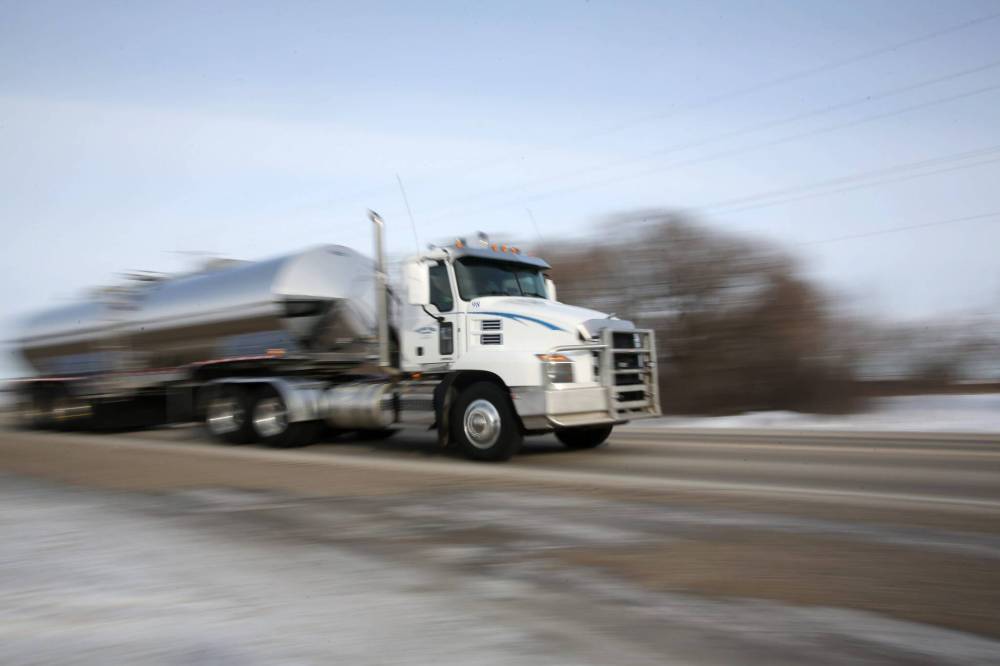
"Most trucking companies are professional, responsible businesses that move the goods Canadians depend on every day," writes Manitoba Trucking Association executive director Aaron Dolyniuk. "They take pride in operating safely, treating employees fairly and complying with the law." (The Brandon Sun files)
Many people have never heard the term, while others assume it is simply a dispute about taxes. In reality, Driver Inc. is best understood as a worker misclassification scheme in which company drivers are treated as independent contractors rather than employees, allowing some carriers to avoid costs and obligations that legitimate employers are required to pay.
At first glance, this may sound like a technical employment issue that affects only trucking companies and their drivers. It is not.
Imagine a restaurant owner telling cooks and servers that they are no longer employees, but independent contractors. The staff would still wear the same uniforms, report to the same manager and perform the same work, but the employer would suddenly avoid many of the responsibilities that come with employing workers. Most Canadians would recognize that something is wrong with that arrangement.
Driver Inc. works in much the same way.
The issue is not legitimate owner-operators. Owner-operators have long been an important part of Canada’s trucking industry. They own or finance their equipment, operate independent businesses, assume financial risk and manage their own tax obligations. Driver Inc. is different because the drivers involved are often operating company-owned trucks while performing work under conditions that closely resemble traditional employment.
The result is that some carriers gain a financial advantage by avoiding obligations that their competitors continue to meet.
However, if Driver Inc. were only about payroll deductions and tax remittances, the industry’s concerns would be far more limited.
Over time, Driver Inc. has become a warning sign for something larger: a culture of non-compliance in which certain businesses view laws and regulations as obstacles to overcome rather than responsibilities to uphold.
When a company is willing to ignore one set of rules, it raises a reasonable question: what other rules might it be willing to ignore?
In the latter part of 2025, several roadside blitzes were held in collaboration with agencies such as the RCMP, Manitoba Motor Carrier Enforcement, Employment and Social Development Canada (ESDC), and the Workers Compensation Board (WCB). Several issues were identified, including driver misclassification, unpaid wages, overtime violations and more. As a result, hundreds of charges were laid for a variety of offences, including speeding, seatbelt violations, imprudent driving and others.
To be clear, avoiding payroll tax does not automatically make a carrier unsafe, nor does it mean every carrier involved in worker misclassification is engaged in labour abuse or immigration violations. Those are separate issues and should be treated as such.
What concerns the trucking industry is the pattern that often emerges when compliance becomes optional. Businesses willing to cut corners in one area are frequently more willing to cut corners elsewhere, whether that involves maintenance programs, driver training, record-keeping, insurance coverage, labour practices or other regulatory requirements.
That is why Driver Inc. cannot be dismissed as “just a tax issue.”
The trucks travelling Canada’s highways share the road with families, commuters, school buses and emergency vehicles. Canadians have every right to expect that the companies operating those vehicles take their legal obligations seriously. Safety is not simply a matter of individual drivers making good decisions; it is also the product of strong systems, proper oversight, adequate training and a commitment to compliance throughout an organization.
Across Canada, governments and industry stakeholders are increasingly focused on issues such as labour trafficking, immigration abuse, carrier fraud, chameleon carriers and unsafe operators. While these are distinct issues, they often stem from the same underlying mindset: a belief that compliance is optional if ignoring the rules creates a competitive advantage.
Immigration has long been important to the trucking industry; however, it does not equate with exploiting workers and immigration abuse. There is no room in the trucking industry for labour trafficking. Visas should not be for sale. Workers should not be denied their wages. Drivers should not be put in trucks without training or even the proper licence.
And yet, all of these things are happening in the trucking industry. Carriers who engage in these practices must be held accountable.
The solution is not endless new regulation. Employment laws already exist. Tax laws already exist. Safety regulations already exist. What the industry has been asking for, for years, is consistent enforcement. There is evidence that stronger oversight works. In Manitoba, the New Entrant Training program requires new motor carriers to designate a certified compliance officer responsible for ensuring the company meets its safety and record-keeping obligations. The results have been encouraging, with carriers that employ certified compliance officers demonstrating stronger safety performance than those that do not.
The lesson is straightforward: when businesses understand their responsibilities, are held accountable for meeting them and operate within a culture of compliance, outcomes improve for everyone. That is good for drivers, good for carriers and good for the public.
Education, however, is only one part of the solution.
There must also be meaningful consequences for businesses that repeatedly ignore the rules. Carriers that deliberately misclassify workers, evade employer obligations, exploit vulnerable workers, abuse regulatory loopholes or repeatedly violate legal requirements should not be allowed to continue operating without consequence. Nor should they be permitted to shut down one company, open another and carry on as though nothing happened.
That is why the trucking industry has increasingly called for the creation of a national carrier registry.
Today, information about motor carriers is fragmented across multiple provinces, agencies and databases, making it more difficult to identify repeat offenders and easier for bad actors to move between jurisdictions or reappear under new names. A national carrier registry would improve transparency, strengthen enforcement efforts and help prevent chronic violators from escaping accountability through administrative loopholes.
The recent accident in Brandon involved a chameleon carrier. That accident should not have happened because the company should not have been in business. However, they were able to re-start operations in Alberta after being shut down in Manitoba.
Most trucking companies are professional, responsible businesses that move the goods Canadians depend on every day. They take pride in operating safely, treating employees fairly and complying with the law. Those companies deserve an industry in which professionalism, integrity and accountability are rewarded — not one in which success is achieved by finding new ways to avoid legal obligations.
The trucking industry cannot solve this challenge on its own. Governments must be prepared to enforce existing laws and elected officials need to hear from Canadians who believe that standards matter.
If you are concerned about Driver Inc., labour exploitation, unsafe operators or the broader culture of non-compliance that exists within parts of the trucking industry, contact your member of Parliament and your member of the Legislative Assembly. Tell them that existing laws must be enforced and that enforcement departments need appropriate budgets. Tell them that repeat offenders must face meaningful consequences and that Canada needs a national carrier registry to improve accountability and prevent bad actors from simply changing names and carrying on as usual.
Canadians place tremendous trust in the trucking industry. The overwhelming majority of carriers and drivers earn that trust every day through professionalism, hard work and a commitment to doing things the right way.
It is time to ensure that everyone operating in the industry is held to the same standard.
» Aaron Dolyniuk is the executive director of the Manitoba Trucking Association.