
Stonehenge’s ‘altar stone’ originally came from Scotland and not Wales, new research shows
Advertisement
Read this article for free:
or
Already have an account? Log in here »
We need your support!
Local journalism needs your support!
As we navigate through unprecedented times, our journalists are working harder than ever to bring you the latest local updates to keep you safe and informed.
Now, more than ever, we need your support.
Starting at $15.99 plus taxes every four weeks you can access your Brandon Sun online and full access to all content as it appears on our website.
Subscribe Nowor call circulation directly at (204) 727-0527.
Your pledge helps to ensure we provide the news that matters most to your community!
To continue reading, please subscribe:
Add Brandon Sun access to your Free Press subscription for only an additional
$1 for the first 4 weeks*
*Your next subscription payment will increase by $1.00 and you will be charged $20.00 plus GST for four weeks. After four weeks, your payment will increase to $24.00 plus GST every four weeks.
Read unlimited articles for free today:
or
Already have an account? Log in here »
Hey there, time traveller!
This article was published 14/08/2024 (480 days ago), so information in it may no longer be current.
WASHINGTON (AP) — The ancient ritual meaning of Stonehenge is still a mystery, but researchers are one step closer to understanding how the famous stone circle was created.
The unique stone lying flat at the center of the monument was brought to the site in southern England from near the tip of northeast Scotland, researchers reported Wednesday in the journal Nature. It’s not clear whether the 16-foot (5-meter) stone was carried by boat or across land — a journey of more than 460 miles (740 kilometers).
“It’s a surprise that it’s come from so far away,” said University of Exeter archaeologist Susan Greaney, who was not involved in the study.
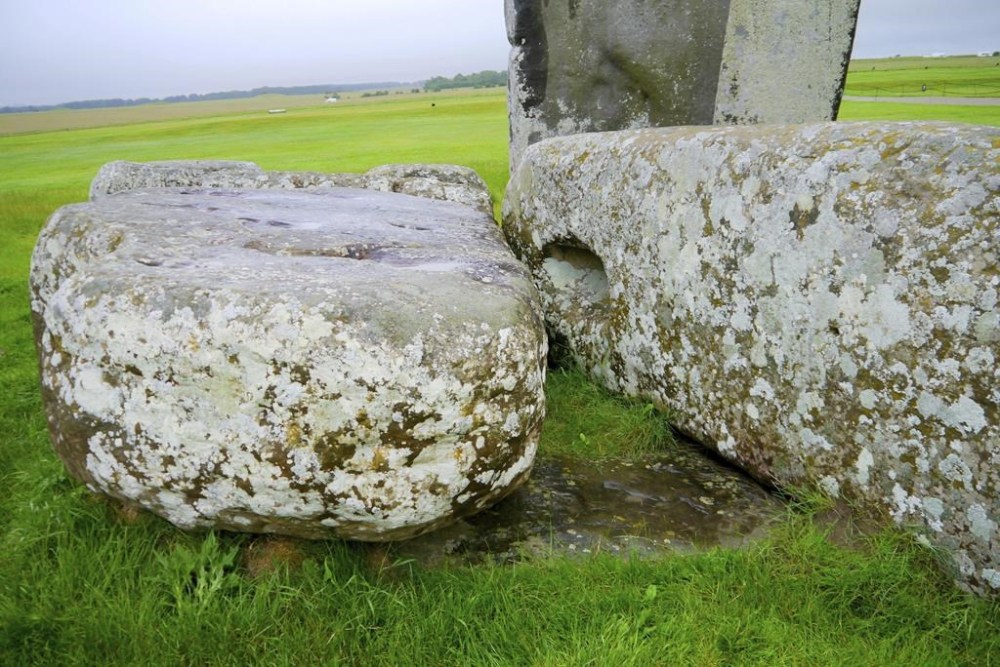
For more than a hundred years, scientists believed that Stonehenge’s central sandstone slab — long called the “altar stone” — came from much closer Wales. But a study last year by some of the same researchers showed that the stone didn’t match the geology of Wales’ sandstone formations. The actual source of the stone remained unknown until now.
For the study, the team was not permitted to chip away rocks at the site, but instead analyzed minerals in bits of rock that had been collected in previous digs, some dating back to the 1840s. They found a match in the sandstone formations of Orcadian Basin in northeast Scotland, a region that includes parts of the tip of the Scottish peninsula as well as the Orkney Islands.
“That geological ‘fingerprint’ isn’t repeated in any other area of sediment in the U.K.,” said Aberystwyth University geologist Nick Pearce, a study co-author.
Greaney said the difficult logistics of moving the stone such a long distance show a high level of coordination and cultural connection between these two regions of ancient Britain.
Stonehenge was constructed around 5,000 years ago, with stones forming different circles brought to the site at different times. The placement of stones allows for the sun to rise through a stone “window” during summer solstice. The ancient purpose of the altar stone — which lies flat at the heart of Stonehenge, now beneath other rocks — remains a mystery.
“Stonehenge isn’t a settlement site, but a place of ceremony or ritual,” said Heather Sebire, senior curator at English Heritage, who was not involved in the study. She said that past archaeological excavations had not uncovered evidence of feasting or daily living at the site.
Previous research has shown cultural connections — such as similarities in pottery styles — between the area around Stonehenge and Scotland’s Orkney Islands. Other stones at Stonehenge came from western Wales.
While Britain is dotted with other Neolithic stone circles, “the thing that’s unique about Stonehenge is the distance from which the stones have been sourced,” said Aberystwyth University’s Richard Bevins, a study co-author.
___
The Associated Press Health and Science Department receives support from the Howard Hughes Medical Institute’s Science and Educational Media Group. The AP is solely responsible for all content.