
Likelihood of FASD leading to victimization overlooked
Advertisement
Read this article for free:
or
Already have an account? Log in here »
We need your support!
Local journalism needs your support!
As we navigate through unprecedented times, our journalists are working harder than ever to bring you the latest local updates to keep you safe and informed.
Now, more than ever, we need your support.
Starting at $15.99 plus taxes every four weeks you can access your Brandon Sun online and full access to all content as it appears on our website.
Subscribe Nowor call circulation directly at (204) 727-0527.
Your pledge helps to ensure we provide the news that matters most to your community!
To continue reading, please subscribe:
Add Brandon Sun access to your Free Press subscription for only an additional
$1 for the first 4 weeks*
- Enjoy unlimited reading on brandonsun.com
- Read the Brandon Sun E-Edition, our digital replica newspaper
*Your next Free Press subscription payment will increase by $1.00 and you will be charged $20.95 plus GST for four weeks. After four weeks, your payment will increase to $24.95 plus GST every four weeks.
Read unlimited articles for free today:
or
Already have an account? Log in here »
Hey there, time traveller!
This article was published 11/03/2011 (5661 days ago), so information in it may no longer be current.
Numerous studies have shown people with fetal alcohol spectrum disorder have a high likelihood of committing a crime.
What isn’t as well-known is the same disabilities that make a kid with FASD more likely to get into trouble make a kid more likely to become a victim.
Others can easily persuade them to do or say things. They don’t always understand certain behaviours — sexual touching for example — are wrong.
More than half of people with FASD have serious mental disabilities and extremely low IQs.
People who are easily manipulated, don’t always understand what is going on around them and aren’t smart enough to know when they are being taken advantage of, make easy targets.
Kids with FASD are also more likely to end up in high-risk living situations and are at greater risk of homelessness and substance abuse, making them more prone to the violence of street life.
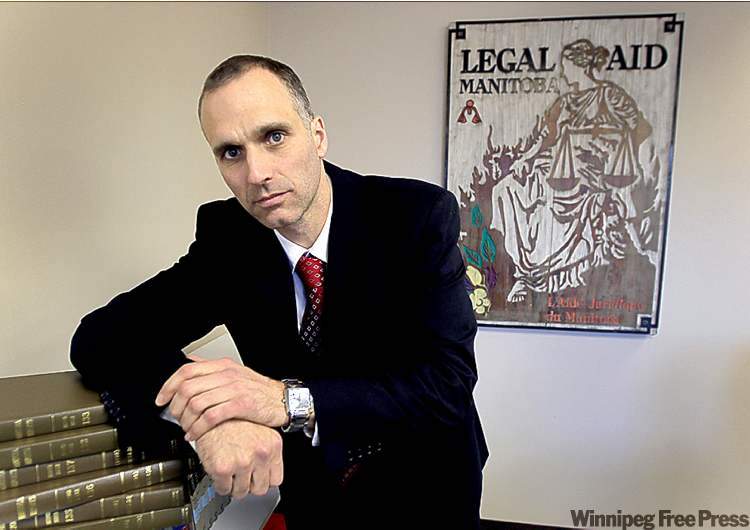
Legal Aid Manitoba lawyer Corey La Berge said kids with FASD are at risk in every way.
brightcove.createExperiences();
"I see children who are vulnerable in the community, vulnerable at home," he said. "Children who end up struggling in school and then not attending school, struggling to make friendships with social acquaintances."
Statistics Canada reports people with mental developmental delays or behavioural problems are four times more likely than others to become a victim of a crime. And FASD is the leading cause of developmental delays in Canada.
A famous research study on kids with FASD in the U.S. Pacific Northwest found 72 per cent of FASD kids studied had been victims of abuse.
Evelyn Milner’s daughter fell prey to the influence of others when she was 18. One man several years her senior and with a "criminal record more than three feet long" convinced her to move in with him and falsely accuse her twin brother of sexual abuse. He controlled her every move and phoned her at work so often she was eventually fired. After her family helped her escape from his clutches, she ended up marrying a foreign student a week after she met him at a bar.
"I really think he wanted to become a Canadian citizen," said Milner, who asked her real name not be used to protect her child. "He didn’t look after her."
Within a year, her daughter was pregnant. The man threatened to divorce her if she kept the baby. She had an abortion. He divorced her anyway.
"She will agree with whatever you want," said Milner.
A Justice Canada report looking at victims’ services workers’ experience with people with FASD found some estimated as many as half their clients in victims’ services programs likely had the disability. Most who worked with FASD victims also noted the justice system is ill-equipped to handle their needs as victims.
The study quoted a victims’ services worker talking about a boy with FASD testifying against his father in a sexual abuse case. The prosecutor was warned the child would make a horrible witness and couldn’t understand abstract questions. But the questions posed were not direct enough and the kid struggled to answer. His attempts to appear brave came off as his being cocky.
It resulted in the judge accusing the boy of lying and the father being released.
mia.rabson@freepress.mb.ca