
Gone Gardenin’ – Unusual plant will dazzle you out of winter doldrums
Advertisement
Read this article for free:
or
Already have an account? Log in here »
We need your support!
Local journalism needs your support!
As we navigate through unprecedented times, our journalists are working harder than ever to bring you the latest local updates to keep you safe and informed.
Now, more than ever, we need your support.
Starting at $15.99 plus taxes every four weeks you can access your Brandon Sun online and full access to all content as it appears on our website.
Subscribe Nowor call circulation directly at (204) 727-0527.
Your pledge helps to ensure we provide the news that matters most to your community!
To continue reading, please subscribe:
Add Brandon Sun access to your Free Press subscription for only an additional
$1 for the first 4 weeks*
- Enjoy unlimited reading on brandonsun.com
- Read the Brandon Sun E-Edition, our digital replica newspaper
*Your next Free Press subscription payment will increase by $1.00 and you will be charged $20.95 plus GST for four weeks. After four weeks, your payment will increase to $24.95 plus GST every four weeks.
Read unlimited articles for free today:
or
Already have an account? Log in here »
Hey there, time traveller!
This article was published 01/03/2012 (5270 days ago), so information in it may no longer be current.
During the long winter months, we gardeners sometimes have fun by growing a plant that is a bit unusual and that we do not normally include in our indoor plant collections.
This winter I have noticed a quite a number of bromeliads offered for sale at garden centres and I think this would be a plant that may give impatient green thumbs an opportunity to grow something a little out of the ordinary.
Bromeliads are tropical plants — epiphytes actually, that grow in the tropical and subtropical jungles of the world. In their natural environment, they grow above ground in the crotches of trees, and like true epiphytes, their bare roots take in moisture and nutrients from the air and water around them.
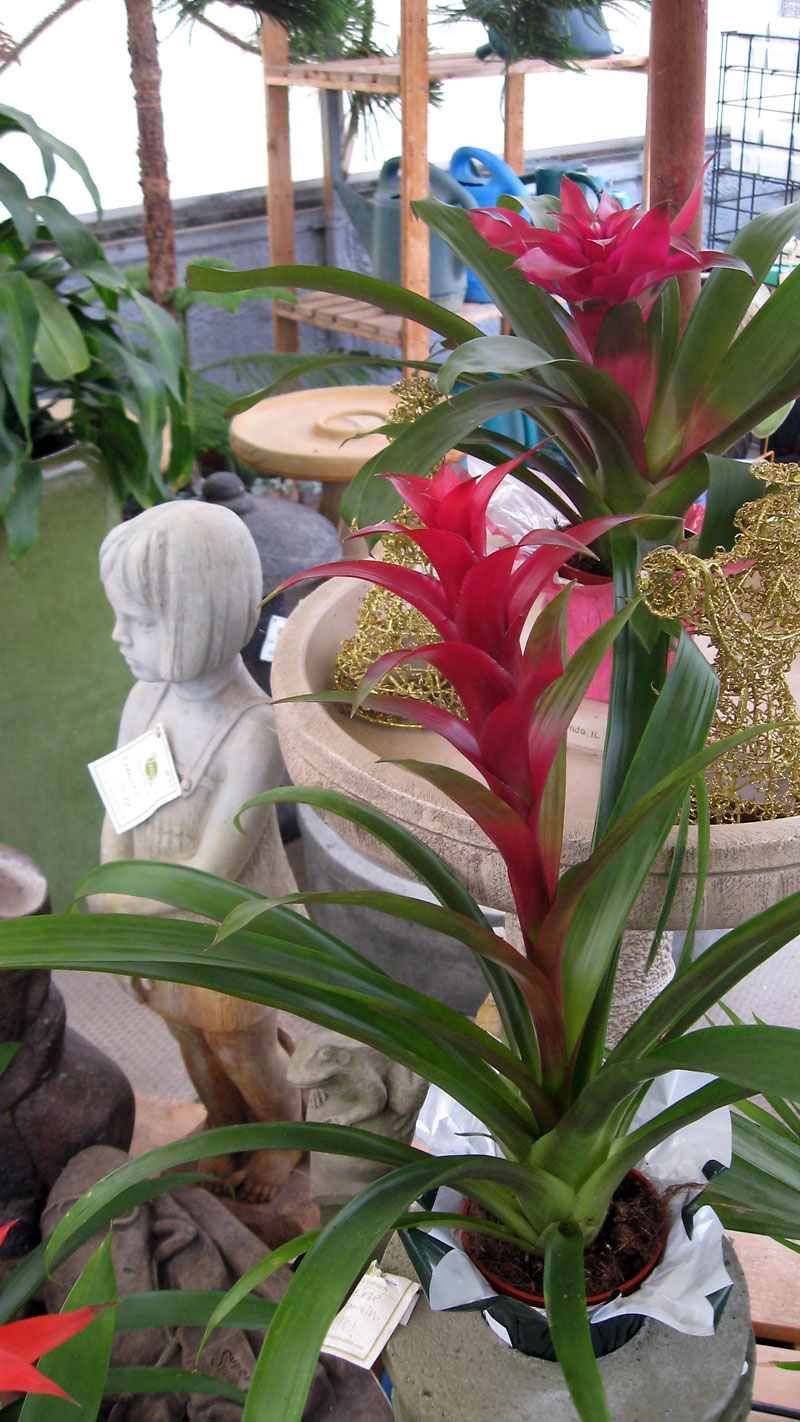
The bromeliad plant grows as a rosette of thick, strappy leaves surrounding a central cup. In the wild, this central cup will fill with water and decaying plant material that provides the plant with both nutrients and moisture.
In our indoor gardens, we generally grow bromeliads in pots, not as epiphytes, and they seem to adapt to this way of being grown quite well. The planting medium must be fast draining, which is made possible by using a mix of 2/3 peat-based soilless mix and 1/3 sand.
Bromeliads are not heavy feeders so they should be fertilized during the growing season with a soluble fertilizer at 1/3 to 1/2 strength. Bromeliads are more forgiving in terms of their tolerance of drought and wide temperature fluctuations than their fellow epiphytes, the orchids.
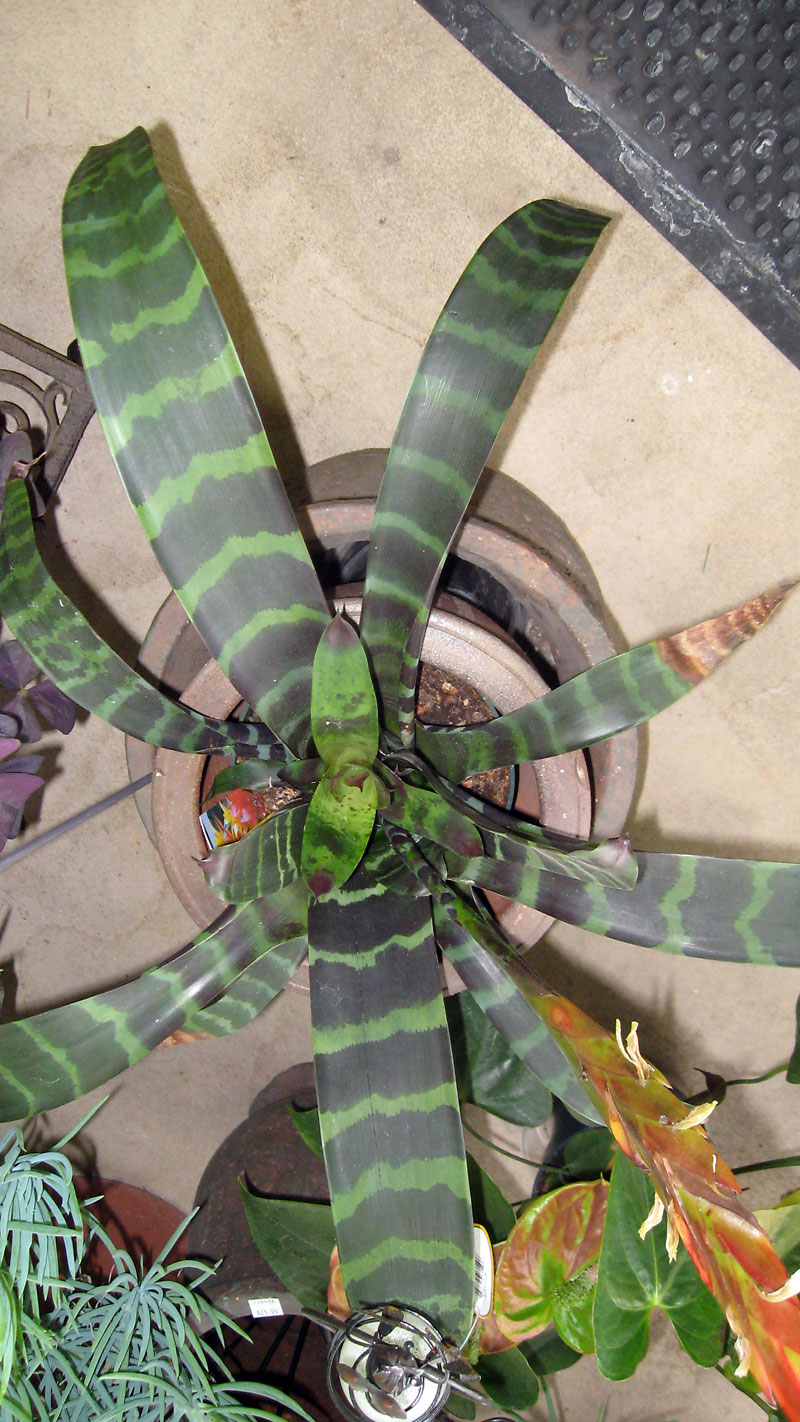
Bromeliads are grown mainly for their striking foliage — the stiff, thick leaves can be red, yellow, purple, orange, green and may have stripes or bands of contrasting colour. There are even some that have spots on their leaves.
In the right conditions, a bromeliad will send up a bloom spike, which is composed of an insignificant flower surrounded by colourful bracts.
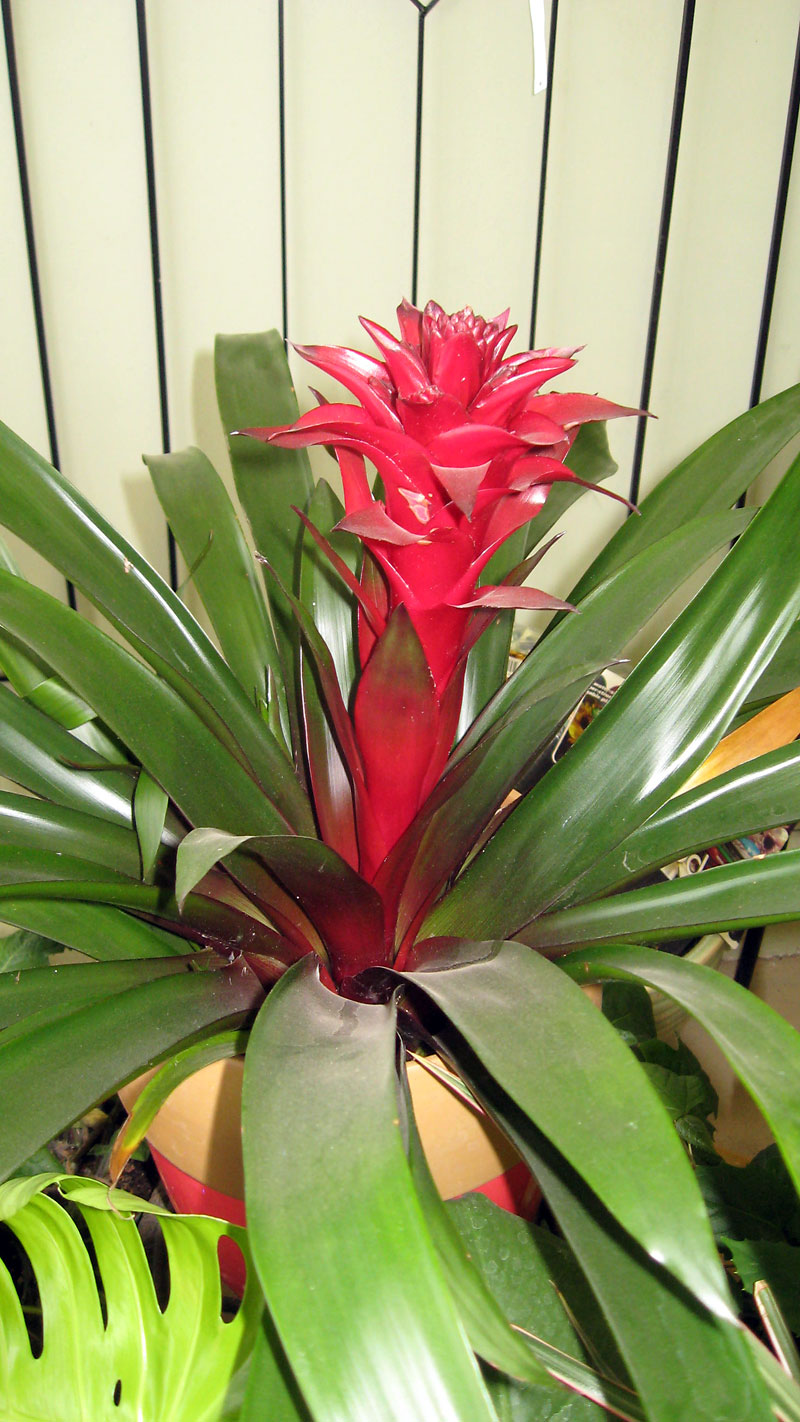
Bromeliads might need to be encouraged into bloom when grown in an ordinary house. One method is to enclose the plant inside a paper bag for 10 days with several pieces of apple — the ethylene gas given off by the decaying apple may prompt the plant into putting forth a flower spike.
The bloom spike will stay attractive for a number of months, but as it begins to die, the plant will produce some off-sets or pups at its base. Over the next few months the off-sets will grow larger and develop their own roots while the parent plant will begin to wither and die.
When the pups are a good size, and before the mother plant completely succumbs, the pups can be detached from the parent plant and potted up to make new plants. Depending on how extensive the off-set’s root system is, the newly potted pup may require some support to hold it upright until its roots have grown long enough to support it.
Care must be taken when handling bromeliads. The edges of the long stiff leaves have backwards facing spines that are quite sharp and can give your hands quite a poke — you might like to wear sturdy gardening gloves when you handle the plants.
Bromeliads should be grown in bright indirect light; they should not be exposed to strong sunlight. If the foliage becomes elongated, the plant is receiving too little light; if the foliage begins to yellow, give the plant more light.
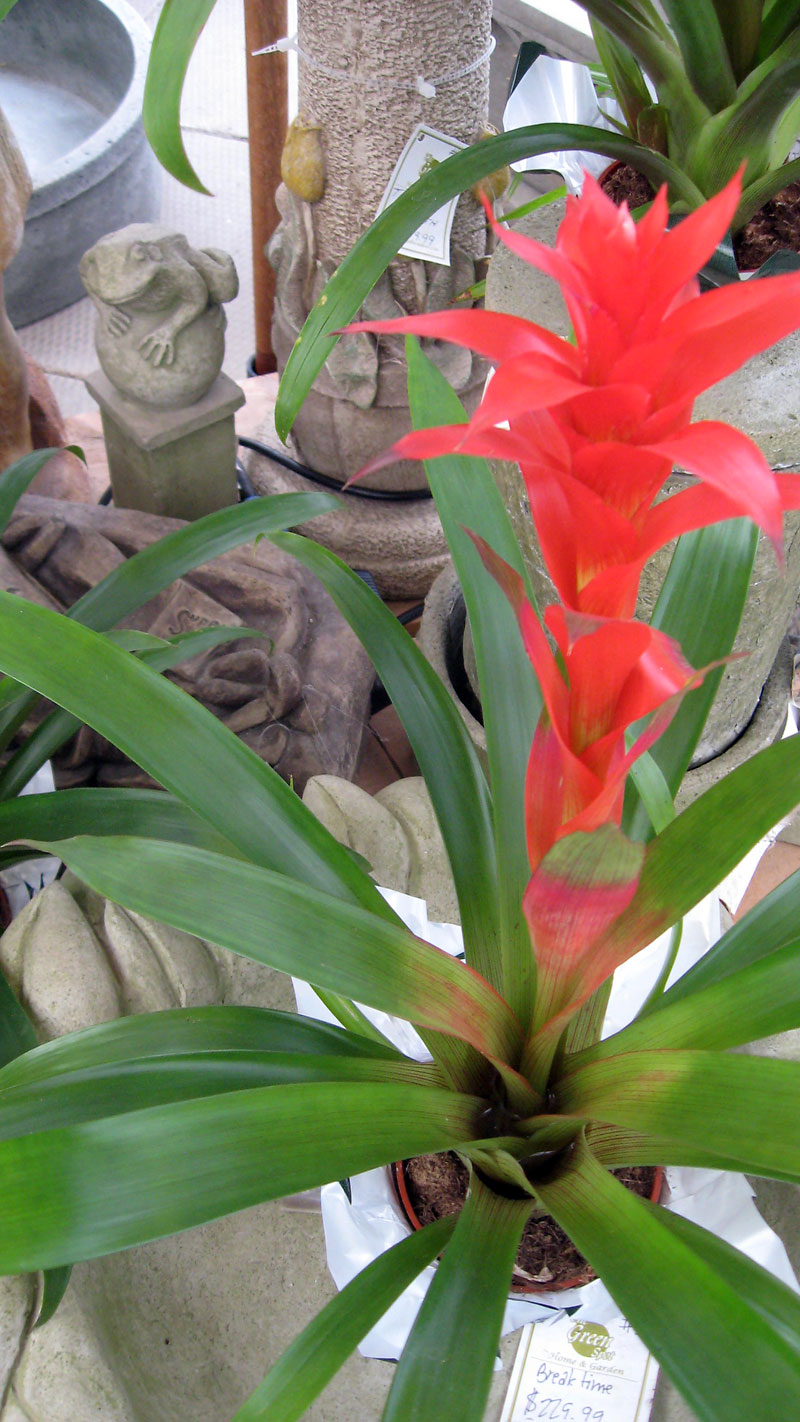
The normal temperature range of our houses at this time of year will suit them just fine. They are tropical plants, so do not expose the plants to cold drafts.
Let the top of the soil dry out before watering the pot again.
Although a bromeliad can be watered by keeping the central cup full of water, it is wise to avoid this practice as the plants are prone to rot if the cup continually has water in it and the plant is growing in a pot. If you do have water in the cup, flush it periodically to remove a buildup of salts.
Bromeliads are unusual plants and obtaining one may help an avid gardener wile away the hours of a long winter. Try one.
Albert Parsons is a consultant for garden design and landscaping who lives in Minnedosa.
» communitynews@brandonsun.com