
‘A lot of work’ to address illegal drainage in Sask.
Advertisement
Read this article for free:
or
Already have an account? Log in here »
We need your support!
Local journalism needs your support!
As we navigate through unprecedented times, our journalists are working harder than ever to bring you the latest local updates to keep you safe and informed.
Now, more than ever, we need your support.
Starting at $15.99 plus taxes every four weeks you can access your Brandon Sun online and full access to all content as it appears on our website.
Subscribe Nowor call circulation directly at (204) 727-0527.
Your pledge helps to ensure we provide the news that matters most to your community!
To continue reading, please subscribe:
Add Brandon Sun access to your Free Press subscription for only an additional
$1 for the first 4 weeks*
*Your next subscription payment will increase by $1.00 and you will be charged $20.00 plus GST for four weeks. After four weeks, your payment will increase to $24.00 plus GST every four weeks.
Read unlimited articles for free today:
or
Already have an account? Log in here »
Hey there, time traveller!
This article was published 13/11/2015 (3795 days ago), so information in it may no longer be current.
Between 100,000 to 150,000 quarter sections of Saskatchewan farmland have illegal drainage on them, according to a Saskatchewan Water Security Agency (WSA) official.
Speaking to more than 100 stakeholders at the Assiniboine River Basin Initiative Conference in Brandon on Thursday, Doug Johnson said new legislation introduced two months ago will bring the first significant changes to drainage regulations in Saskatchewan in 35 years.
Johnson said the legislation will provide the tools necessary to deal with illegal drainage, but it will take time.
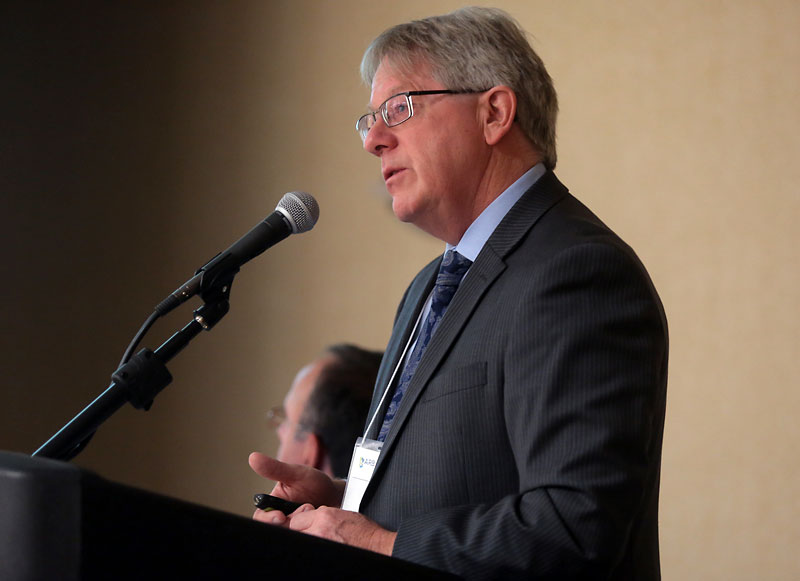
“It’s a lot of work,” he said. “It’s the kind of backlog we’re going to be dealing with over the next 10 years, but we’re going to get to everybody, it’s just going to take some time to get there.”
Policy development and program delivery will be ironed out through a series of pilot projects. The Souris Basin near Stoughton and the Assiniboine Basin near Canora have been selected. Local producers and watershed authorities have committed to working with the WSA to implement the new strategy.
Drainage projects will be assessed based on risk, according to Johnson.
“We have to try to balance the impacts with the benefits,” he said.
Local flooding, large-scale downstream flooding and the degradation of water quality are some of the risks with drainage. The loss of wetlands, natural habitat and the impact of beds and shores of streams and bodies of water are also potential negatives.
On the flip side, Johnson said drainage has allowed for more straight-line farming, which creates efficiency. It has also given producers the ability to farm what was once marginal land and extended the growing season by as much as 20 days in some areas.
“When we’re farming in the northern part of the province where we have an extra 20 days of farming because of drainage, that really has a positive impact on farm production,” Johnson said.
The Saskatchewan government consulted with more than 500 landowners for the new regulations.
Projects identified as high risk will require mitigation tools to be in place, such as gates for slow release or retention ponds to ensure water doesn’t hit rivers and stream suddenly.
Currently, the government has a three-stage complaint process, which starts with an informal complaint, followed by a formal complaint, before moving to a judicial body.
Johnson said it can take years to come to a conclusion on a single case. New fines, which could be expedited, will hopefully provide a better deterrent.
However, there is no appetite to start filling in ditches, according to Johnson, who said the practice would be too time and labour intensive.
“We feel the new approach will be fairer for all concerned, both the drainers and people impacted by drainage,” he said.
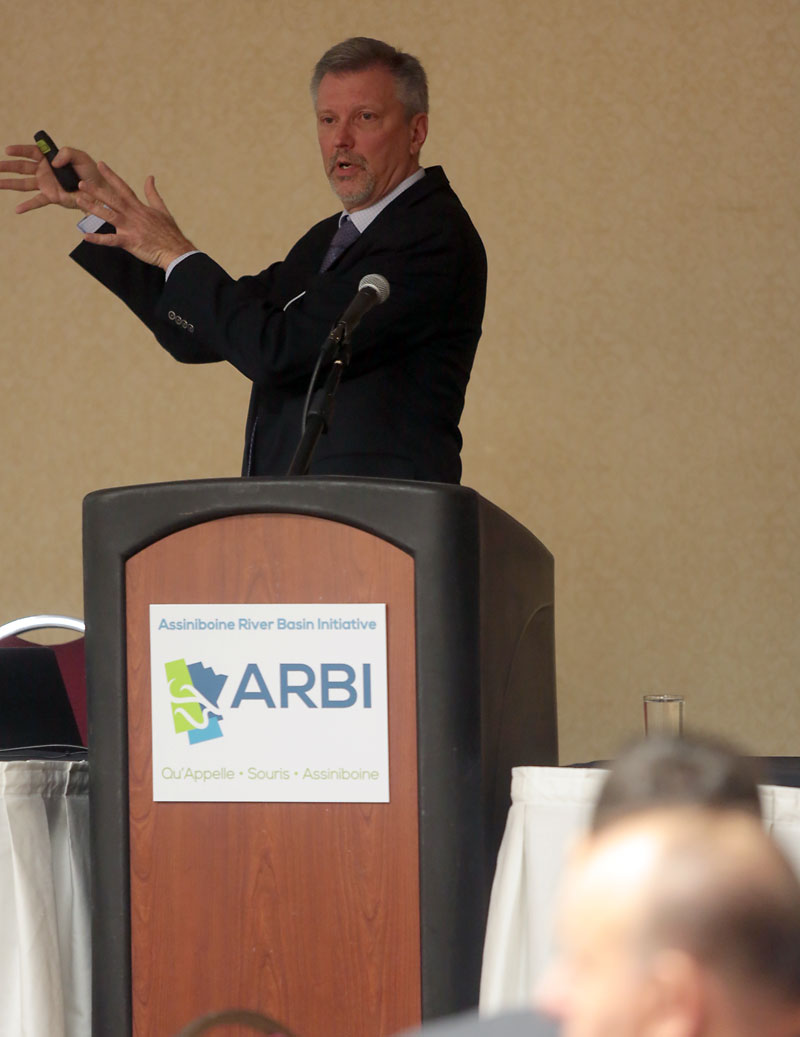
Producers in Manitoba claim the legislation still doesn’t have the teeth necessary to curb the drainage issues in Saskatchewan, and even if it did, the government isn’t motivated to really act on it.
Stan Cochrane, president of the Assiniboine Valley Producers, said the majority of the illegal ditches were dug by large producers — the same producers who are the backbone of the province’s ruling Saskatchewan Party.
“The government isn’t prepared to come down on their buddies and tell them that they can’t drain,” he said.
Cochrane, who farms right up to the banks of the Assiniboine River, said drainage to the west causes water to get to the river more quickly than ever before, resulting in downstream flooding.
Cochrane has been critical of drainage to the west and the province’s operation of the Shellmouth Dam in the past when he has had 1,500 acres of farmland wiped out due to flooding.
“They’ve got the plan in place to solve the problem, but I’m not sure they want to implement it,” he said.
The two-day conference concludes today at the Victoria Inn.
» ctweed@brandonsun.com
» Twitter: @CharlesTweed