
Battle over Douglas files going to court
Advertisement
Read this article for free:
or
Already have an account? Log in here »
We need your support!
Local journalism needs your support!
As we navigate through unprecedented times, our journalists are working harder than ever to bring you the latest local updates to keep you safe and informed.
Now, more than ever, we need your support.
Starting at $15.99 plus taxes every four weeks you can access your Brandon Sun online and full access to all content as it appears on our website.
Subscribe Nowor call circulation directly at (204) 727-0527.
Your pledge helps to ensure we provide the news that matters most to your community!
To continue reading, please subscribe:
Add Brandon Sun access to your Free Press subscription for only an additional
$1 for the first 4 weeks*
*Your next subscription payment will increase by $1.00 and you will be charged $20.00 plus GST for four weeks. After four weeks, your payment will increase to $24.00 plus GST every four weeks.
Read unlimited articles for free today:
or
Already have an account? Log in here »
Hey there, time traveller!
This article was published 22/02/2011 (5548 days ago), so information in it may no longer be current.
Locals who met and admire Tommy Douglas say secret material compiled about the socialist icon should be released and shouldn’t have been gathered at all.
Brandon University professor emeritus Errol Black says Canadians are entitled to see the material that was gathered years ago by RCMP.
"That information that they’ve collected should be available," Black said.
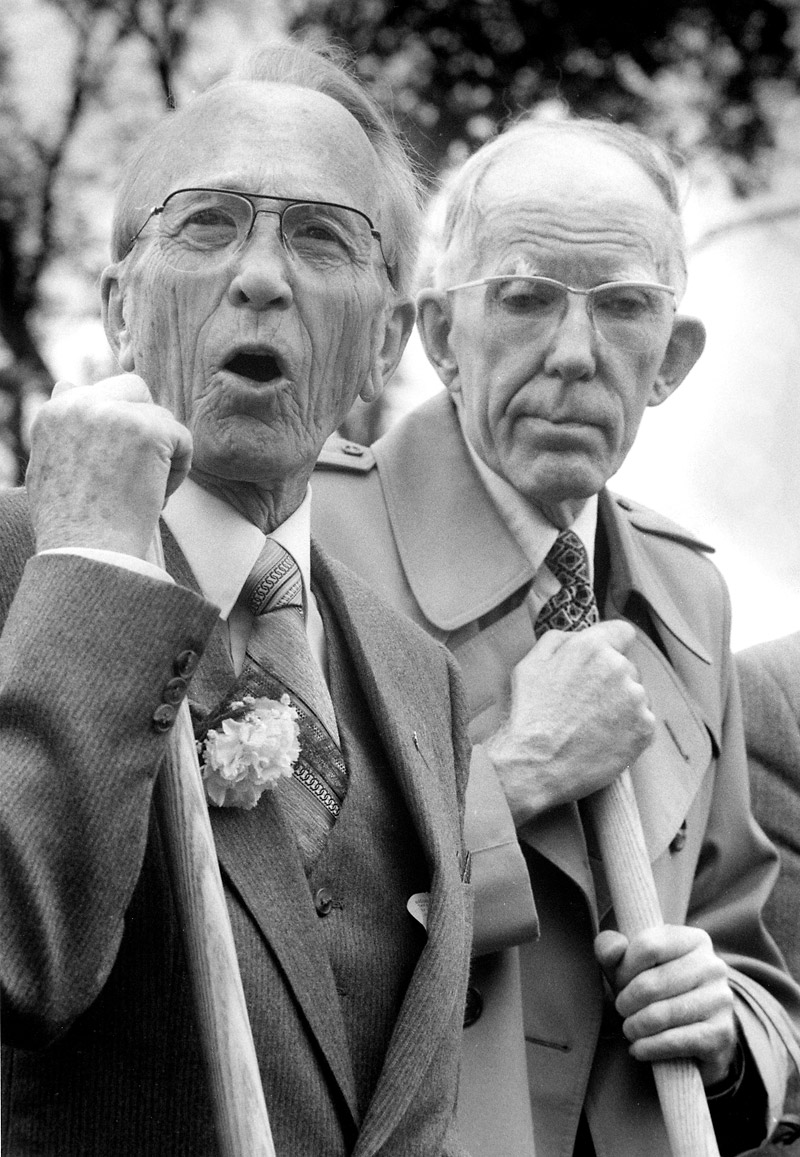
"I don’t think they should be collecting it in the first place."
History will face off against national security this week in a court battle over decades-old intelligence files on Douglas.
The case pits the right of Canadians to see historically significant information against the government’s determination to protect the secrets of the spy trade.
Arguments are to be heard Wednesday in Federal Court.
The Canadian Press is challenging the federal government’s refusal to fully disclose a 1,142-page dossier on Douglas, a former Saskatchewan premier and federal NDP leader who is widely hailed as the father of medicare.
The file was amassed by the RCMP from the late 1930s until shortly before Douglas’s death in 1986.
Library and Archives Canada, which is currently in possession of the Douglas dossier, previously released more than 400 pages, some of them heavily censored.
It was acting on the advice of the Canadian Security Intelligence Service, which took over responsibility for domestic security investigations from the RCMP in 1984.
Last week, acting on concerns recently expressed by the courts, Library and Archives released portions of more than 300 additional pages from the Douglas file.
Many pages were blacked out, but uncensored material shows RCMP security officers shadowed Douglas for four decades, attending his speeches and eavesdropping on his conversations.
They were particularly interested in the erstwhile Prairie preacher’s links to the peace movement and members of the Communist party.
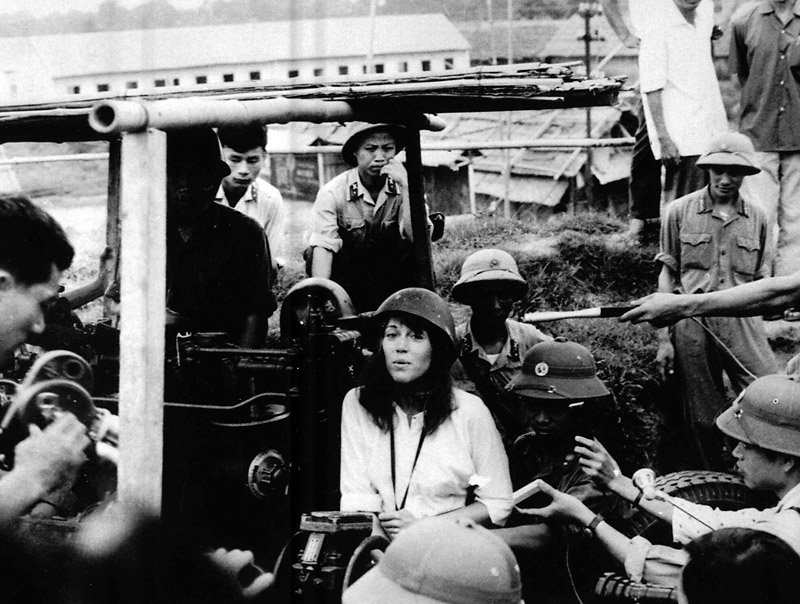
The newly disclosed pages show the RCMP compiled information on talks between Douglas and actress Jane Fonda in 1970 on halting the Vietnam War.
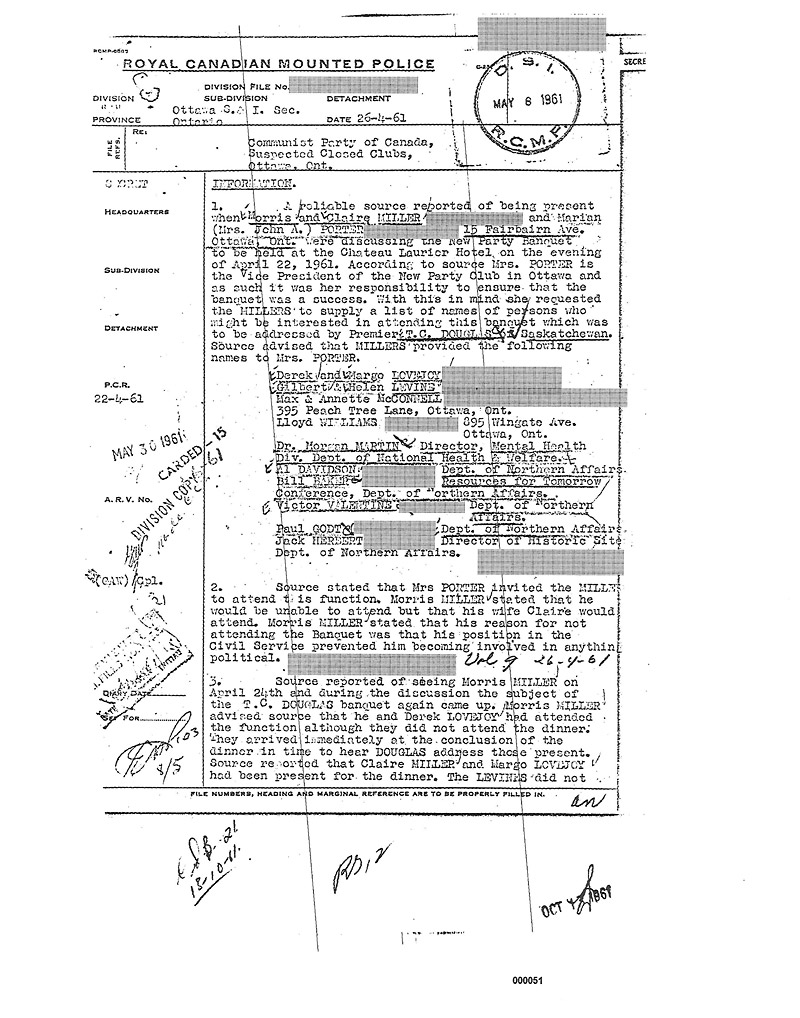
The Mounties were also interested in efforts to create the New Democratic Party in the early 1960s, appearing to equate the fledgling movement with the Communist party.
Douglas had significant ties to the Wheat City, where he attended Brandon College in the 1920s.
It was during a visit by Douglas in the 1970s that Black, who has been active with the NDP, met Douglas and recalls sitting next to him during a banquet.
Black said released intelligence material, such as that which outlines talks between Fonda and Douglas, only serve to strengthen Douglas’s legacy.
"Jane Fonda was correct and everybody else who said that the Americans ought not to be in Vietnam were correct," Black said.
Brandon resident Joe Slomiany was also active with the NDP and also met Douglas.
Slomiany criticized the RCMP for their surveillance of Douglas, describing it as the sort of thing done in Nazi Germany or in the Soviet Union under Stalin.
"This is supposed to be a democratic country," Slomiany said.
» With files from Joan Bryden, The Canadian Press
A look at the life of Tommy Douglas
* Born: Oct. 20, 1904, in Falkirk, Scotland.
* Died: Feb. 24, 1986, of cancer at Ottawa home.
* Youth: Family moved to Canada in 1910, settling in Winnipeg. Douglas left school at 14 to become printer’s apprentice.
* Early career: Baptist minister who preached the social gospel. Became interested in politics upon seeing the hardship of the Great Depression in Saskatchewan.
* Provincial politics: Known for idealism, debating skills and homespun wit. Became leader of Saskatchewan Co-operative Commonwealth Federation (CCF) in 1942, presiding over first socialist government in North America from 1944 to 1961. As premier, ushered in public auto insurance, free hospital care, provincial bill of rights.
* National politics: Chosen first leader of federal New Democratic Party in 1961, serving for 10 years. Retired from politics in 1979. Voted greatest Canadian of all time in 2004 CBC contest.
* Family: Wife Irma and two daughters, including actress Shirley Douglas. Grandfather of actor Kiefer Sutherland.
* Quote: ”I was convinced that a democratic socialist movement in Canada was essential if Canada was going to become a civilized society.”– 1971 interview with Canadian Dimension magazine.
» The Canadian Press