
‘Mr. Big’ sting used to crack cold case
Advertisement
Read this article for free:
or
Already have an account? Log in here »
We need your support!
Local journalism needs your support!
As we navigate through unprecedented times, our journalists are working harder than ever to bring you the latest local updates to keep you safe and informed.
Now, more than ever, we need your support.
Starting at $15.99 plus taxes every four weeks you can access your Brandon Sun online and full access to all content as it appears on our website.
Subscribe Nowor call circulation directly at (204) 727-0527.
Your pledge helps to ensure we provide the news that matters most to your community!
To continue reading, please subscribe:
Add Brandon Sun access to your Free Press subscription for only an additional
$1 for the first 4 weeks*
*Your next subscription payment will increase by $1.00 and you will be charged $20.00 plus GST for four weeks. After four weeks, your payment will increase to $24.00 plus GST every four weeks.
Read unlimited articles for free today:
or
Already have an account? Log in here »
Hey there, time traveller!
This article was published 03/03/2011 (5512 days ago), so information in it may no longer be current.
WINNIPEG — It was a cold case mystery with no end in sight — until RCMP came along with a controversial plan to catch a killer.
Police used a "Mr. Big" undercover sting operation to break open the case of a missing Manitoba carnival worker whose body has never been found.
Derek Kembel, 24, was last seen leaving a Dauphin bar on Feb. 28, 2003. On Tuesday, the RCMP historical case unit charged Christopher Robin Shewchuk, 29, with first-degree murder and his father, Thomas Ronald Shewchuk, 60, with accessory to murder after the fact.
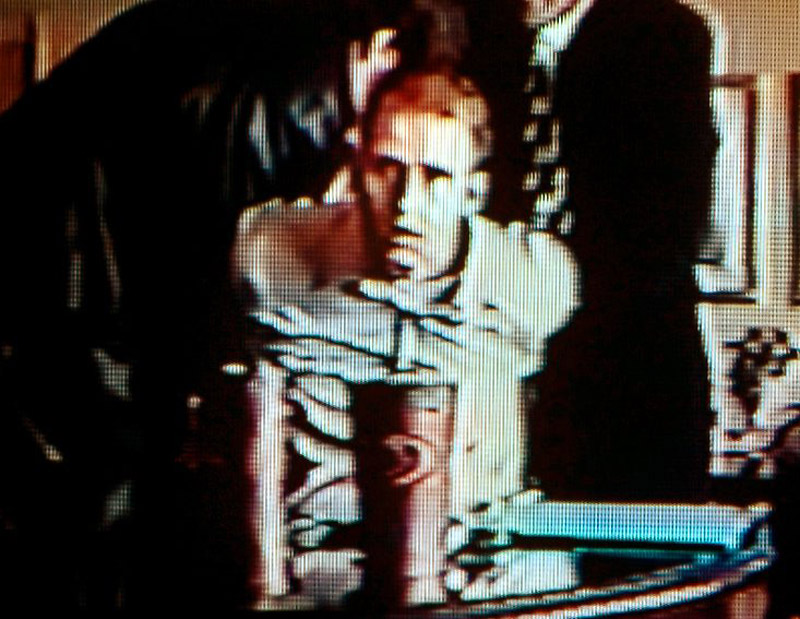
In a Mr. Big sting, the plan is simple: Gain the trust of your main target by surrounding him with undercover police officers playing the roles of shady members of a criminal organization.
Eventually, police hope to make the suspect comfortable enough that he confesses to his crime, believing it’s the only way to climb the corporate ladder to success.
Police see the stings as a costly last resort when all else has failed to bring a suspected killer to justice.
More than 100 of these undercover stings have reportedly been conducted in Canada since the early 1990s — including several prominent ones here in Manitoba.
Undercover operations are banned in the United States and Britain on the grounds they can lead to entrapment of suspects, false confessions and wrongful convictions. Many defence lawyers have called for a similar move in Canada.
Sources said Wednesday that Christopher Shewchuk was the target of this particular operation, which began last year and lasted several months. The information gleaned during the sting led to the arrest of both him and his father.
Kembel’s body has still not been found, but sources say police are planning to begin searching a specific area once the snow begins to melt.
Shewchuk’s lawyer, Greg Brodsky, says he expects the RCMP methods in this case to come under scrutiny.
"We’re going to back to the basic question of if you pay someone to whisper a secret that you promise not to tell anyone else, is it true?" Brodsky said.
Brodsky said a key issue may be whether police do find Kembel’s body or obtained information that "only the killer could know." He was involved in one of the province’s most memorable Mr. Big cases which also involved the search for both the killer and victim.
Erin Chorney, 18, disappeared in April 2002. As time passed, it became apparent she was likely the victim of foul play.
Brandon police focused on Michael Bridges, who had been charged weeks earlier with assaulting Chorney and admitted being the last person to see her.
But he maintained his innocence and police were unable to find any direct evidence tying him to a crime.
The RCMP were called in to assist in the fall of 2003, and they brought in Mr. Big. Over the course of several months, Bridges was duped into believing he was part of a powerful organized crime group in which the key to advancement was confessing his past sins to the mysterious, all-knowing "Boss."
The grand finale came in February 2004 when, as a hidden video camera rolled, Bridges calmly explained how he choked Chorney unconscious, then decided to "finish her off."
Bridges said he cut the cord off his mother’s hair dryer and used it to strangle Chorney. When she didn’t die, he submerged her head in his bathtub for nearly 20 minutes.
He said he then scouted out a location in the graveyard behind his home to hide her body. He dug up a fresh grave and put her body inside and covered it up, believing his secret would also remain buried.
Bridges was convicted in June 2005 of first-degree murder following a jury trial.
Brodsky challenged the sting operation at the time and claimed police induced Bridges to tell them an exaggerated tale.
Queen’s Bench Justice John Menzies rejected the bid and said RCMP made painstaking efforts to ensure they didn’t elicit a false confession from Bridges.
The Manitoba Court of Appeal later upheld the verdict.
Both Shewchuks are being held in custody without bail. The allegations have not been proven and both men are presumed innocent.