
Past, present and future of liquor in Manitoba
Advertisement
Read this article for free:
or
Already have an account? Log in here »
We need your support!
Local journalism needs your support!
As we navigate through unprecedented times, our journalists are working harder than ever to bring you the latest local updates to keep you safe and informed.
Now, more than ever, we need your support.
Starting at $15.99 plus taxes every four weeks you can access your Brandon Sun online and full access to all content as it appears on our website.
Subscribe Nowor call circulation directly at (204) 727-0527.
Your pledge helps to ensure we provide the news that matters most to your community!
To continue reading, please subscribe:
Add Brandon Sun access to your Free Press subscription for only an additional
$1 for the first 4 weeks*
*Your next subscription payment will increase by $1.00 and you will be charged $20.00 plus GST for four weeks. After four weeks, your payment will increase to $24.00 plus GST every four weeks.
Read unlimited articles for free today:
or
Already have an account? Log in here »
Hey there, time traveller!
This article was published 20/05/2011 (5445 days ago), so information in it may no longer be current.
Liquor law timeline
Aug. 7, 1923: The province creates the Manitoba Liquor Control Commission, and it sold its first liquor six weeks later.
1956: Home delivery service begins: For 35 cents Manitobans can have up to 12 bottles of liquor or wine delivered.
1968: Liquor Control Act amended to allow people to make homemade wine and serve alcohol with restaurant meals on Sundays.
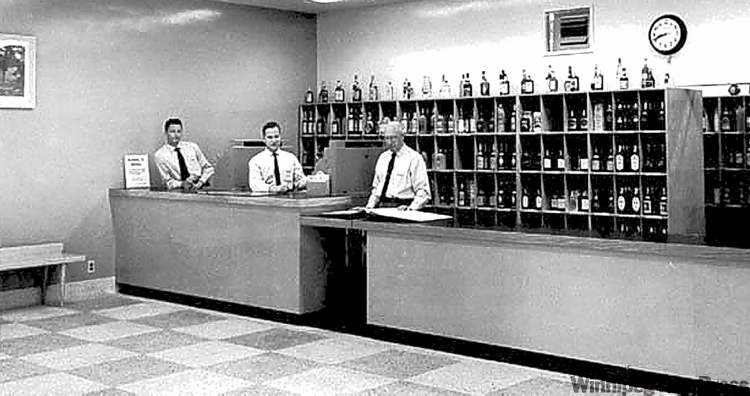
Late 1960s: MLCC begins conversion of outlets from having people mark down a product on a piece of paper and hand it to a clerk, who would get the bottle, to a self-serve system.
1970: Amendment allows Manitobans to dance where liquor is sold.
1975: Act amended so women can handle, serve and sell beer in beer parlours.
1979: Liquor can be sold in a beverage or cocktail room on Sundays, Thanksgiving Day and Christmas Day, but only with meals.
1982: Amendment ends MLCC control of prices in beer parlours.
1984: Amendment allows non-Canadian citizens to apply for liquor licences.
1993: Amendment allows privately owned specialty wine stores.
2001: Amendment allows the sale of alcohol on Sundays in Liquor Marts, cabarets, beverage rooms and non-sport private clubs. As well, the province sets the minimum price for alcoholic drinks at $2.25.
2005: Diners can take home a re-corked wine that had been served with a meal from a restaurant.
2007: Patrons can carry their drinks into washrooms.
2011: Province proposes several amendments, including allowing Liquor Mart boutiques in grocery stores and the ability to bring your own wine to a restaurant.
Changes to selling liquor
Brew pubs would be recognized in the Liquor Control Act and be able to sell product at Liquor Marts.
MLCC would pilot 10 boutique-style stores, with five of them in Winnipeg grocery stores and one in the new Richardson International Airport terminal.
Restaurant patrons can bring their own wine to licensed premises with only the staff able to open it. The restaurant would be allowed to charge a corkage fee.
Some beer vendors will be able to sell coolers and ciders.
Local breweries and distilleries, including Fort Garry Brewing, Diageo’s Crown Royal distillery in Gimli and Killarney’s Rigby Orchards fruit winery, would be allowed to set up visitors’ centres, complete with free samples and the ability to sell their product on site.
Permit events will be able to close at 2 a.m., the same time as licensed establishments.
MLCC Liquor Marts will be able to sell non-liquor products, such as bar ware, gift boxes, wine magazines but also promotional materials, including hats and T-shirts for events such as Folklorama, the Grey Cup and curling events.
Measures for public safety
Three new liquor inspectors will be hired and a satellite inspections office created on Main Street to allow for an increase in inspections downtown.
MLCC will work with Manitoba Justice to increase fines for public disorder related to alcohol consumption to $655.65 from the $292.65. The fine would be the highest in the country.
Making bar owners not only responsible for disorderly patrons inside their premises but also making them responsible for conduct and damage outside and in the immediate area of the premises.
Measures to crack down on false age identification.
Liquor Marts would be able to sell low-alcohol beverages and taxi-fare cards.
MLCC will conduct a study on the use of energy drinks mixed with alcohol.
MLCC will install defibrillators in all 50 Liquor Marts by early summer.
Action against underage drinking
Restrict minors from possessing alcohol in licensed premises and permit events.
Anyone buying a keg of beer would have to register identification so if police catch minors drinking from one at a house or bush party, they can trace who bought it.
MLCC will work with parent councils at schools to promote Be the Influence program to encourage adults to talk to their children about alcohol.
Reducing red tape
People will be able to apply online for social permits by next year.
Liquor licences could be renewed for three years instead of annually.
Liquor-licence applicants would no longer have to advertise in the Manitoba Gazette, just the newspaper in their municipality, as well as notices posted at the premises and on the MLCC website.
Licensees would only have to keep 80 per cent of profit instead of the current 90 per cent.
Eliminate the requirement to send in quarterly food-to-liquor reports, which MLCC admits provided limited or no value and just have licensees keep the records so they could be examined if needed.
MLCC, instead of the provincial cabinet, would make licensing decisions in provincial parks.
— Source: Manitoba Liquor Control Commission and provincial government
Related Articles
Mayor hopeful about brew pub following gov't move
Advertisement Advertise With Us
Advertisement Advertise With Us