
Students, RCA museum help with dig at former PoW camp
Advertisement
Read this article for free:
or
Already have an account? Log in here »
We need your support!
Local journalism needs your support!
As we navigate through unprecedented times, our journalists are working harder than ever to bring you the latest local updates to keep you safe and informed.
Now, more than ever, we need your support.
Starting at $15.99 plus taxes every four weeks you can access your Brandon Sun online and full access to all content as it appears on our website.
Subscribe Nowor call circulation directly at (204) 727-0527.
Your pledge helps to ensure we provide the news that matters most to your community!
To continue reading, please subscribe:
Add Brandon Sun access to your Free Press subscription for only an additional
$1 for the first 4 weeks*
- Enjoy unlimited reading on brandonsun.com
- Read the Brandon Sun E-Edition, our digital replica newspaper
*Your next Free Press subscription payment will increase by $1.00 and you will be charged $20.95 plus GST for four weeks. After four weeks, your payment will increase to $24.95 plus GST every four weeks.
Read unlimited articles for free today:
or
Already have an account? Log in here »
Hey there, time traveller!
This article was published 18/07/2011 (5405 days ago), so information in it may no longer be current.
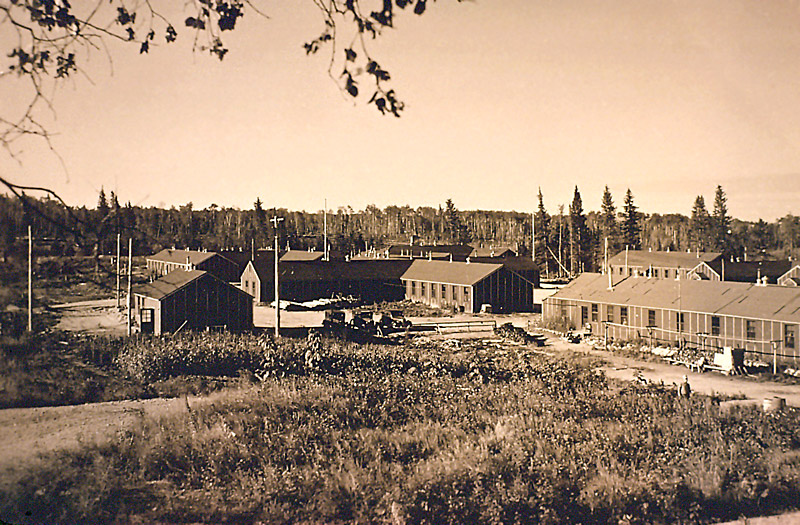
Brandon University and Canada’s National Artillery Museum will join an ongoing archeological dig at the former prisoner of war camp in Riding Mountain National Park later this month.
In conjunction with CFB Shilo’s RCA Museum, BU forensic anthropologist Suyoko Tsukamoto will lead a field school of archaeology students at the park’s former Whitewater German prisoner of war camp starting July 25, as part of a larger archeological dig conducted by Stanford University historical archaeologist Adrian Myers.
"Not only do our students get to work on an interesting project … it will make immediate contributions to our history," Tsukamoto told the Sun.
At the same time, museum director Marc George says museum staff will conduct historic research on the camp to complement the archeological dig. And he’s asking the public’s help to fill in some of the information gaps.
"We are going to conduct our own research — artifact gathering above ground," George said.
From October 1943 to October 1945, the PoW camp held 450 German Afrika Korps soldiers who were captured in Egypt after the Second Battle of El-Alamein. Whitewater was one of 40 PoW camps across Canada during the Second World War, which interned 37,000 prisoners in total.
The word "archeology" generally conjures up images of exotic locations and ancient civilizations. While it may seem unusual to excavate such a relatively recent site, Tsukamoto says this kind of archeology allows historians to improve their knowledge of recently recorded events.
"It’s historic archeology, which usually implies that we have some sort of written record. But just because we have a written record, it doesn’t mean we have a written record of everything."
This is the third season of Whitewater excavations by Myers’ team. When Tsukamoto approached Myers last summer about partnering with his team and allowing BU to hold a field school at the site, she said Myers was "quite agreeable."
As a result, Myers gets extra help at the site, and the students get experience.
"From my perspective it’s great," Myers said. "I’m getting essentially volunteers working on my project and putting labour into the research."
Much of Myers’ research is to piece together how the PoWs lived. Detritus left behind by the PoWs has already been found a metre below the surface. The archeological dig is recording features and recovering artifacts lost and discarded by the German soldiers.
Already there have been some interesting results.
Since September, Brandon University students have been processing a large collection of bones that were taken from refuse heaps at the site last summer. Students put in more than 200 hours examining and cataloguing more than 3,000 bone fragments.
The initial assumption was that the prisoners would have been fed various species of animals that are found in Riding Mountain, such as moose or deer, which are found in the university’s comparative collection.
Much to Tsukamoto’s surprise, the prisoners had a largely domestic diet.
"These guys ate a lot of pig," she said. "I thought for sure we’d have some other species."
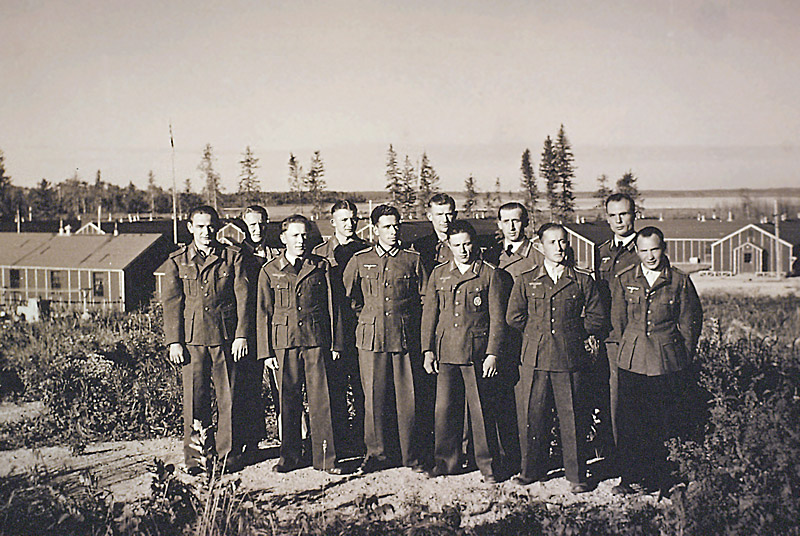
BU’s participation has been sponsored by the RCA Museum, which has taken a particular interest in the personal stories of the prisoners, and the men who guarded them.
The guards were essentially veterans of the First World War who were either too old or infirm to take part in the Second World War. While a select few were posted to locations in the Caribbean or England, the vast majority served in Canada as guards in PoW camps and other sites considered vital to the government.
"Our mandate is to tell the story of Manitoba military history and a large number of veteran guards were members of the artillery … Their story is not that well known," George said.
George hopes that someone with intact historic items in their possession from the camp — which could be compared to the unearthed artifacts at the site — would either donated them or allow them to be examined. He’s looking for anything of note, from uniforms and pictures to tin cans and bottles.
"If people are willing to donate things or let us see them, we can use them as examples of things that come out of the ground."
But it’s the personal letters between guards, prisoners and their families and friends that George truly hopes to find in the process.
"We would so love to be given copies of that correspondence. There has to be that information out there."
Down the road, George hopes to run a temporary PoW exhibit featuring these artifacts — those found during the dig and any donated or loaned items — once Myers completes his work.
Museum staff members will also be participating at the Riding Mountain site to help them become more familiar with the archeological process and help with the BU field school.
Opportunities are available for interested members of the public who want to visit the site and try their hands at excavation for a day.
For more information about BU’s field school and the Whitewater project, go to: brandonu.ca/archaeology-field-school or whitewaterpowcamp.com.