
Dry conditions major concern for farmers
Advertisement
Read this article for free:
or
Already have an account? Log in here »
We need your support!
Local journalism needs your support!
As we navigate through unprecedented times, our journalists are working harder than ever to bring you the latest local updates to keep you safe and informed.
Now, more than ever, we need your support.
Starting at $15.99 plus taxes every four weeks you can access your Brandon Sun online and full access to all content as it appears on our website.
Subscribe Nowor call circulation directly at (204) 727-0527.
Your pledge helps to ensure we provide the news that matters most to your community!
To continue reading, please subscribe:
Add Brandon Sun access to your Free Press subscription for only an additional
$1 for the first 4 weeks*
*Your next subscription payment will increase by $1.00 and you will be charged $20.00 plus GST for four weeks. After four weeks, your payment will increase to $24.00 plus GST every four weeks.
Read unlimited articles for free today:
or
Already have an account? Log in here »
Hey there, time traveller!
This article was published 24/09/2012 (4940 days ago), so information in it may no longer be current.
As trees and bushes begin to turn a thousand shades of autumn in preparation for winter, grass, too, has turned.
Hot and dry conditions has turned grass, that can typically stay lush and green well into October, into a stiff, crunchy brown.
“We haven’t received any rain for six weeks, if not longer,” former Reeve of the RM of Harrison Anthony Kowalchuk said. “We never had a steady rain through the whole harvest. We got one rain that was a tenth or three-tenths in some spots, but that was the extent of our rain.”
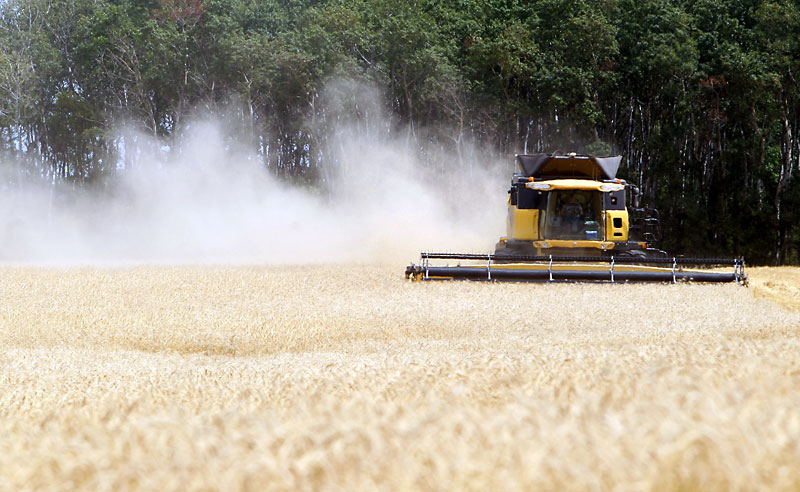
It’s a stark contrast to 12 months ago when most of the province was saturated from heavy rains and flooding. It’s also impacted producers with livestock as second cuts of hay have been below average in many areas.
“We’ve done some second cuts and what was done around Oakburn was maybe a bale an acre,” Kowalchuk said.
It also has an impact on the decisions farmers make heading into fall and winter. Last year, more winter cereals were planted to take advantage of the plentiful moisture. This year, Kowalchuk expects most farmers will be on the equipment trenching and ditching areas that are usually unworkable due to moisture.
“It seems more people are shying away from winter wheat,” Kowalchuk said. “Being so dry the guys are eager to hook up to their scrapers and do some ditching.”
Don Yanick, who farms near Shoal Lake, has seen some producers seeding winter wheat and knows those crops will have trouble emerging if the moisture stays away.
“(The farmers planting winter wheat) are hoping it’s going to rain otherwise it won’t germinate,” Yanick said. “Some fields seem to have a little bit of moisture, but there won’t be a lot of fall work done until we get some moisture.”
He said rains were spotty in the area and that the last good rain his farmland received was in June, turning what was expected to be a bumper crop into a crop that didn’t finish and his yielded average to below average.
Yanick also understands the importance of getting a healthy supply of moisture in the form of snow this winter, but he said it won’t change his practices come spring.
“There aren’t any grains that deal well with drought and until they come up with one we will stick to our regular rotation and try to get it in the ground as soon as we could to take advantage of the moisture that is there,” Yanick said.
While droughts in the United States’ Midwest and parts of Eastern Canada have been a boon for local producers in the form of higher commodity prices, if the rains stay away producers are bound to get leary.
“We don’t have enough sub-soil moisture right now and it is a concern, but there is nothing we can really do about it,” Yanick said. “If we don’t get enough moisture this winter, it will be a poor spring when we start sowing.”
» ctweed@brandonsun.com