
Gone Gardenin – A reluctant foray into world of exotic disposable plants
Advertisement
Read this article for free:
or
Already have an account? Log in here »
We need your support!
Local journalism needs your support!
As we navigate through unprecedented times, our journalists are working harder than ever to bring you the latest local updates to keep you safe and informed.
Now, more than ever, we need your support.
Starting at $15.99 plus taxes every four weeks you can access your Brandon Sun online and full access to all content as it appears on our website.
Subscribe Nowor call circulation directly at (204) 727-0527.
Your pledge helps to ensure we provide the news that matters most to your community!
To continue reading, please subscribe:
Add Brandon Sun access to your Free Press subscription for only an additional
$1 for the first 4 weeks*
*Your next subscription payment will increase by $1.00 and you will be charged $20.00 plus GST for four weeks. After four weeks, your payment will increase to $24.00 plus GST every four weeks.
Read unlimited articles for free today:
or
Already have an account? Log in here »
Hey there, time traveller!
This article was published 28/03/2013 (4690 days ago), so information in it may no longer be current.
I was reading an article the other day about trends in landscaping and one of the trends, apparently, is to use large tropical foliage plants in the outdoor landscape.
This practice ties in with the trend of creating exotic garden rooms and outdoor living spaces that are an extension of indoor spaces and provide exotic, tropical-like settings for entertaining outdoors.
I have actually employed this technique to a small degree in my garden over the last couple of years as I have exhibited two large potted agaves in the front driveway, positioned on either end of a garden bench. The plants do indeed add an exotic, tropical touch to the driveway area.
Unlike the gardeners mentioned in the article, however, I cannot bear to just use the plants for one summer season and then watch them freeze in the fall.
I winter the agave plants in my sunroom — although this winter I asked a local greenhouse operator to winter them for me, as they are getting so large that they occupy too much space in my sunroom and I can barely move around in it to care for my other plants.
Large foliage plants are not actually that expensive and if you find them on sale they will not break the gardening budget — I must admit that I obtained my agaves at a garage sale for $8 each!
Like so many very tender perennials and basket stuffers that are now commonly used in our outdoor gardens, these large foliage plants can be, as they say, “treated like annuals”.
The idea of allowing so many plants to succumb to frost and not be saved in the fall is contrary to every gardening instinct that I have, but I realize that I am old-fashioned and out of step with the modern way of thinking.
So, here goes — I am going to embrace this gardening trend … somewhat.
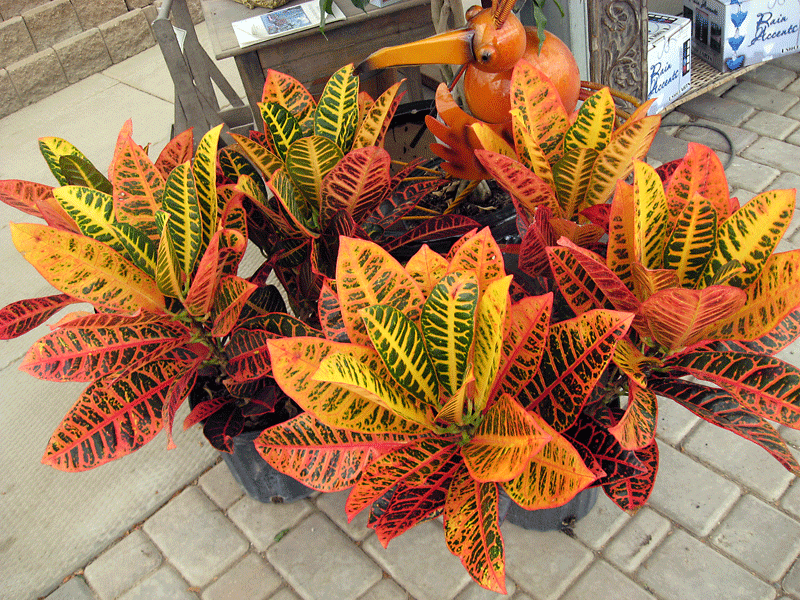
One exotic foliage plant that would be useful for such a practice is the croton, and I just might buy one and use it on the patio this summer. We will see whether it moves into the sunroom in the fall. A croton would certainly add a tropical touch to any outdoor room.
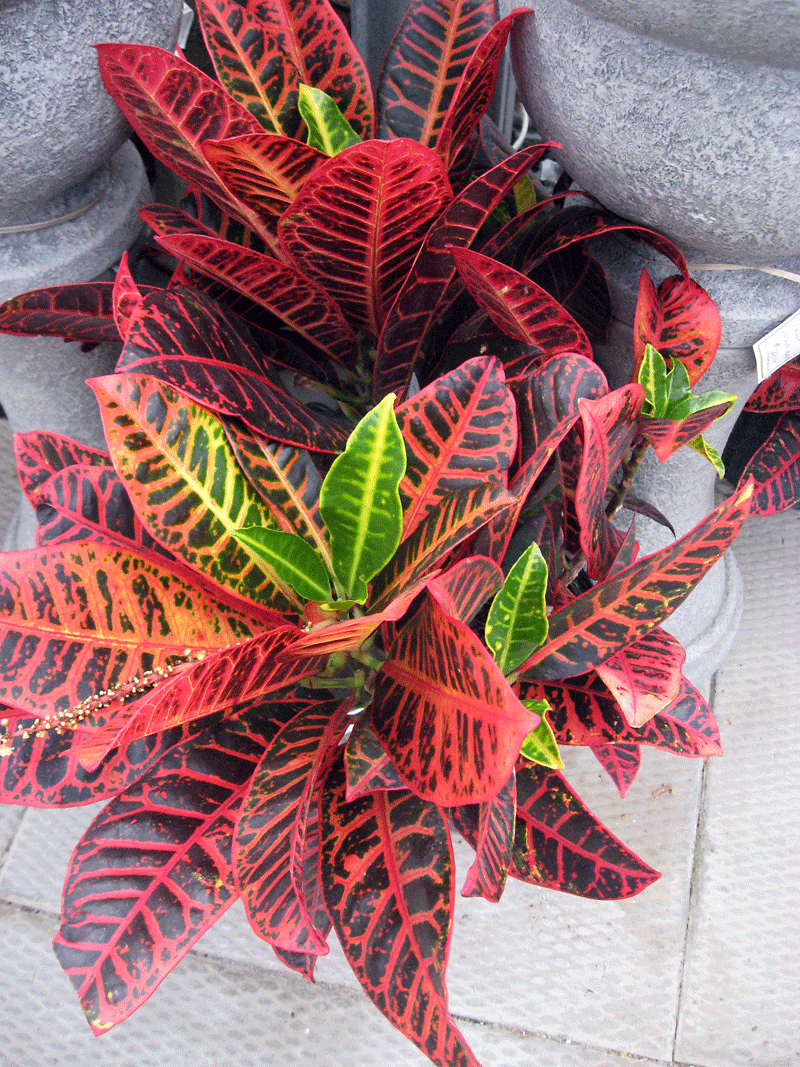
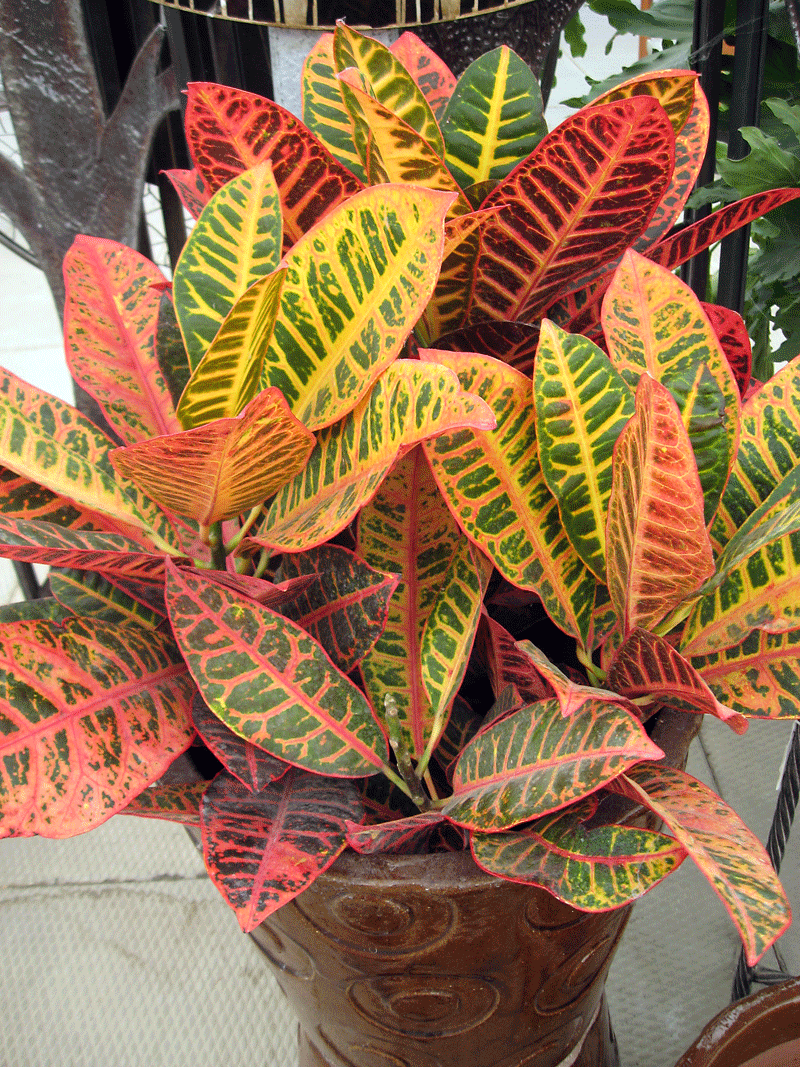
Crotons have brightly coloured, exotic looking foliage; the variegated foliage is comprised of stiff leaves that have a wax-like feel, which makes the plant ideal for outdoor use because the leaves are tough and will not be easily damaged by wind or rain.
There are lots of reds, oranges, and gold in the variegation, which fits into the use of hot colours, another recent trend in gardening. The colours are brighter and the variegation more exotic in higher light levels.
Crotons like warmth and moisture, so put a croton outdoors only after the temperatures are reliably warm — above 15 C. degrees at night. The soil must be kept constantly moist and should not be allowed to dry out. If a croton gets too dry or too cool, it will drop leaves.
On the other hand, the plant will not do well if the soil is sodden — browning around the edges of the leaves will signal that the soil is too wet. The best way to deal with water issues is to ensure regular watering while allowing good drainage of excess water and to use a large pot so that the soil will not dry out too quickly.
Crotons also like high humidity and so the use of a pebble tray will increase the humidity around the foliage — be sure the pot doesn’t sit in the water in the pebble tray. During periods of low humidity, it is a good idea to give the plant a spray with the garden hose, both to add water to the air but also to wash off any dust on the leaves.
Crotons are susceptible to spider mites, which also flourish during periods of low humidity, so regular spraying with the garden hose will deter these pests. Regular inspection of the plant will prevent the pests from getting a foothold; defensive measures can be taken if they are observed during one of these examinations.
Although a croton is not an easy care plant, with some TLC it will certainly perform the task of supplying exotic colour to an outdoor space in the summer garden.
Even if it is simply used for the season and then allowed to succumb to frost with the other annuals, your croton will have earned its keep by adding exotic foliage to your outdoor living space … or you just might decide to add it to your indoor landscape for the winter.
Albert Parsons is a consultant for garden design and landscaping who lives in Minnedosa.
» communitynews@brandonsun.com