Niece feared retaliation if she reported McKay to authorities, inquiry hears
Advertisement
Read this article for free:
or
Already have an account? Log in here »
We need your support!
Local journalism needs your support!
As we navigate through unprecedented times, our journalists are working harder than ever to bring you the latest local updates to keep you safe and informed.
Now, more than ever, we need your support.
Starting at $15.99 plus taxes every four weeks you can access your Brandon Sun online and full access to all content as it appears on our website.
Subscribe Nowor call circulation directly at (204) 727-0527.
Your pledge helps to ensure we provide the news that matters most to your community!
To continue reading, please subscribe:
Add Brandon Sun access to your Free Press subscription for only an additional
$1 for the first 4 weeks*
*Your next subscription payment will increase by $1.00 and you will be charged $20.00 plus GST for four weeks. After four weeks, your payment will increase to $24.00 plus GST every four weeks.
Read unlimited articles for free today:
or
Already have an account? Log in here »
Hey there, time traveller!
This article was published 18/04/2013 (4735 days ago), so information in it may no longer be current.
When Alison Kakewash found Phoenix Sinclair shut away in a dark room wearing nothing but panties and a blanket over her head, covered with either bruises or dirt, she asked her uncle Karl Wesley McKay why.
“She was a bad little girl from what he told me,” the Fisher River First Nation woman, overcome with emotion, told the inquiry into Phoenix’s death. The probe is trying to find out how the little girl in and out of care her whole short life fell through Manitoba’s child-welfare safety net. The inquiry is also tasked with finding out how her June 2005 death wasn’t discovered until March 2006.
Kakewash said she was 19 the summer of 2005 with a baby boy of her own when she went to her uncle’s rented home in Fisher River for “play dates” with the toddler McKay had with Samantha Kematch, Phoenix’s mother.
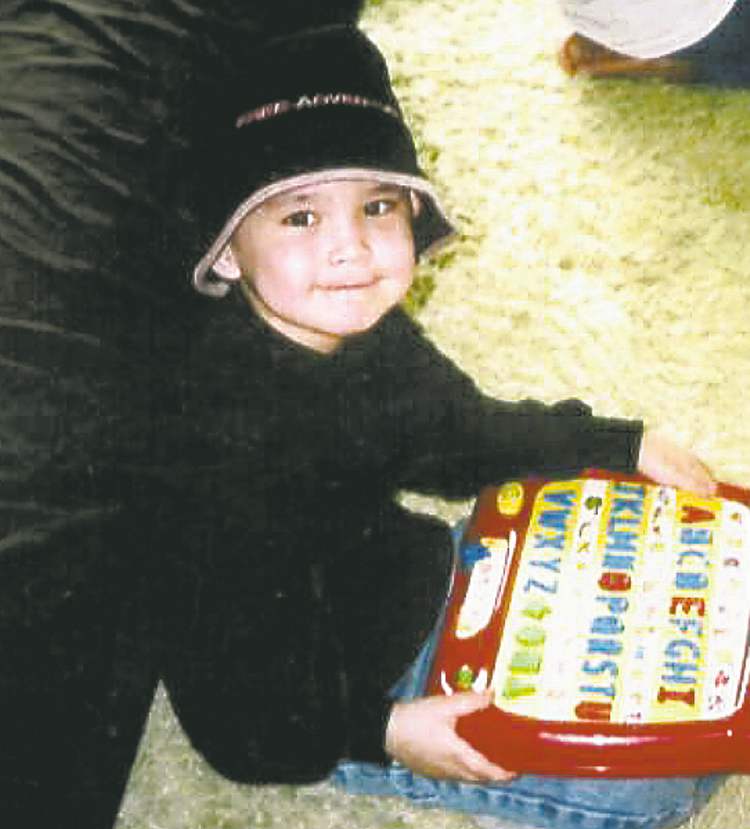
On one visit, she said five-year-old Phoenix accidently knocked over one of the toddlers. McKay grabbed her by the arm, called her a “f_cking bitch” and shoved her in the same darkened room that Kakewash later found Phoenix with a blanket over her head and unable or unwilling to speak, Kakewash recalled.
Kakewash didn’t report seeing Phoenix verbally or physically abused to Child and Family Services but told her mom, McKay’s sister-in-law. Her mom, who died in 2006, said McKay was a “pervert” and had warned her earlier not to go there, said Kakewash. She testified that she knew McKay was “mean and wicked” but she and her mom feared retaliation if they reported him to child welfare authorities. Still, Kakewash returned to McKay’s house several days after seeing Phoenix shut away but it was a short, strange visit.
She said she got a bad feeling — “like as if Wesley killed somebody” — before she knocked on the back door and went inside.
She saw dried drops of blood on the landing. She saw Kematch weeping for the first time. The normally sedentary McKay was running up and down the basement stairs, cleaning. And Phoenix was no longer living there. McKay said she’d been sent to live with her dad because she was “a bad girl.” Kakewash said she believed him.
Later that summer, when Kakewash’s sister went to live at McKay’s house, she went there to watch a movie with them. It was about a stepson being killed. McKay suggested putting pepper on the grave to make it harder to detect, she recalled.
Kakewash didn’t report what she saw that summer to the RCMP until after she learned that McKay’s stepdaughter Phoenix had been killed.
“I cried,” Kakewash said. “I was shocked. She was only five years old — a really innocent girl… I never thought he would do something like that.”
McKay and Kematch were found guilty in 2008 of the first-degree murder of Phoenix Sinclair.