
Addictions fuel Thompson’s crime woes
Getting sober a struggle up north
Advertisement
Read this article for free:
or
Already have an account? Log in here »
We need your support!
Local journalism needs your support!
As we navigate through unprecedented times, our journalists are working harder than ever to bring you the latest local updates to keep you safe and informed.
Now, more than ever, we need your support.
Starting at $15.99 plus taxes every four weeks you can access your Brandon Sun online and full access to all content as it appears on our website.
Subscribe Nowor call circulation directly at (204) 727-0527.
Your pledge helps to ensure we provide the news that matters most to your community!
To continue reading, please subscribe:
Add Brandon Sun access to your Free Press subscription for only an additional
$1 for the first 4 weeks*
- Enjoy unlimited reading on brandonsun.com
- Read the Brandon Sun E-Edition, our digital replica newspaper
*Your next Free Press subscription payment will increase by $1.00 and you will be charged $20.95 plus GST for four weeks. After four weeks, your payment will increase to $24.95 plus GST every four weeks.
Read unlimited articles for free today:
or
Already have an account? Log in here »
Hey there, time traveller!
This article was published 30/07/2013 (4832 days ago), so information in it may no longer be current.
THOMPSON — It is the engine that is driving this community’s crime rate to troubling heights. Yet reducing drug and alcohol addiction — and the scores of social ills that come with it — is certainly no easy task.
John Donovan knows that better than anyone. He grew up with an alcoholic father who would go on lengthy blackout-inducing benders. As an adult, Donovan began working with Thompson teens at the local high school, both as a counsellor and vice-principal.
And now, as director of the northern region Addictions Foundation of Manitoba, he is seeing some of his former students, neighbours and even friends struggling to stay clean and sober. Or, in some cases, alive.p
“Many of these people are asking for that. They want sobriety. They want out of the drunken lifestyle,” said Donovan. He hopes some new programs being offered by AFM — specifically a six-bed detox unit opening this fall — will help address the needs of his community.
Currently, the AFM treats about 250 people a year in Thompson. But Donovan admits there are many more who need help. One of the biggest obstacles is dealing with generational addictions. Many people Donovan sees have come from horrific backgrounds. Thompson is a popular destination point for many who grew up on isolated, troubled First Nations communities. Approximately 40 per cent of local citizens are aboriginal, the highest rate of any city in Canada.
“The trauma is phenomenal. Some of these people have lost five, 10, 15 family members. Some haven’t been sober in more than a year. When they do sober up, they’re confronted with these demons.”
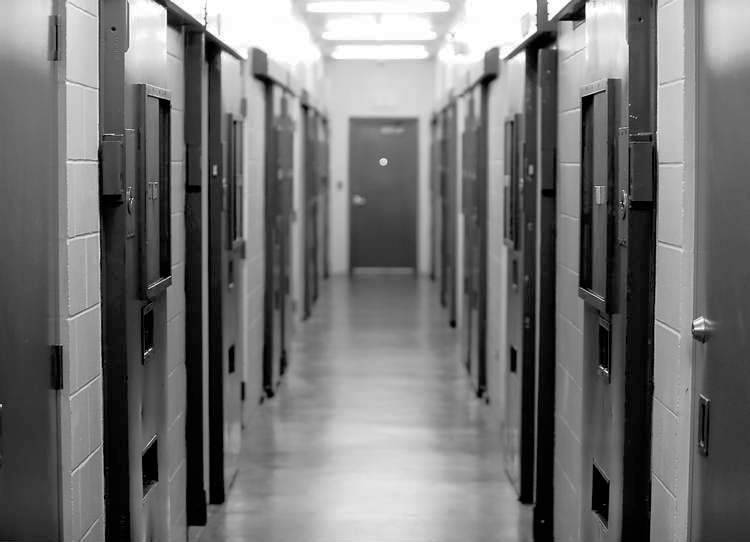
The Free Press saw the problem first-hand during a recent visit to Thompson, which included a ride-along with the RCMP. There is no stand-alone detox unit, like the Main Street Project, so many addicts and drunks end up sleeping on a regular basis in the jam-packed concrete cells of the local police detachment.
“The amount of police work going into this problem is incredible,” said Donovan. And unlike other cities with similar challenges, the small size of Thompson makes it impossible not to notice, especially when the sun sets.
“It can be an eyesore for many. But maybe it’s a good thing people notice it,” said Donovan. “The community, unfortunately, doesn’t have the same level of understanding or compassion. I wish people would engage more to understand their plight.”
And it’s not just those on the fringes of society. As the Free Press documented Monday, Thompson has a serious issue with drugs and organized crime bringing harder drugs into the city, such as cocaine. That industry is largely being fuelled by the middle class, including many who earn good wages while working at the local mine.
And whenever you have a high demand for drugs, you’ll always have people competing for their financially lucrative role in the supply chain.
In 2011, Thompson recorded 6,538 crime incidents. Of those, more than half (3,447) were for disturbing the peace, with close to 20 per cent (1,249) being for public mischief. Those are the types of offences which regularly occur when drug and alcohol abuse run high.
The same goes with offences like trafficking, theft, robbery and assault, which have all helped contribute to Thompson being No. 1 in the violent crime index for all but one year since 2008.
“These stats reflect the social issues we’re dealing with. I’ve seen the problem get progressively worse,” said Thompson Mayor Tim Johnston. “The (police) workload is tremendous. None of us can afford to have the RCMP acting as social workers.”
Thompson spends about $300,000 per year on bylaw officers who enforce obvious violations, such as open liquor and underage drinking. But they are barely scratching the surface, Johnston admits.
He wants the provincial government to fund a cadet program in Thompson, which would offset some of the demand currently placed on police officers. He also shares the vision of local RCMP who would like a comprehensive restorative justice facility and remand centre with treatment.
“I don’t think anyone is different in what they look for in life — hope and opportunity. If those things aren’t there, why on Earth should we be surprised with the problems we have with gangs, drugs and addiction?” said Johnston.
Next year, a major expansion project will be completed in Thompson that will see University College of the North (UCN) expand from about 450 students to 900. He hopes that infusion of youth, coupled with the dorm-style housing that goes with it, will slowly begin to change the face of Thompson.
“One of the biggest challenges is changing the perception people have,” said Johnston. “I think it’s an exciting time to be here.”
The Winnipeg Free Press recently visited Thompson, looking at why the city perpetually leads the country in per-capita crime rates. Our series, which began Saturday, is exploring a number of causes, including addiction, gangs, migration from neighbouring communities, homelessness, poverty and a lack of sufficient resources. Today, justice reporter Mike McIntyre documents how fighting addictions is seen as a key.
Saturday: A night out with the RCMP
Monday: Gangs and organized crime
Today: Battling addictions
Wednesday: Homelessness and mental illness
Related Articles
Easy targets for Thompson's crimes
Advertisement Advertise With Us
Advertisement Advertise With Us
History
Updated on Tuesday, July 30, 2013 7:48 AM CDT: adds photo