
‘It should have been me’: scientist in charge of deadly Arctic research mission
Advertisement
Read this article for free:
or
Already have an account? Log in here »
We need your support!
Local journalism needs your support!
As we navigate through unprecedented times, our journalists are working harder than ever to bring you the latest local updates to keep you safe and informed.
Now, more than ever, we need your support.
Starting at $15.99 plus taxes every four weeks you can access your Brandon Sun online and full access to all content as it appears on our website.
Subscribe Nowor call circulation directly at (204) 727-0527.
Your pledge helps to ensure we provide the news that matters most to your community!
To continue reading, please subscribe:
Add Brandon Sun access to your Free Press subscription for only an additional
$1 for the first 4 weeks*
- Enjoy unlimited reading on brandonsun.com
- Read the Brandon Sun E-Edition, our digital replica newspaper
*Your next Free Press subscription payment will increase by $1.00 and you will be charged $20.95 plus GST for four weeks. After four weeks, your payment will increase to $24.95 plus GST every four weeks.
Read unlimited articles for free today:
or
Already have an account? Log in here »
Hey there, time traveller!
This article was published 11/09/2013 (4741 days ago), so information in it may no longer be current.
Renowned University of Manitoba Arctic researcher David Barber believes he could — and maybe even should — have died in a helicopter crash in the frigid waters of the Arctic Ocean Monday night.
He was the scientist in charge, and when he was away from the Arctic, others had to take the risks for him, a saddened Barber said.
As project director, Barber often took that routine helicopter flight to check ice conditions ahead of the research vessel Amundsen.
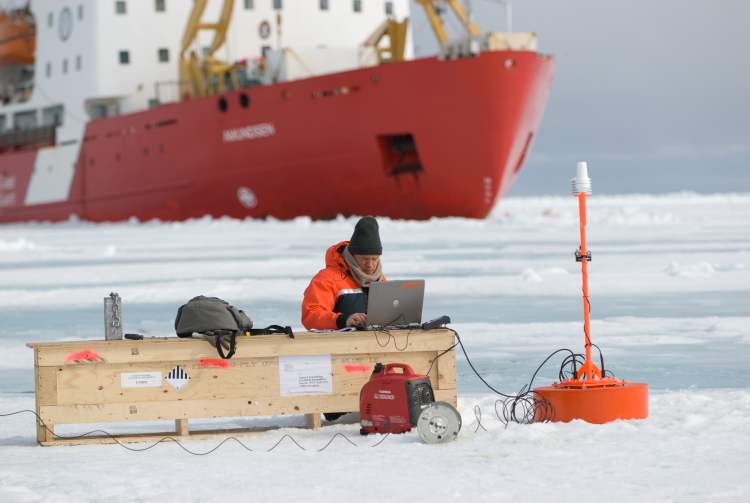
But when Barber rotated off the ship last week, that put U of M colleague and long-time friend Klaus Hochheim on the helicopter, in harm’s way above the unforgiving Arctic waters.
“It should have been me on that helicopter, not him,” an emotional Barber said in an interview on Wednesday.
“I left the ship on Thursday. I was doing the same work” last week as Hochheim was performing Monday, when Hochheim, Canadian Coast Guard pilot Daniel Dube, and Amundsen commander Marc Thibault died.
Two days after the crash, there were still few answers from federal agencies Wednesday about what happened. The men’s bodies were recovered and taken aboard Amundsen, which reached Resolute early Wednesday. Autopsies are to be performed, and a recovery operation to gather wreckage is being organized.
“It was a very routine operation,” said Barber, Canada Research Chair in Arctic Systems Science at U of M. Flying out from the Amundsen, they would have been low over the surface, measuring through lowered sensors the depth of the ice, he said.
“They were on their way back,” 10, maybe 15 minutes out, when their automatic signal stopped, sending the Amundsen at full speed to find them, Barber said.
“There was no emergency call, so something must have happened very quickly,” he said.
Barber said he met Wednesday morning with the three lead researchers at the Centre for Earth Observation Science at U of M, all of whom had talked to their 10 university staff and graduate students among the 40 researchers aboard the Amundsen.
“We’re quite concerned about their mental state right now,” said Barber, who pointed out that clinicians and grief counsellors were flying up to Resolute.
University staff are discussing whether to bring the group home immediately, and whether and when to continue the current research. The Amundsen needs a new helicopter and it can’t sail until it has a new captain, Barber said.
Some people say the Arctic is too dangerous for people, that research should be done through satellites and other technology. Barber rejects that view and he said Hochheim shared that opinion.
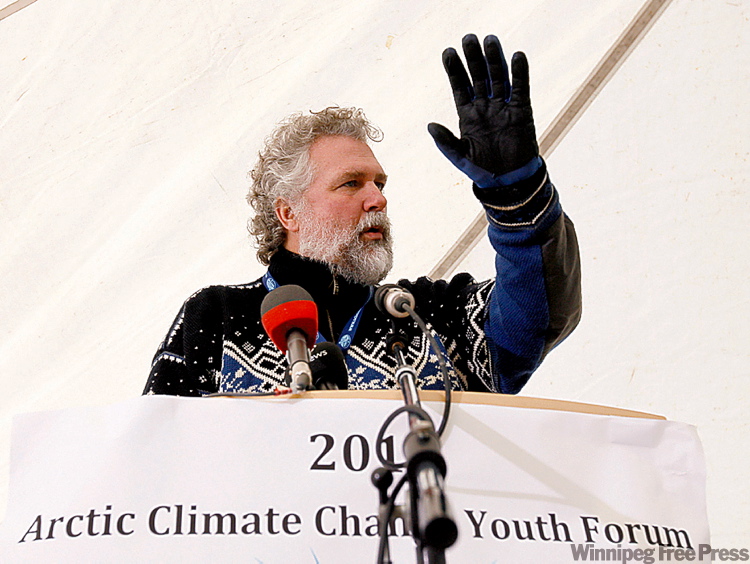
“We represent a group of scientists, we’re boots-on-the-ground people, by definition, that’s in harm’s way,” said Barber. “They’re (tragedies) traumatic when they happen, but they should not deter us.
“We don’t do it for a paycheque, we do it because it makes a difference” to everyone on the planet to know what climate change is doing to the Arctic sea ice, he declared.
Barber and Hochheim go back 30 years, to when Barber hired the Winnipeg-born Hochheim to work in a small environmental consulting firm. Later, Hochheim joined Barber in academia.
“He was very much a specialist in how climate is coupled with sea ice. He was especially a specialist on Hudson Bay.”
Barber said that Hocheim’s work is required reading for his environment students at U of M: “It was seminal on how Hudson Bay works.”
U of M said that flags will be lowered through the end of the week, and the university is discussing how best to memorialize Hochheim. He left a wife and three children.
nick.martin@freepress.mb.ca
History
Updated on Wednesday, September 11, 2013 5:10 PM CDT: Due to incorrect information given to the Free Press, a previous version of this story reported officials had recovered a black box the crash site. In fact, a black box has not been recovered.