
Gone Gardenin’: Easy-care philodendron dependable indoor icon
Advertisement
Read this article for free:
or
Already have an account? Log in here »
We need your support!
Local journalism needs your support!
As we navigate through unprecedented times, our journalists are working harder than ever to bring you the latest local updates to keep you safe and informed.
Now, more than ever, we need your support.
Starting at $15.99 plus taxes every four weeks you can access your Brandon Sun online and full access to all content as it appears on our website.
Subscribe Nowor call circulation directly at (204) 727-0527.
Your pledge helps to ensure we provide the news that matters most to your community!
To continue reading, please subscribe:
Add Brandon Sun access to your Free Press subscription for only an additional
$1 for the first 4 weeks*
*Your next subscription payment will increase by $1.00 and you will be charged $20.00 plus GST for four weeks. After four weeks, your payment will increase to $24.00 plus GST every four weeks.
Read unlimited articles for free today:
or
Already have an account? Log in here »
Hey there, time traveller!
This article was published 21/11/2013 (4521 days ago), so information in it may no longer be current.
The philodendron plant family has always been one of my favourite groups of houseplants. These dependable, easy-care plants are a mainstay of many indoor landscapes and with good reason.
Philodendrons are tropical plants native to tropical America and they are grown mainly for their foliage. Many of them do produce flowers in the form of spathes, but by and large, their foliage is their main attraction.
Most philodendrons are climbing plants that will cling to stakes and trellises. In our climate, these tender tropical plants are normally grown in pots indoors and either a bark stake or a wooden stake covered with some sphagnum moss will allow the plant to climb and produce an attractive specimen.
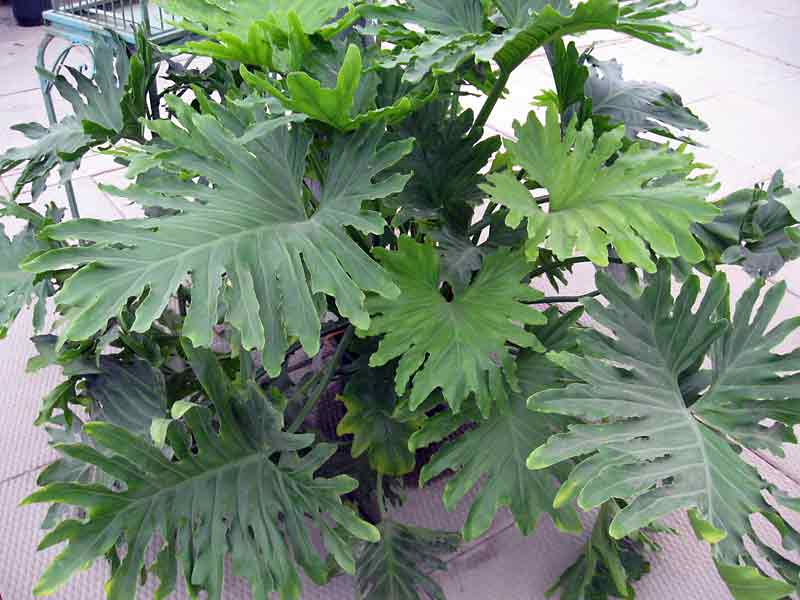
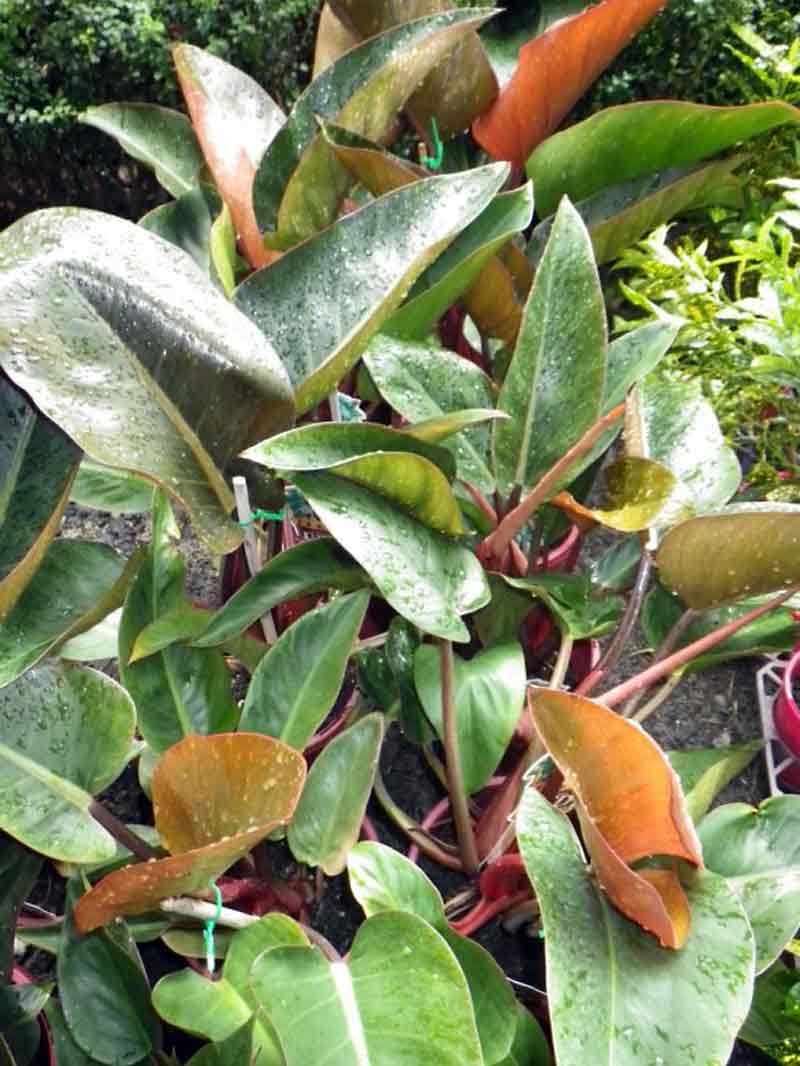
While most philodendron leaves are dark green, some varieties have coppery-red undersides or red veining in their otherwise green leaves. Some philodendrons will produce reddish-coloured new leaves that gradually turn green as they mature.
Coming in a wide range of leaf sizes, a philodendron might have six-centimetre-long leaves or three-metre-long leaves. The leaves might be heart-shaped, arrow-shaped or be oblong or deeply lobed. Sizes also vary greatly from variety to variety.
Philodendrons are good houseplants because they are happy with the temperatures and humidity of the ordinary household. They require relatively low light levels, and although most do best in bright light, few will be happy in direct sun and the leaves might burn or yellow if they are exposed to high light intensity.
Using a loose, well-drained soil in a pot that has excellent drainage, and ensuring that the pot is undersize — philodendrons prefer to be slightly root bound — will ensure the plant is happy. Let the soil almost dry out before watering — the plant will usually tell you when it needs to water by drooping slightly.
A weak solution of soluble fertilizer might be used in the water during the summer but philodendrons are not heavy feeders, and too much fertilizer should not be used. Since philodendrons are foliage plants, the leaves should be kept clean both to improve the health of the plants and to make them as attractive as possible.
The best way to clean the leaves is to wipe them with a clean damp cloth. This cleaning process will also help to deter insects, although insect pests do not usually bother philodendrons.
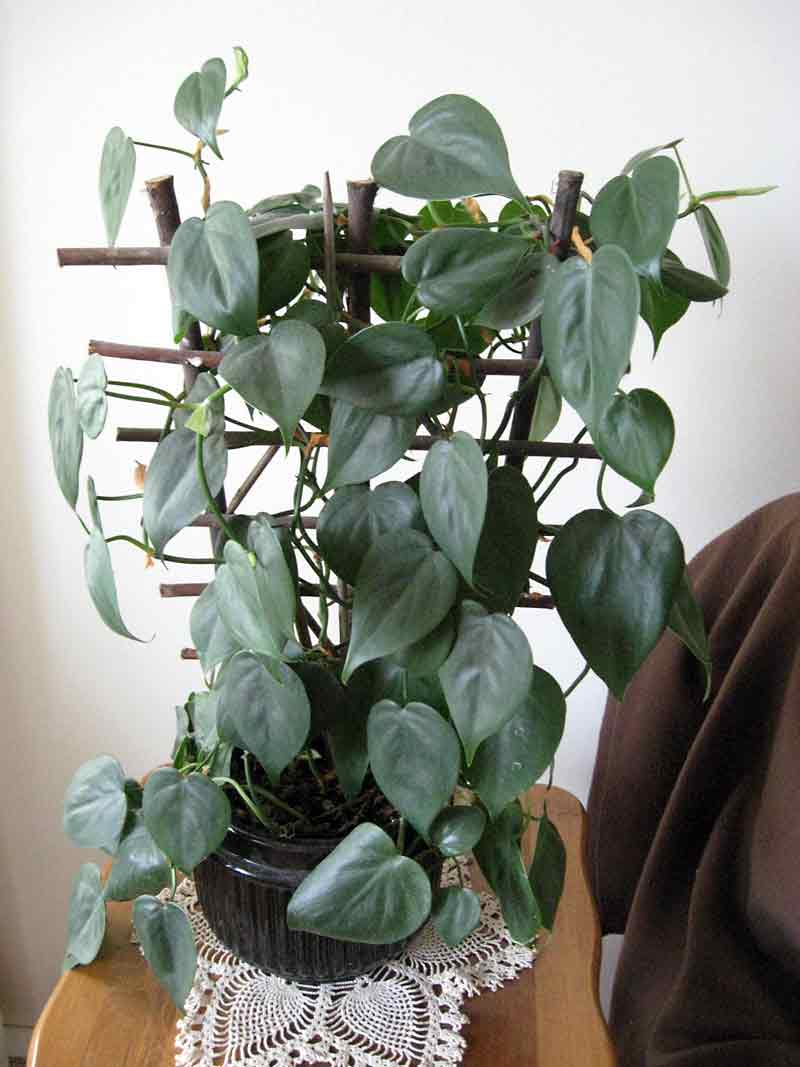
One of my favourite philodendrons is the heart-leafed one. They come in a variety of leaf sizes and they can be trained onto a trellis or stake to create a nice specimen plant for display on a table.
On a recent visit to The Green Spot, I noticed a few rather large and unusual philodendrons — in fact, I had to ask if they were in fact members of this plant family. They turned out to be a variation of the split-leaf philodendron with crinkled leaves that have a very unusual texture, called lacy leaf philodendron.
These plants would be perfect for a large office or big house — they are large plants and although they only get about a metre in height their arching branches create a plant that can be over two meters wide. The plants had a very unusual leaf shape and texture.
I also like some of the reddish-leafed philodendrons, most of which have smooth, oval leaves. These are usually climbing plants and like the lacy leaf philodendron, lend themselves to being used as floor plants because one of these plants grown on a substantially sized trellis will produce a suitably sized plant for floor display.
Smaller philodendrons are useful in dish gardens where they like the increased humidity of being grown adjacent to other plants and because they don’t mind a small root space they are right at home in such an environment.
If you are looking for a dependable foliage plant to add beauty to your landscape this winter, try a philodendron. If your home or office has the space, you might like to try one of the bigger varieties to use as a specimen floor plant. You’ll be happy with the effect.
Albert Parsons is a consultant for garden design and landscaping who lives in Minnedosa.
» communitynews@brandonsun.com