
Battalion reaches milestone at Shilo
Advertisement
Read this article for free:
or
Already have an account? Log in here »
We need your support!
Local journalism needs your support!
As we navigate through unprecedented times, our journalists are working harder than ever to bring you the latest local updates to keep you safe and informed.
Now, more than ever, we need your support.
Starting at $15.99 plus taxes every four weeks you can access your Brandon Sun online and full access to all content as it appears on our website.
Subscribe Nowor call circulation directly at (204) 727-0527.
Your pledge helps to ensure we provide the news that matters most to your community!
To continue reading, please subscribe:
Add Brandon Sun access to your Free Press subscription for only an additional
$1 for the first 4 weeks*
- Enjoy unlimited reading on brandonsun.com
- Read the Brandon Sun E-Edition, our digital replica newspaper
*Your next Free Press subscription payment will increase by $1.00 and you will be charged $20.95 plus GST for four weeks. After four weeks, your payment will increase to $24.95 plus GST every four weeks.
Read unlimited articles for free today:
or
Already have an account? Log in here »
Hey there, time traveller!
This article was published 29/09/2014 (4338 days ago), so information in it may no longer be current.
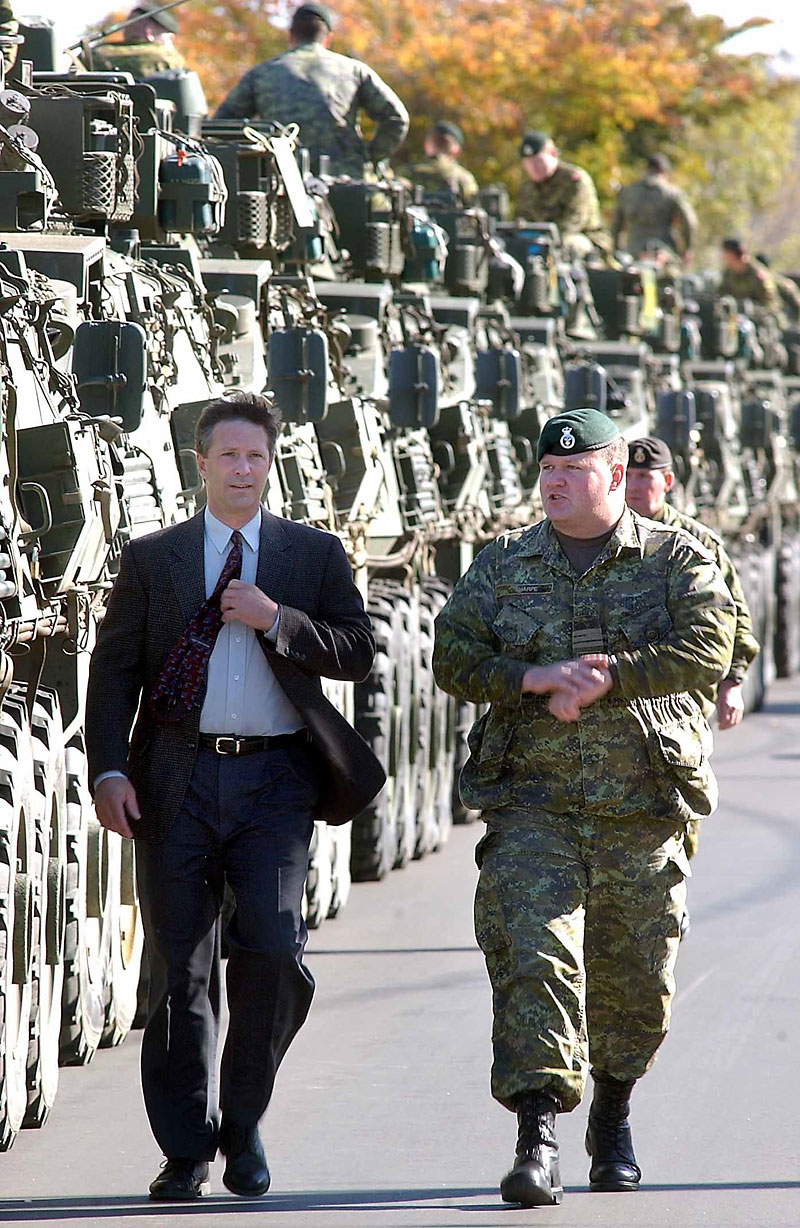
It was a decade ago yesterday when a convoy of light armoured vehicles full of 2nd Battalion, Princess Patricia’s Light Infantry (2PPCLI) soldiers cruised through Brandon as an official “hello” from the hundreds of troops who now call Westman home.
The move from Kapyong Barracks in Winnipeg to CFB Shilo was gradual, but not without its share of controversy.
Base commander Lt.-Col. Stephen Joudrey was part of the battalion that moved in the fall of 2004.
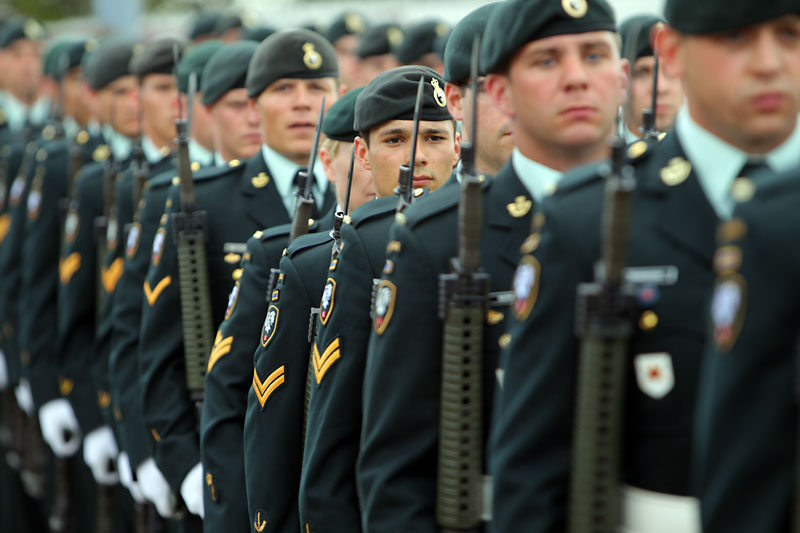
Joudrey said the move gave soldiers better access to vital training grounds, but admits there was apprehension from some who had built lives in the provincial capital.
“Work-wise, everyone was looking forward to it, but family-wise, as any change is, there was some trepidation,” Joudrey said. “Some folks wanted to move, others didn’t.”
The move was possible after the German military, which trained more than 140,000 soldiers beginning in 1974 at CFB Shilo, decided to leave the base in 2000.
That decision, which saw 640 soldiers and 300 staff pull out, left many questioning the viability of the base during an uncertain time in Canadian military history.
The 1996 federal budget forced several Canadian Forces bases, including CFB Calgary, to close or be consolidated in other locations.
Joudrey said any time a base is under the 1,000 soldier mark, there are viability concerns.
Today, CFB Shilo is home to approximately 1,400 military personnel, mainly made up of the 1st Regiment, Royal Canadian Horse Artillery and 2PPCLI, while another 400 civilians are employed at Shilo.
The marriage between the two units was seamless, according to Joudrey, because they are “brothers” in a military sense and had like-minded leadership at the time.
“It was a culture change for the good,” Joudrey said.
The move also brought tens of millions of dollars of investment to the base.
Kapyong Barracks, a 323,000-square-foot administrative, operational and training complex, had a price tag of $39.4 million in 2004.
While the move provided stability for CFB Shilo, it also had a major impact on Brandon and Westman.
Brandon Chamber of Commerce president Todd Birkhan said the base has become an important driver for the city’s economy.
“I think sometimes it is forgotten the level of purchasing power from individuals directly or indirectly employed by the base in Shilo,” Birkhan said. “There is a lot of people, and ultimately they spend the majority of their money, whether it’s entertainment or retail, buying in Brandon.”
The base has bolstered student numbers at schools, while spouses have also filled a gap.
“Spouses are a big part of our labour pool in a city that has labour challenges,” Birkhan said. “When the Germans left the base there was some real concern. They filled a real void and brought in a lot of people that have become a part of the community.”
Cam Toews, president of the Brandon Area Realtors, said housing demand and prices were buoyed by the move.
“We noticed when the bulk of them came out of Winnipeg that it definitely went into more of a sellers’ market,” Toews said. “The nice thing is they made up the whole market. You had young soldiers that were buying starter homes, people that had been in the military for years that were buying mid-range homes and then there were high-ranking officers who were buying high-end homes. So they didn’t grab one pocket, they were spread out through the whole market and that was good to see.”
Toews said “posting season,” when soldiers are relocated to different bases, has also become an important buying and selling time, although it has cooled since more recent government cutbacks.
The move has also changed the demographic of the city by the very nature that the battalion is made up of mostly young men and women.
Kerri Lagonia (nee Logan) grew up in Brandon and never expected the military to play a role in her life.
That was until she met her husband Ben, who is a soldier with 2PPCLI.
“The military was never on my radar growing up,” she said. “It was very foreign to me at the beginning, but they’ve given us a lot of support.”
The young couple, who were married in July and own a home in Brandon, expects to have to move at some point during Ben’s military career, but the plan is to return.
“This is his home now. He’s changed from growing up in a suburb in Kitchener to a full-blown redneck,” Lagonia joked. “He’s really embraced Manitoba. He’s really happy here and for that I’m really happy.”
If the first decade has weaved 2PPCLI into the social fabric of Brandon, the base’s commander expects those stitches to strengthen in the decades to come.
“The root system and network will continue to grow and get stronger,” Joudrey said. “Ten years ago Shilo was the place you were posted to because you’re not in Winnipeg anymore, and it’s not like that anymore. Now, Shilo is home.”
» ctweed@brandonsun.com
» Twitter: @CharlesTweed
Timeline of 2PPCLI’s journey to Shilo
• Sept. 2, 1999: Canadian Lt.-Col. Rick Wilson announces the German military will pull out of Shilo in one year, taking 640 soldiers and 300 staff.
• Feb. 10, 2000: Brig.-Gen. Doug Dempster leads a military working group examining the future of Manitoba land forces and rules out attracting another foreign unit to Shilo.
• March 8, 2000: Then-premier Gary Doer said he’ll continue to lobby for a foreign unit to replace the Germans, while a Brandon-based lobby group calls for 2PPCLI to move to Shilo.
• April 14, 2000: A Department of National Defence study on the cost of six options for Manitoba’s two land force units reports that over two decades, one of the cheapest options is moving 1RCHA to Winnipeg. A later revision of the study favours amalgamating the two forces at Shilo.
• May 2000: In the House of Commons, Defence Minister Art Eggleton said that military concerns, not politics will decide Shilo’s fate. At the same time, Doer said he would support moving 2PPCLI to Shilo.
• June 2000: A all-party committee from Manitoba goes to Ottawa to lobby for merging 1RCHA and 2PPCLI at Shilo, or keeping each unit where they are but making a long-term commitment to keeping Shilo open.
• November 2000: Most German trainees leave Shilo for the last time.
• April 4, 2001: Federal and provincial officials confirm the transfer of 2PPCLI to Shilo.
• June 21, 2004: Patricia Road is officially unveiled at Shilo. “We look forward to integrating 2PPCLI heritage to this base,” said Maj. Marc George, acting base commander.
• Sept. 29, 2004: A convoy of light armoured vehicles cruise through Brandon as 550 soldiers were welcomed to thier new city.
• Today: CFB Shilo is home to 1,400 soldiers and another 400 civilian employes, while Kapyong, the former military base in Winnipeg, has been tied in court for several years, in a fight between the federal government and several First Nations over who controls the land.
• In 2013, it was revealed taxpayers have spent nearly $15 million over the past eight years maintaining the vacant site.
» Brandon Sun