
Dauphin museum set to unveil pair of fossils
Advertisement
Read this article for free:
or
Already have an account? Log in here »
We need your support!
Local journalism needs your support!
As we navigate through unprecedented times, our journalists are working harder than ever to bring you the latest local updates to keep you safe and informed.
Now, more than ever, we need your support.
Starting at $15.99 plus taxes every four weeks you can access your Brandon Sun online and full access to all content as it appears on our website.
Subscribe Nowor call circulation directly at (204) 727-0527.
Your pledge helps to ensure we provide the news that matters most to your community!
To continue reading, please subscribe:
Add Brandon Sun access to your Free Press subscription for only an additional
$1 for the first 4 weeks*
- Enjoy unlimited reading on brandonsun.com
- Read the Brandon Sun E-Edition, our digital replica newspaper
*Your next Free Press subscription payment will increase by $1.00 and you will be charged $20.95 plus GST for four weeks. After four weeks, your payment will increase to $24.95 plus GST every four weeks.
Read unlimited articles for free today:
or
Already have an account? Log in here »
Hey there, time traveller!
This article was published 30/05/2015 (4200 days ago), so information in it may no longer be current.
The Fort Dauphin Museum will unveil two new fossils when it officially opens for the season tomorrow.
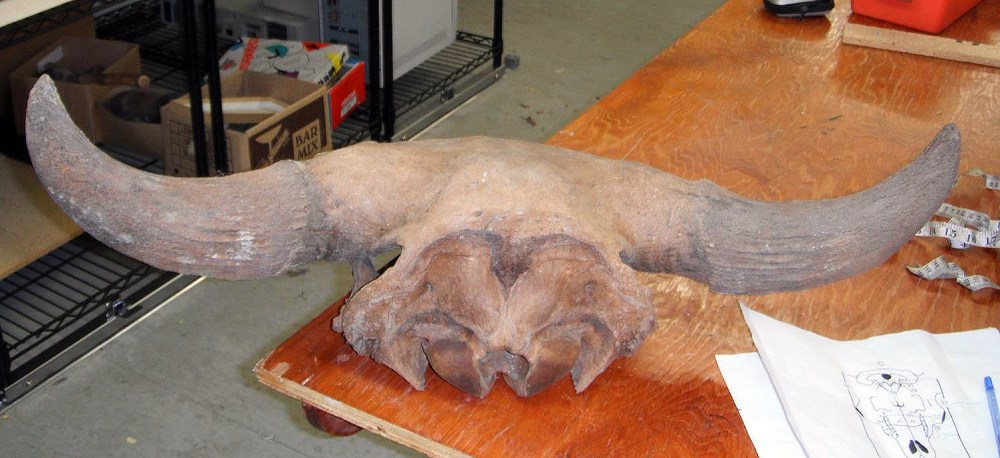
First, the skull of an extinct bison — Bison occidentalis — will debut at the museum. This skull, which was found near the Vermillion River in the RM of Dauphin, is considerably larger than the modern bison.
Found by Jamie Van Buekenhout, the skull measures 71 centimetres from horn tip to horn tip, while the modern bison skull typically measures under 60 cm.
Carbon dating measured this skull to be 6,050 years old. The species went extinct sometime between 2,000 and 5,000 years ago.
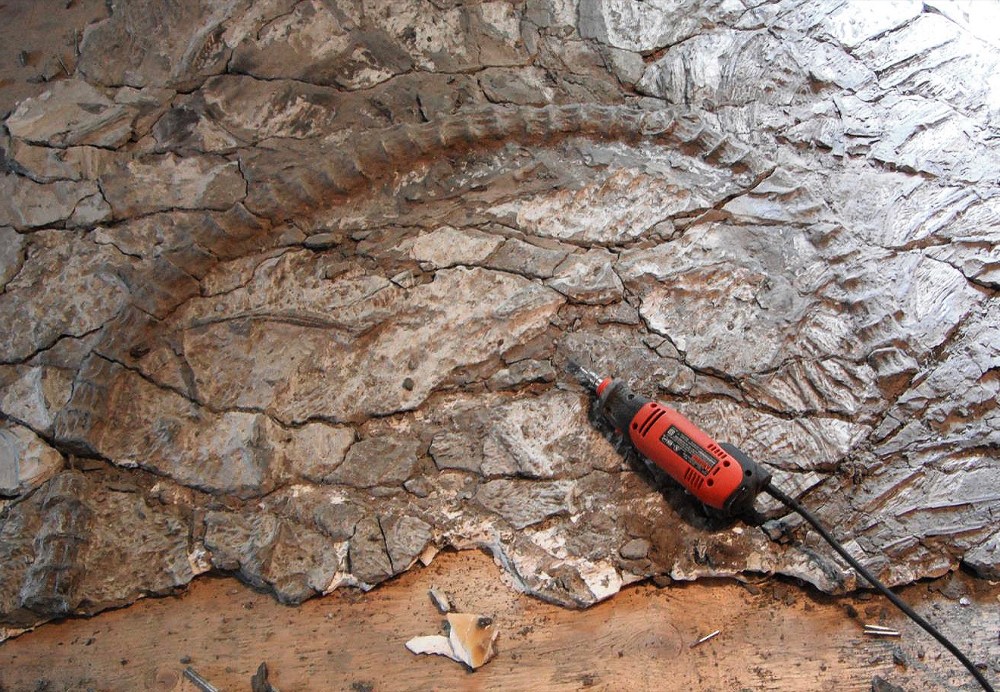
The second fossil is a fish that swam in the Western Interior Seaway 100 million years ago, according to amateur paleontologist Chris Tait.
Walking along the Wilson River, Tait found a fish vertebrae near the bottom of a cliff, only to look up and discover the rest of the fossil protruding through the bank.
Tait meticulously removed the fish, hopeful the head or tail was still in the rock, but unfortunately only the body of the animal was present.
It’s not uncommon, he said, to get only pieces of a fossil puzzle.
“Sometime you’ll find a fossil that’s all messed up because it rotted when it was deposited or there were a lot of small sharks here that would tear up anything that died,” Tait said.
This fish — a Xiphactinus — would have measured approximately two metres long. Smaller fish bones in this fossil show some of its last meal.
Tait, who is a lawyer by day, said he found this fish fossil near the site where he found a 100-million-year-old crocodile.
“It’s fascinating to see something that nobody else has ever seen before,” he said. “You open up that rock and no human being has ever seen that particular fish before.”
Tait is part of a growing number of amateurs who are able to secure a permit from Manitoba Heritage to search for fossils.
While Tait found and recreated the fish, the fossil is considered provincial property, owned by Manitoba Heritage.
This fish will be owned by the province and donated to the museum as its place of deposition.
Last year was a particularly bad year for fossil hunters in the area as the river’s height kept much of the rock bed that is lucrative with ancient fossils covered up.
“A lot of fossils are destroyed by the river that we don’t get to see, but it also exposes new stuff too,” Tait said.
The area is part of where the Western Interior Seaway used to flow. Millions of years ago it was considerably warmer all year-round and islands provided good conditions for reptiles and fish to flourish.
The fossil collection at the museum includes shark teeth and vertebrae, as well as vertebrae from large marine reptiles such as a plesiosaur — which is commonly associated as a Loch Ness Monster.
» ctweed@brandonsun.com
» Twitter: @CharlesTweed