
Province shoots down use of hunting drones
Advertisement
Read this article for free:
or
Already have an account? Log in here »
We need your support!
Local journalism needs your support!
As we navigate through unprecedented times, our journalists are working harder than ever to bring you the latest local updates to keep you safe and informed.
Now, more than ever, we need your support.
Starting at $15.99 plus taxes every four weeks you can access your Brandon Sun online and full access to all content as it appears on our website.
Subscribe Nowor call circulation directly at (204) 727-0527.
Your pledge helps to ensure we provide the news that matters most to your community!
To continue reading, please subscribe:
Add Brandon Sun access to your Free Press subscription for only an additional
$1 for the first 4 weeks*
*Your next subscription payment will increase by $1.00 and you will be charged $20.00 plus GST for four weeks. After four weeks, your payment will increase to $24.00 plus GST every four weeks.
Read unlimited articles for free today:
or
Already have an account? Log in here »
Hey there, time traveller!
This article was published 29/08/2015 (3902 days ago), so information in it may no longer be current.
Hunters looking for an advantage over their game won’t be permitted to use drones, according to a Manitoba Conservation representative.
Wildlife allocation manager Brian Hagglund said Conservation introduced rules in 2015 that strictly prohibit the use of drones while hunting in the province.
The regulation, which can be found in the Manitoba Hunting Guide, states “the operation or possession of a drone while hunting or while accompanying another person who is hunting is prohibited.”
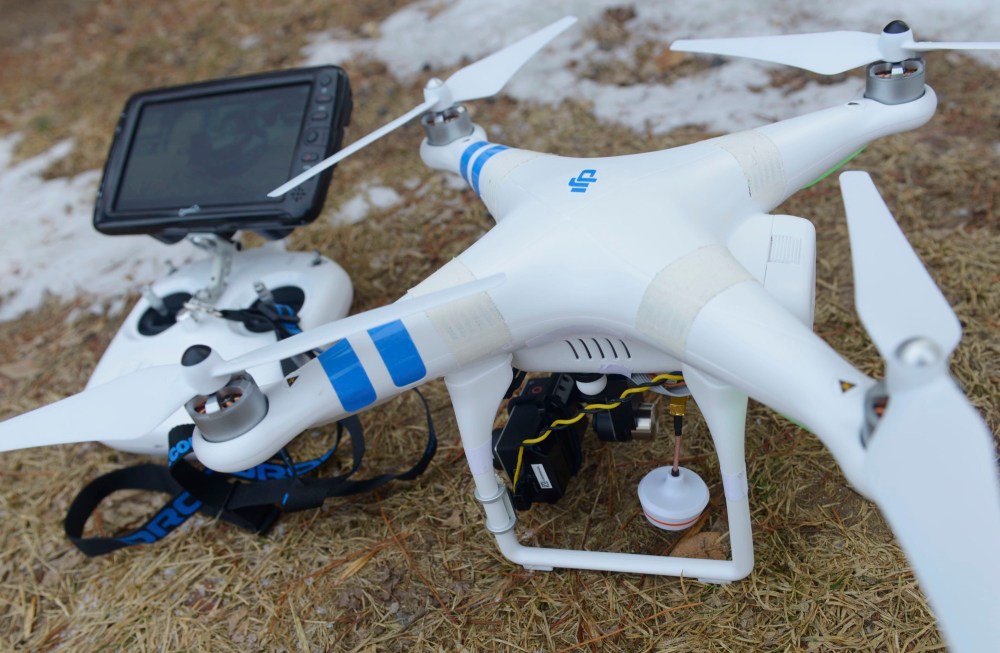
While there were no issues with hunters using the unmanned aerial vehicles for hunting in the province, Hagglund said Conservation wanted to be proactive and get out in front of the issue before it became a problem.
“They weren’t an issue in Manitoba, but one of our prior investigators sent a video around and we said, ‘Wow, these things could have a real impact on hunting,’” he said.
Some sportsmen in the United States were using the aircraft to scout for wildlife from the air. Drones could spot large game animals or haze waterfowl.
“They were being used to herd birds over hunters and that in our opinion was just wrong,” Hagglund said. “We wanted to make them illegal for any type of hunting before they became established.”
Drones violate the spirit of Manitoba’s traditional “fair chase” hunting.
While fair chase stops short of giving animals weapons also, it is defined as the lawful pursuit and taking of any free-range wild animal in a matter that doesn’t give hunters an improper advantage over their prey.
“You want to have fair chase,” Hagglund said. “The majority of hunters —99 per cent of them — are very ethical. But there are bad ones out there and they’ll do anything to get their animal.”
Bear season is currently on, ending Oct. 11.
Hagglund said the province issues approximately 3,000 bear tags each year, with the majority of the hunting taking place in the spring. The majority of bear hunters are residents of Manitoba; however, approximately 45 per cent come from other provinces or countries.
Hagglund said hunters come as far away as Europe to harvest black bears.
“Our bear population is extremely healthy,” Hagglund said. “It brings a lot of economic benefit into areas of Manitoba. A lot of people have said they love the meat better than moose or any other kind of wild meat.”
Conversely to bear numbers, the deer population continues to suffer. A mild winter helped the numbers rebound slightly, and Hagglund is optimistic the population will bounce back.
He expects the province will only issue one deer tag, an adult male deer, per hunter in most areas of Manitoba for 2016.
» ctweed@brandonsun.com
» Twitter: @CharlesTweed