
Tory gov’t will end spotlight hunting, Morris MLA tells Brandon gathering
Advertisement
Read this article for free:
or
Already have an account? Log in here »
We need your support!
Local journalism needs your support!
As we navigate through unprecedented times, our journalists are working harder than ever to bring you the latest local updates to keep you safe and informed.
Now, more than ever, we need your support.
Starting at $15.99 plus taxes every four weeks you can access your Brandon Sun online and full access to all content as it appears on our website.
Subscribe Nowor call circulation directly at (204) 727-0527.
Your pledge helps to ensure we provide the news that matters most to your community!
To continue reading, please subscribe:
Add Brandon Sun access to your Free Press subscription for only an additional
$1 for the first 4 weeks*
- Enjoy unlimited reading on brandonsun.com
- Read the Brandon Sun E-Edition, our digital replica newspaper
*Your next Free Press subscription payment will increase by $1.00 and you will be charged $20.95 plus GST for four weeks. After four weeks, your payment will increase to $24.95 plus GST every four weeks.
Read unlimited articles for free today:
or
Already have an account? Log in here »
Hey there, time traveller!
This article was published 05/03/2016 (3739 days ago), so information in it may no longer be current.
A Progressive Conservative government will put an end to spotlight hunting in the province, the party’s critic for Conservation and Water Stewardship said Friday.
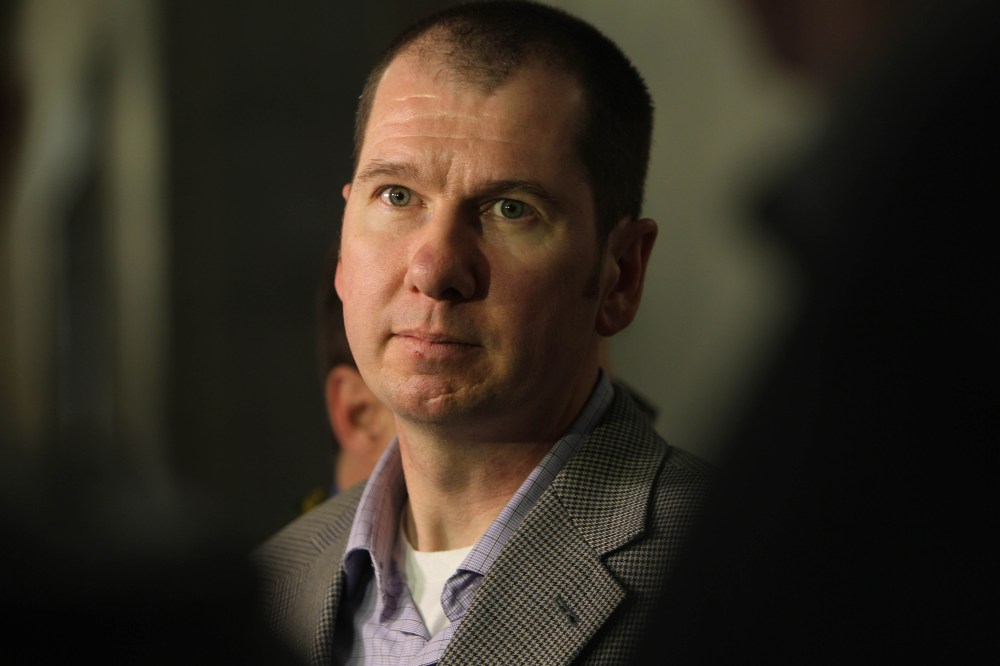
Speaking from the Manitoba Wildlife Federation’s annual general meeting in Brandon yesterday, Shannon Martin said the practice of hunting at night using a spotlight is dangerous.
“This is an issue of safety and conservation,” said Martin, who represents the Morris constituency.
A Tory government will work with stakeholders, including indigenous hunters, to ban the practice and consider increasing resources to the department to enforce existing rules.
Martin said the NDP government has dragged its feet on the file and that Saskatchewan has deemed spotlight hunting a dangerous practice for close to two decades.
“Nothing on this file has been done, and we’re going to end that,” he said.
Chief Conservation Officer Jack Harrigan said Manitoba took a different approach than Saskatchewan at the time, bringing in legislation that created punitive fines and measures against spotlight hunters deemed to be taking part in dangerous or illegal activities.
More than 50 vehicles have been seized from spotlight hunters since 1994.
“The penalty was a deterrent, and we thought we had fixed the problem, but what we’ve seen in the past year is a slight increase in complaints in night hunting,” Harrigan said.
Some of that uptick might be traced to fact hunters know it’s extremely difficult for conservation officers to make a case against them. Evidence and eyewitness reports can often be discounted if charges end up in court.
Harrigan believes it’s time to start consultations with First Nations hunters in the province for conservation and safety reasons.
“It’s a big issue,” he said. “I don’t agree with night hunting. It’s dangerous to discharge a firearm … It can potentially be dangerous at any time, but at night you can only really see everything within the beam of light and very little outside of it.”
Knowing your backstop is a hallmark of safe hunting, and Harrigan said that’s almost impossible at night.
Ultimately, the issue will need to be a priority for policy makers for those consultations to move forward.
In 2006, the Supreme Court of Canada ruled that First Nations hunters have a right to harvest at any time — day or night — throughout the year.
While that’s true, it only applies to Crown land or private land where permission has been granted. Harrigan said a lot of problems arise when hunters are on Crown land but animals are standing on private land. He said hunters have become more mobile and weapons have evolved to the point where it’s possible to harvest an animal so quick that it’s often not reported until the following day, when it’s too late.
In January 2010, Ramie Fontaine shot and killed Jason Guimond while hunting near Sagkeeng First Nation. Fontaine mistook Guimond for a moose and fatally shot him while using a spotlight. Fontaine got 13 months in jail for the incident.
Manitoba Wildlife Federation director Rob Olson said he hopes it doesn’t take another death for the government and stakeholders to understand that spotlight hunting is a dangerous practice.
“It’s getting worse — more aggressive and more intense,” Olson said.
If the province isn’t going to outright ban hunting at night, Olson said he would at least like to see clearly defined areas where it is permittable. Remote areas up north, where hunters use moonlight to stalk their prey, might make sense, according to Olson.
For safety and conservation reasons, however, he would like to see spotlight hunting banned.
“It’s not a sustainable hunting practice for moose,” Olson said. “Moose are in decline in every area of the province where there are roads.”
He compared moose to the canary in the coal mine, serving as a warning for wildlife management across the board. Olson said due to the declining moose population in the province that hunters are already shifting their attention to elk or moving further afield, such as Saskatchewan, to hunt the large animal.
“Aboriginals in Saskatchewan need those moose to hunt,” Olson said.
“Let’s put the resource first. I think the consultations will go well, but the government has to do the work.”
A call to the Southern Chiefs Organization wasn’t returned by press time.
» ctweed@brandonsun.com
» Twitter: @CharlesTweed