
Fringe candidates determined despite challenges
Advertisement
Read this article for free:
or
Already have an account? Log in here »
We need your support!
Local journalism needs your support!
As we navigate through unprecedented times, our journalists are working harder than ever to bring you the latest local updates to keep you safe and informed.
Now, more than ever, we need your support.
Starting at $15.99 plus taxes every four weeks you can access your Brandon Sun online and full access to all content as it appears on our website.
Subscribe Nowor call circulation directly at (204) 727-0527.
Your pledge helps to ensure we provide the news that matters most to your community!
To continue reading, please subscribe:
Add Brandon Sun access to your Free Press subscription for only an additional
$1 for the first 4 weeks*
- Enjoy unlimited reading on brandonsun.com
- Read the Brandon Sun E-Edition, our digital replica newspaper
*Your next Free Press subscription payment will increase by $1.00 and you will be charged $20.95 plus GST for four weeks. After four weeks, your payment will increase to $24.95 plus GST every four weeks.
Read unlimited articles for free today:
or
Already have an account? Log in here »
Hey there, time traveller!
This article was published 09/04/2016 (3820 days ago), so information in it may no longer be current.
Choosing not to run for one of the “big three” political parties in the provincial election has its perks and disadvantages, according to three fringe candidates in Westman.
Damian Dempsey, who is running as an independent in the Agassiz constituency, doesn’t have the deep pockets and party support that some of the other candidates have, but found a unique way to help level the playing field.
“I sold some calves to help finance my campaign,” said the cattle farmer and Canadian Food Inspection Agency inspector who lives east of Arden.
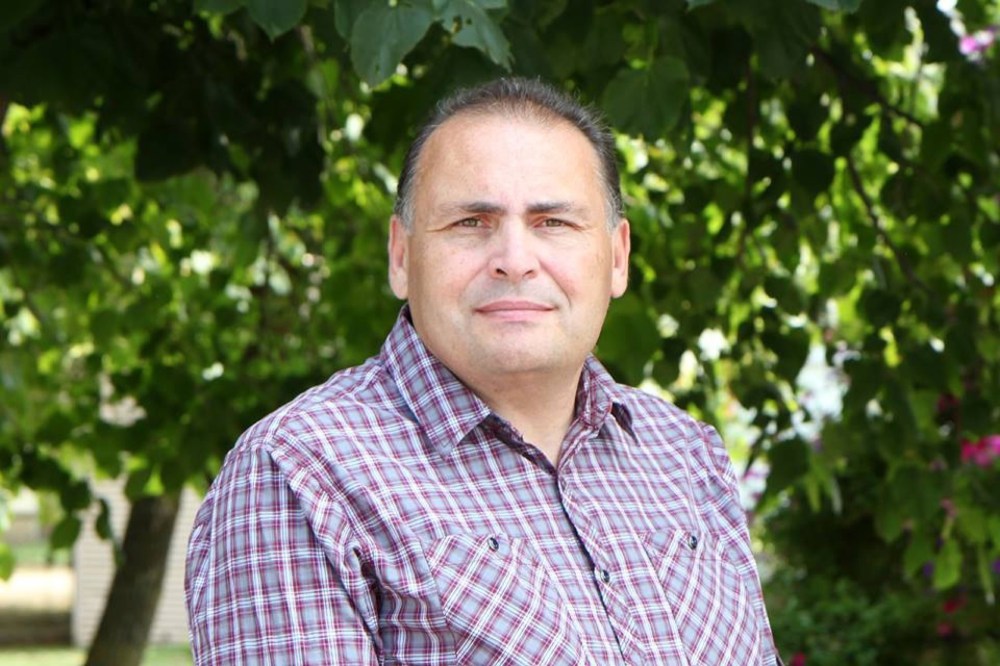
“I haven’t got the party machine behind me, so I have to do a lot of it myself. I’ve been knocking on doors, and it’s a lot of work. I can’t outspend those big parties, so I’m trying to outwork them.”
Dempsey is running against Progressive Conservative Eileen Clark, the NDP’s Courtney Lucas and Green candidate Robert Smith. The seat was previously held by Tory Stu Briese.
Dempsey, who emigrated from England in 1993, has taken a leave from his position with the CFIA during the campaign period.
A self-identifying conservative, Dempsey started thinking about running after his son was diagnosed with kidney failure. Because he didn’t have a family doctor after his former physician left the area, Dempsey couldn’t be considered a donor.
“I decided then that I could either grumble or do something about it,” he said.
Dempsey said education, infrastructure and the ballooning deficit are issues that are resonating with voters.
“We’re paying a lot more servicing the debt, and that money could be put to other uses,” Dempsey said.
The constituency, which borders Lake Manitoba, is sacrificed for Winnipeg during major flooding events when water is diverted into the lake, according to Dempsey. He said that has left communities and farmland flooded on the shoreline of the province’s third-largest body of water.
“We feel very much in the rural areas that we are being marginalized,” he said.
Dempsey is one of only four independents running in 2016.
Boissevain’s Frank Godon is one of three Manitoba Party candidates in seven Westman constituencies. Godon, who ran as a Libertarian in Brandon-Souris in the last federal election, is running in Arthur-Virden against PC incumbent Doyle Piwniuk and NDP candidate Lorne Topolniski.
If voters keep electing the same two “tired parties,” nothing is going to change, according to Godon, who recently spent several years off and on in Russia, where he taught English and Canadian aboriginal culture at a university in St. Petersburg.
“A major party candidate is hamstrung by party policy,” Godon said, adding that the Manitoba Party emphasizes candidates put their constituents first.

“We’re not party controlled. We’re free and our party recognizes that each section of the province is different and things that might work in one area might not work in my area.”
Godon said it is a huge challenge running for a party that isn’t well known throughout the province. The party didn’t officially register until one week into the campaign.
A party can register by either endorsing at least five candidates in the current election or by filing a petition with the signatures of at least 2,500 eligible voters, according to the Election Financing Act.
Godon said the party had close to 4,000 signatures well before the writ drop, but was denied official party status because many of the signatures came from new voters who weren’t registered with Elections Manitoba yet.
Not being officially registered prior to the election has put the Manitoba Party at a disadvantage, according to Godon.
There are 16 Manitoba Party candidates registered with Elections Manitoba. Godon said he hopes six are elected, but recognizes that this campaign will serve as an opportunity to build toward the next election when the party hopes to run a full slate of candidates.
“We can prepare now,” Godon said. “We can start signing up members, getting donations and putting together riding associations. We can search for a good leader.”
A self-professed “agitator,” Godon said it’s important the party connect with rural Manitoba. Eleven of the party’s 16 candidates are running in Winnipeg.
“These candidates are city-centred and they really know nothing about the rural area,” Godon said. “As we grow, we are going to be looking for a leader that can work with the rural area and the city. Then we can present something to all Manitobans.”
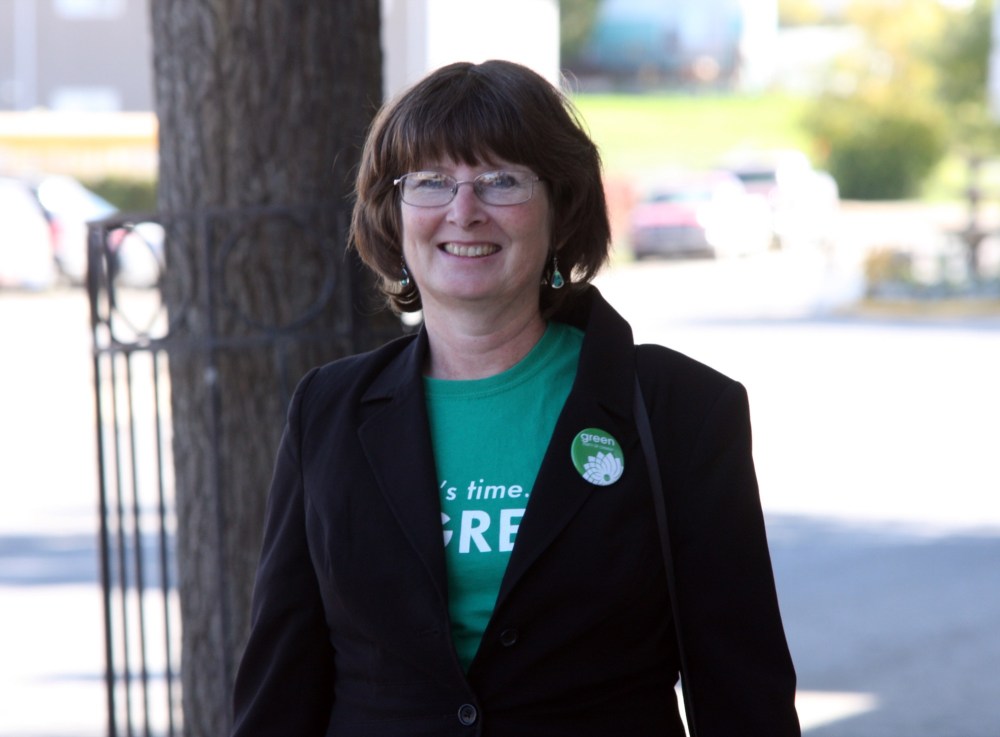
In Dauphin, Kate Storey is once again carrying the Green party banner in the election.
She’s running against the NDP’s Darcy Scheller, Tory Brad Michaleski, Liberal Garry Gurke and Manitoba Party candidate Darrell Inkster. The seat was previously held by New Democrat Stan Struthers.
Storey, a cattle and organic wheat farmer near Grandview, has run for the party five times federally and will make her third appearance on a provincial ballot, her first in the Dauphin constituency.
“The Green party is getting good support this election,” she said, adding that the party’s main planks are to cut the poverty rate in the province, create green jobs and invest in children.
Earlier this week, the party vowed to introduce a guaranteed annual income (GAI) that would cut poverty rates and strengthen organic agriculture while improving relations with First Nations and Métis peoples.
The idea is similar to Mincome, an experimental project in Dauphin in the 1970s, based on the premise of providing every adult with a basic income.
While a final report was never issued on Mincome, a Manitoba economist studied the project and determined a GAI decreased visits to the emergency room from car accidents and domestic abuse.
The program is fully costed, according to Storey.
“If you remove the tax credit system, most of those things don’t work and they sure don’t work for poor people,” Storey said. “You replace it with
GAI, which is going to lift people out of poverty, which is going to help the main street business because they’re going to spend it.”
While the Greens may not have the same resources as the larger more established parties during the campaign, Storey said the key is to continue to push the public discourse for new ideas.
“It’s very hard to break through as a newer party,” she said. “People like to vote for what they know and they like to vote for the winner … because they know that power drives politics. Ideas don’t drive politics in the province.”
» ctweed@brandonsun.com
» Twitter: @CharlesTweed