
Success followed Ash throughout his career
Advertisement
Read this article for free:
or
Already have an account? Log in here »
We need your support!
Local journalism needs your support!
As we navigate through unprecedented times, our journalists are working harder than ever to bring you the latest local updates to keep you safe and informed.
Now, more than ever, we need your support.
Starting at $15.99 plus taxes every four weeks you can access your Brandon Sun online and full access to all content as it appears on our website.
Subscribe Nowor call circulation directly at (204) 727-0527.
Your pledge helps to ensure we provide the news that matters most to your community!
To continue reading, please subscribe:
Add Brandon Sun access to your Free Press subscription for only an additional
$1 for the first 4 weeks*
- Enjoy unlimited reading on brandonsun.com
- Read the Brandon Sun E-Edition, our digital replica newspaper
*Your next Free Press subscription payment will increase by $1.00 and you will be charged $20.95 plus GST for four weeks. After four weeks, your payment will increase to $24.95 plus GST every four weeks.
Read unlimited articles for free today:
or
Already have an account? Log in here »
Hey there, time traveller!
This article was published 29/11/2016 (3474 days ago), so information in it may no longer be current.
Bob Ash did a lot of winning with the Brandon Wheat Kings.
Now 73 and living with wife Susan just south of Brandon, Ash was part of three Manitoba Junior Hockey League championship teams from 1961-64. Back then, the team was largely comprised of local players and a big very deal in the city.
“That was really one of the primary activities,” he said. “Television wasn’t really that big of an issue then, there wasn’t all the computers at that time. Thursday night at the Wheat City Arena was pretty special. We had jobs and people knew you. If you didn’t perform well, you had to answer to them the next day. It was special. You were growing up and probably didn’t realize how special it was until you went and went through the challenges of picking up and moving. In Brandon, everything was secure and you were safe. You had to go play hockey but the people were all supportive.

“It was a nice feeling to play here.”
Ash, who was born in Broadview, Sask., moved to Brandon at age five. After playing three games with the Wheat Kings in 1960-61, he joined the squad full time for the 1961-62 campaign. Brandon’s roster was assembled by general manager Jake Milford, who went on to work as a GM in the National Hockey League with the Los Angeles Kings and Vancouver Canucks.
Ash said those special teams had a wonderful chemistry.
“The nice part was that most of the players were local so you were friends off the ice and in the summer time,” he said. “You would see Teddy Taylor and Larry McKillop and Jimmy Murray and Chuck Meighen and Bobby Allen all the time. There was an accountability to each other and that’s what I’ve attributed our success to.”
The MJHL was a very different league at the time, with Brandon playing four teams from Winnipeg, the Canadiens, Monarchs, Braves and Rangers. The Fort Frances Royals made it a six-team league in 1963-64.
At the time, the MJHL winner would advance to play the Thunder Bay Junior A Hockey League champion. Brandon won all three years but lost in the next round to the Edmonton Oil Kings, who then represented the west in a best-of-seven series against the eastern champion for the Memorial Cup.
“Either they were too strong or we weren’t strong enough,” Ash said of the Oil Kings. “They had good squads. A number of them went on and furthered their careers.”
Brandon generally hosted its home games on Thursday nights, with the Winnipeg teams usually playing on Fridays and Sundays. The Wheat Kings would bus in for their home games, walk from where the Viscount Gort Hotel is to the old Winnipeg Arena to loosen up, and stop in Portage la Prairie for a meal on the way home.
“That was back when steaks were prominent, your pre-game meals were five or six hours prior to playing a game and water wasn’t really encouraged on the bench because it would give you stitches (cramps),” Ash said. “The technology and information has certainly changed in today’s game.”
Ash remembers the old Wheat City Arena fondly, noting it had wire behind the nets that was held up by steel poles, which occasionally did some damage to players. It was open along the sides, and fans would make their presence felt during games.
“The visiting players got a rude reception from the fans,” Ash said. “When they went down the wall, it wasn’t uncommon that arms and things would come out and get in their way.”
He said referees would sometimes get grabbed by their jersey after a bad call.
Ash also remembers that in an apparent homage to the Detroit Red Wings tradition of fans throwing an octopus on the ice during the playoffs, a fan threw a fish on the ice one year.
Along with team success, Ash had personal success, being named to the MJHL’s first all-star team in 1964. The five-foot-nine, 170-pound defenceman also played in the 1961-62 all-star game against the Saskatchewan Junior Hockey League as an injury replacement.
“I was a defensive defenceman,” Ash said. “There were lots of years that there weren’t many goals or assists, although back then the defencemen didn’t jump into the rush like they do now. We were expected to play in our end, protect the front of the net, get the puck out and block shots. It was more of a defensive game.”
At the time, Brandon was New York Rangers territory, so after Ash graduated he tried out at a Rangers camp held in Brandon. He earned a job with the St. Paul Rangers of the Central Professional Hockey League, one step below the American Hockey League and two below the NHL, to start what would prove to be an 11-year professional career.
Although the New York Rangers called him up for three NHL games, most of his career was spent in the CPHL and AHL. That changed in 1972-73.
When the World Hockey Association began play, Ash was a charter member of the Winnipeg Jets entirely because he co-owned the Highway Esso gas station on the Trans-Canada in Brandon with Bill Houston. He was filling in at the pump for one of the staff one day when Gerry Brisson stopped to gas up. Brisson, who had coached the Winnipeg Junior Jets the previous season, asked Ash who had his rights in the WHA — it was the Minnesota Fighting Saints — and if we would be interested in playing with the Jets.
After Ash said he would love to play in Winnipeg, Brisson conveyed the news to Jets brass and two weeks later he had a contract.
Ash said it was a special experience.
“It was nice to go from the minors to the WHA where it was a first-class operation,” he said. “It was always nice hotels, you flew, which I didn’t like near the end of my career, but it was nice to get that treatment, plus the salary … It was better competition, nicer rinks, it was just nice.”
The Jets lost in the final in five games to the New England Whalers after winning the Western Division in the 12-team league.
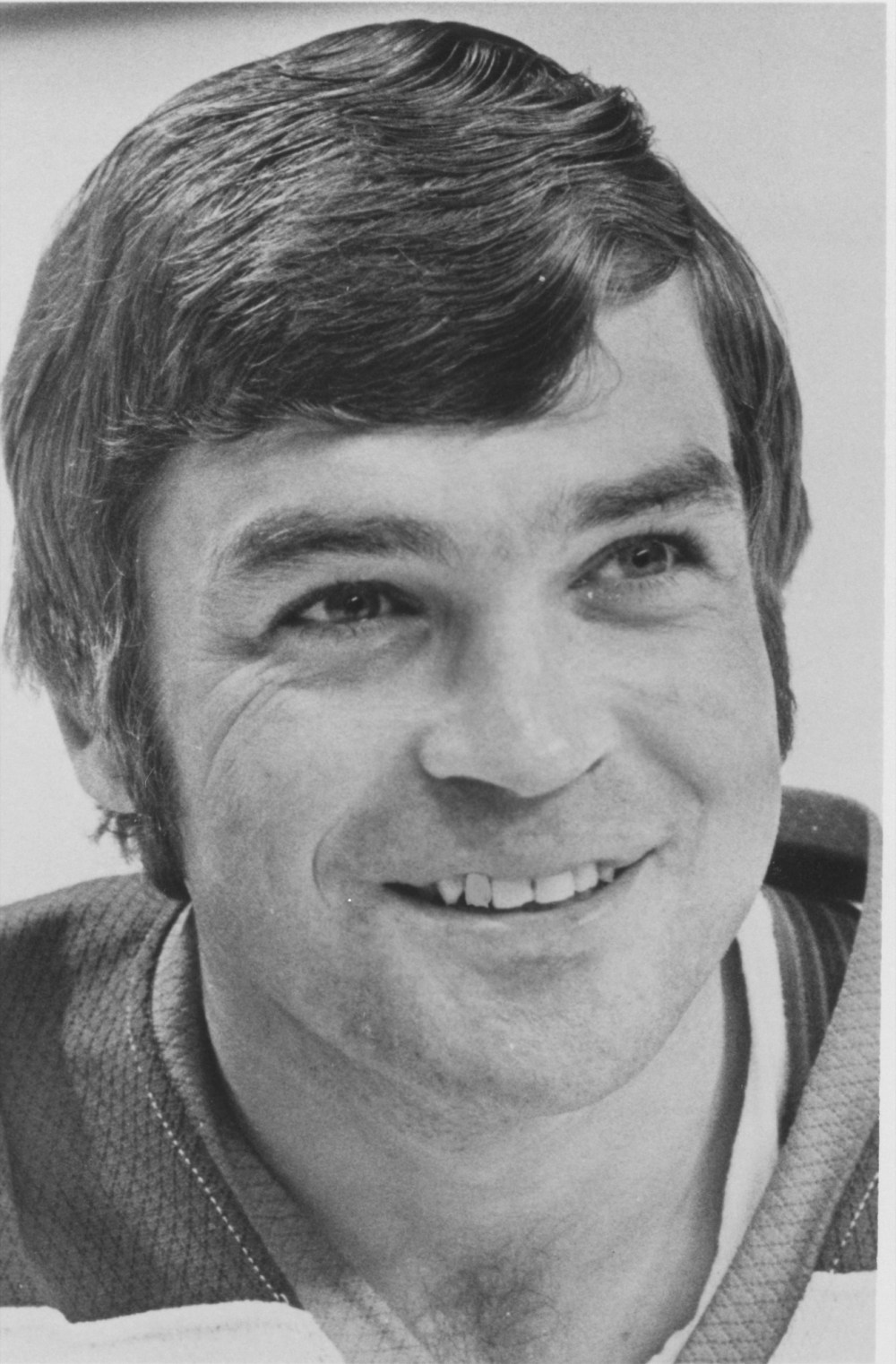
Ash said the fans were terrific.
“I can remember that building was raucous, much like the Jets are today,” Ash said. “The fans were really supportive.”
After one more season with the Jets, Ash was claimed eighth overall in the 1974 expansion draft by the Indianapolis Racers, four spots after former Wheat King Bob Fitchner, who would go on to coach the Brandon University Bobcats in the 1980s.
Ash knew the end of his career was in sight and considered not reporting, but was talked into it by his agent, Don Baizley.
“In retrospect, it would have been nice to finish in Winnipeg because it was a disaster that year,” Ash said.
“We were all individuals there and it didn’t seem like we were pulling the rope in the same way.”
The Racers went 18-57-3, finishing last in the only season Ash didn’t make the playoffs in his career.
After 200 games and three seasons in the WHA, and no longer enjoying the travel by plane, Ash said it was time for him to go.
“The game was changing, the players were bigger and at my stature and my age, I was 32, it was time,” Ash said. “You start losing half a step and you start to lose some enthusiasm too. It’s just harder to do those things.”
He returned to the service station until he and his partner sold them, and then moved to Neepawa for three years as the facility manager of the arena and the swimming pool. After that he joined the provincial government as a recreation consultant, working with municipalities within about a 160-kilometre radius of Brandon in the development of sport and fitness facilities.
He retired in 1999.
Ash has kept in touch with a number of Wheat King teammates, in part because he and friends formed the Molson Pioneers senior hockey team in the 1970s.
“It was a wonderful fraternity that we ended up developing in Brandon,” he said.
Ash has two kids, Deron and Dana, and three grandchildren, Ben, Katie and Easton.
He was part of a group of former Wheat Kings who were honoured by the club prior to the team’s home opener on Sept. 24 as Brandon celebrates its 50th season in the Western Hockey League. He appreciated that some of the guys who didn’t play in the league were included.
“It was really a nice occasion that they recognized that there were some founding fathers, you might say, to the WHL,” Ash said. “I was lucky enough to be one of them.”
» pbergson@brandonsun.com
» Twitter: @PerryBergson