
Fort Ellice: Canada’s hidden gem
Advertisement
Read this article for free:
or
Already have an account? Log in here »
We need your support!
Local journalism needs your support!
As we navigate through unprecedented times, our journalists are working harder than ever to bring you the latest local updates to keep you safe and informed.
Now, more than ever, we need your support.
Starting at $15.99 plus taxes every four weeks you can access your Brandon Sun online and full access to all content as it appears on our website.
Subscribe Nowor call circulation directly at (204) 727-0527.
Your pledge helps to ensure we provide the news that matters most to your community!
To continue reading, please subscribe:
Add Brandon Sun access to your Free Press subscription for only an additional
$1 for the first 4 weeks*
- Enjoy unlimited reading on brandonsun.com
- Read the Brandon Sun E-Edition, our digital replica newspaper
*Your next Free Press subscription payment will increase by $1.00 and you will be charged $20.95 plus GST for four weeks. After four weeks, your payment will increase to $24.95 plus GST every four weeks.
Read unlimited articles for free today:
or
Already have an account? Log in here »
Hey there, time traveller!
This article was published 08/12/2016 (3468 days ago), so information in it may no longer be current.
There is hope a largely unknown trading post in western Manitoba will become a tourist attraction next year if the site is further opened to the public.
Four years after the Nature Conservancy of Canada purchased Fort Ellice, with promises to greet visitors again, the trading post is still perceived as inaccessible.
Unbeknownst to many, NCC actually facilitates public requests to tour much of the 1,416-hectare plot near St. Lazare, close to the junction of the Assiniboine and Qu’Appelle rivers, but only after visitors ask. Thus far, virtually all requests have been approved since NCC purchased Fort Ellice in 2012, according to Kevin Teneycke, director of conservation for NCC’s Manitoba region.
“There’s been dozens of requests,” he said.
However, there is still an agreement that needs to be signed between a private charitable organization and Petite Fourche CDC, which would give the local community development corporation permission to access the land.
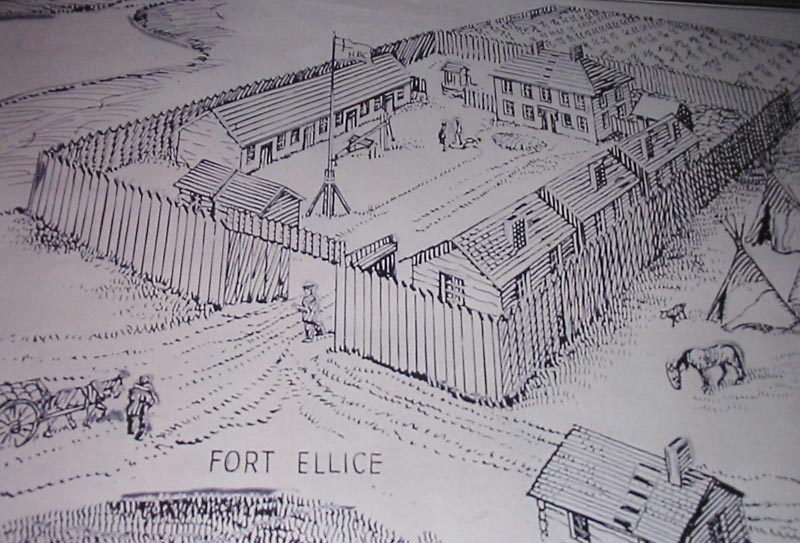
The CDC wants to open up the former trading post, erecting wooden posts where the four corners of the fort’s walls were situated and connect them by boardwalk. There are plans to develop a parking lot, fix the road and include on-site historic information about Fort Ellice.
CDC chairperson Roland Blouin said both organizations are open and willing to sign this agreement — it simply hasn’t happened.
“I don’t know the exact reason because I’ve talked to some of the representatives and they said it was just a matter of time,” Blouin said. “The documents are made up, they’re just waiting on it.”
Once an agreement is hatched, and CDC makes improvements, visitors will no longer require NCC’s permission to visit the site.
Blouin believes this can happen at any time, and he’s hopeful it will happen next year.
He considers Fort Ellice an attraction tourists don’t know about.
“It’s a hidden jewel. We want to take the opportunity to have it opened to the public again and to start trying to bring it back,” he said. “There is a lot of history in that place.”
The CDC anticipates its initial round of improvements, encompassing the parking lot, fencing around the publicly accessible portions and road upgrades, will cost $20,000. It would be funded largely by grants. While it hasn’t priced out the boardwalk, historical markers or other enhancements.
They might build outside walls to the fort in the future, he said.
“If it’s really a good attraction, and if we get good grant money, it’s very possible.”
Blouin added they also want road markers to direct the public where to go and walking trails would likely veer outside the enclosed area.
Fort Ellice was the main trading stop between Fort Garry and Fort Edmonton.
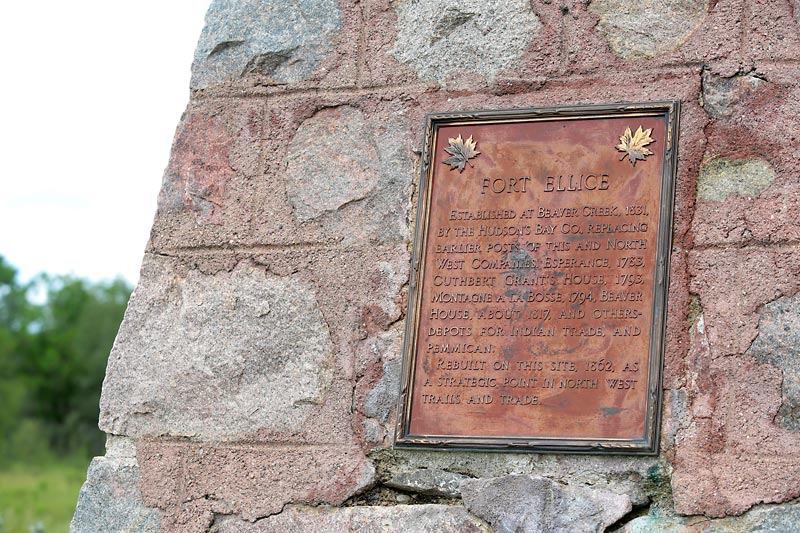
The trading post was built in 1831 and a new fort replaced it in 1862. The Hudson’s Bay Company sold the lot privately in 1925.
The property was purchased by NCC from Arthur and Christine Fouillard in 2012, after the former RM of Ellice fought for years to expropriate the land so it could be opened to the public.
The municipality gave up its efforts when their legal costs escalated.

The site is currently commemorated in St. Lazare, which hosts the Fort Ellice Interpretive Centre.
While the Nature Conservancy’s main intention is to preserve the integrity of the area’s biodiversity, it recognizes its historic and cultural significance should be available to all.
“We want to be sure that, in the long-run, this is a place where all of the values of Fort Ellice are shared,” Teneycke said.
In the years following its purchase, NCC said it has improved the health of the mixed-grass prairie as well as ecosystems associated with the Assiniboine River and Beaver Creek.
They conducted an inventory of the habitats and vegetation, developed control plans to deal with invasive species and annually assessed the habitat conditions following grazing treatments.
.jpg?w=1000)
» ifroese@brandonsun.com, with files from the Winnipeg Free Press
» Twitter: @ianfroese