
Farm attack survivor from South Africa finds new life in Erickson
Advertisement
Read this article for free:
or
Already have an account? Log in here »
We need your support!
Local journalism needs your support!
As we navigate through unprecedented times, our journalists are working harder than ever to bring you the latest local updates to keep you safe and informed.
Now, more than ever, we need your support.
Starting at $15.99 plus taxes every four weeks you can access your Brandon Sun online and full access to all content as it appears on our website.
Subscribe Nowor call circulation directly at (204) 727-0527.
Your pledge helps to ensure we provide the news that matters most to your community!
To continue reading, please subscribe:
Add Brandon Sun access to your Free Press subscription for only an additional
$1 for the first 4 weeks*
- Enjoy unlimited reading on brandonsun.com
- Read the Brandon Sun E-Edition, our digital replica newspaper
*Your next Free Press subscription payment will increase by $1.00 and you will be charged $20.95 plus GST for four weeks. After four weeks, your payment will increase to $24.95 plus GST every four weeks.
Read unlimited articles for free today:
or
Already have an account? Log in here »
Hey there, time traveller!
This article was published 04/11/2017 (3292 days ago), so information in it may no longer be current.
ERICKSON — It was a Sunday night in November when Johan Celliers was attacked at his farm in South Africa.
Celliers was at his home in Ermelo, a town more than 200 kilometres southeast of Johannesburg, listening to the evening news on the radio when his two dogs jumped up, clearly nervous about something outside.
He walked out with his 9-mm pistol to see if something had happened and saw a flash about five or 10 yards away, followed by a gunshot.
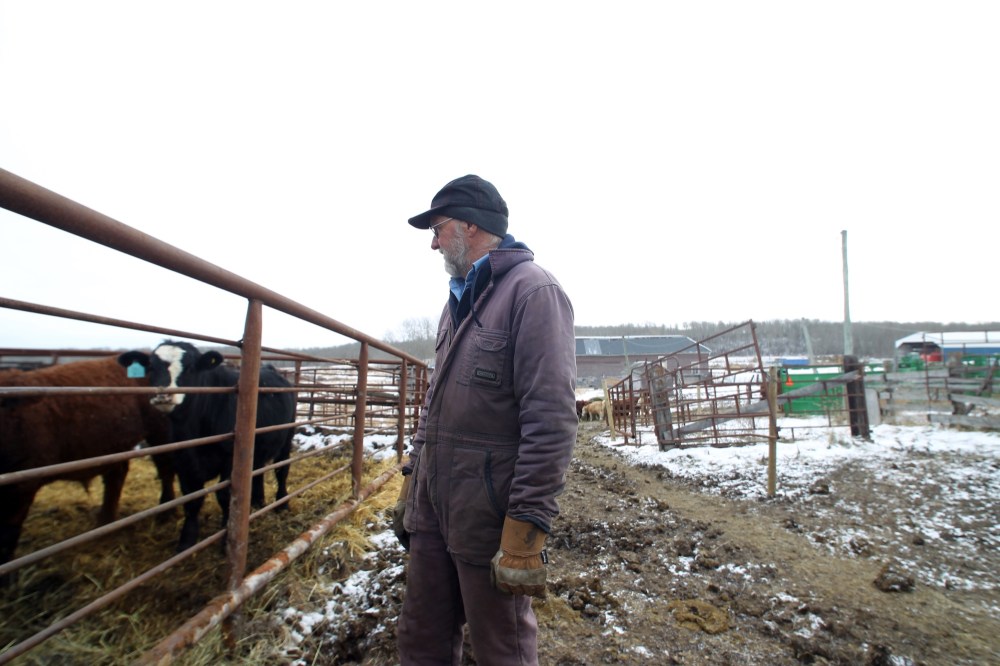
Celliers fired back, releasing all of the rounds in his magazine before calling his neighbours on a two-way radio.
He came out unharmed that night nine years ago. When he checked the damage later on, Celliers found a single bullet hole in the wall of his home, located at head level.
Now living in Erickson, Celliers said it is by the grace of God that he is alive to tell the tale.
“I don’t see myself as a victim,” he said. “I’m a survivor.”
Celliers’s encounter is one of hundreds taking place in South Africa against farmers, which saw a notable increase in the 1990s and have been documented by groups such as Human Rights Watch.
The attacks can result in severe beatings, rapes and in many cases death.
On Monday, South Africans living in Brandon gathered for an event dubbed Black Monday, a movement which began in South Africa as a way to raise awareness of the attacks against farmers.
Lukas Scheepers, a South African pastor who raises goats, cows and sheep on his farm between Rivers and Alexander, said he knew of two people who were killed in an attack three years ago near his brother’s farm in Magaliesburg, outside Johannesburg.
A neighbour and his son-in-law had broadcast over a two-way radio, known as a common way for farmers to communicate with each other in South Africa, to say they were responding to an incident at a nearby village where their workers lived.
When the two arrived at the village, Scheepers said he heard gunshots over the radio and later discovered that the two men had been killed.
“It was shocking,” Scheepers said. “Nothing stolen, nothing gained, nobody knows why it happened.”
While farmers and their workers of all ethnicities are targeted in these attacks, the majority of the victims are white South Africans who historically have been the country’s primary landholders.
In late October, the organization Afriforum, an advocacy group for the Afrikaner minority in South Africa, said at least 341 farm attacks had been carried out so far in 2017, of which 70 people were murdered.
Some see the attacks as an example of racial hatred, while others view it as politically motivated and believe South Africa is moving in a similar direction as neighbouring Zimbabwe, where the government took land from white farmers.
Martie Kruger, an immigration consultant living in Brandon, helped Celliers and others from South Africa settle in Canada.
Kruger moved to Canada herself in 2008 and started out in real estate, recruiting farmers and business people to buy property in Manitoba, before receiving her consulting licence in 2015.
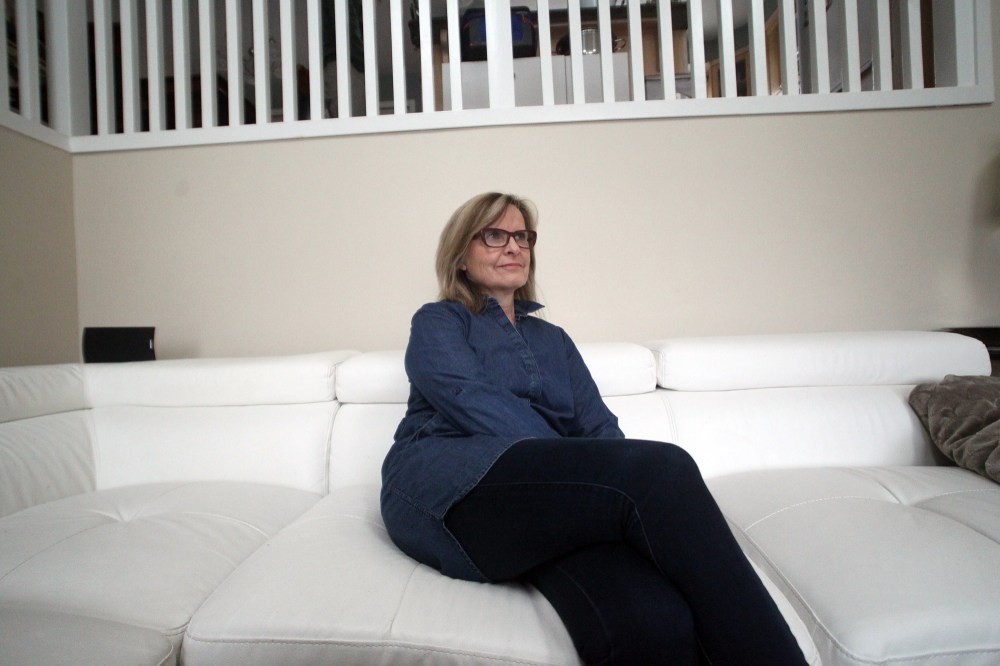
She can think of at least 28 families who are in the process of immigrating to Canada, in large part because of the violence in South Africa but also because of concerns the government will take their land.
“Farmers are scared,” Kruger said. “They don’t have any security. They don’t know what’s going to happen.”
Kruger talks to farmers frequently from her home office in Brandon and once a year, she travels to South Africa to find people who may consider moving to Canada.
“I do it because I want to help them and figure out a way for them to leave South Africa.”
Celliers, who raised sheep and grew a few cash crops, sold his family farm before he moved to Canada in November 2014.
Before he left, Celliers said his niece and her husband were both attacked at their home and burned with hot water.
The farm attacks, combined with what he sees as widespread political corruption, all factored into his decision to leave South Africa.
Celliers now raises beef cows and at some point hopes to try his hand at canola, but he said selling the family farm was traumatic for him and to this day, he finds it hard to look at old photos and videos of it.
“If you live with revenge, if you keep on hating, and connect that with greed, you’ve got a deadly combination,” he said.
“It’s toxic, it’s radioactive, it destroys everything.”
» mlee@brandonsun.com
» Twitter: @mtaylorlee