
Brandon soldier played pivotal role in Second World War
Advertisement
Read this article for free:
or
Already have an account? Log in here »
We need your support!
Local journalism needs your support!
As we navigate through unprecedented times, our journalists are working harder than ever to bring you the latest local updates to keep you safe and informed.
Now, more than ever, we need your support.
Starting at $15.99 plus taxes every four weeks you can access your Brandon Sun online and full access to all content as it appears on our website.
Subscribe Nowor call circulation directly at (204) 727-0527.
Your pledge helps to ensure we provide the news that matters most to your community!
To continue reading, please subscribe:
Add Brandon Sun access to your Free Press subscription for only an additional
$1 for the first 4 weeks*
*Your next subscription payment will increase by $1.00 and you will be charged $20.00 plus GST for four weeks. After four weeks, your payment will increase to $24.00 plus GST every four weeks.
Read unlimited articles for free today:
or
Already have an account? Log in here »
Hey there, time traveller!
This article was published 09/11/2017 (3096 days ago), so information in it may no longer be current.
One of the most demanding air supply tasks in the Second World War was assigned to a 27-year-old man from Brandon.
“That this responsibility is entrusted to a young Canadian and his newly-formed unit is a testament to the respect these young men have instilled in their Canadian and British supervisors,” writes James Vandermeer, of Dryden Ont. “The magnitude of the task before them is often not fully appreciated.”
While researching the war history of a family member, Vandermeer stumbled upon a group of compelling characters that served alongside his father-in-law, JC Clifton “Tip” Holborn.
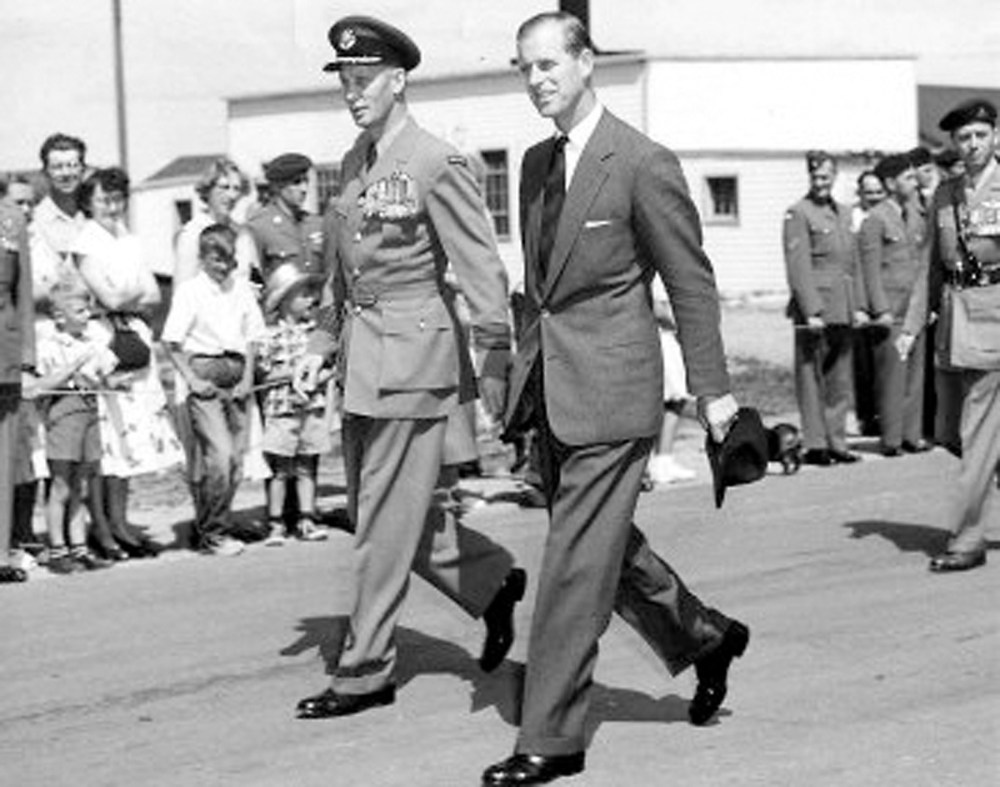
Among this cast, as documented in his book, ‘Tip’s Kite,’ is John Alexander Sproule, chosen as wing commander at the age of just 27. Sproule, also known as Jack, was tasked with transporting Allied troops to Europe. (Tip’s Kite is not available for sale but a copy is held at Commonwealth Air Training Plan Museum in Brandon)
Their squadron was formed in Sept. 1944, to be part of Operation Market Garden. The daring Allied mission, by air and ground, involved seizing a bridge across the Rhine River, gain a foothold into Germany and head toward the Reich’s captain in Berlin.
The instruction of 437 Husky Squadron, as Vandermeer writes, was tugging gliders and dropping paratroopers at Arnhem, Netherlands, as the crossing of that bridge was critical for their advance into Germany.
They went ahead, in spite of Dutch warnings the bridge would be defended heavily by German troops. The squadron was just days old when, on Sept. 17, they set off with 14 Dakotas aircraft, each carrying 28 paratroopers and pulling 12 Horsa gliders, with 30 troops on board.
Sproule, along with Vandermeer’s father-in-law JC Clifton “Tip” Holborn, were two of the pilots who took part.
The squadron carried most of the British 1st Airborne into battle.
As the fight raged on, some of their Dakotas were caught in enemy fire. Four of their 10 aircraft were lost on Sept. 21.
According to a biography on Sproule, he was wounded and shot down during Operation Market Garden, while resupplying Polish Airborne troops.
Pete Porter, a 94-year-old veteran, is believed to be the only surviving pilot from that squadron still alive.
Porter, residing in Mississauga, Ont., attended Sproule’s funeral in 1995 in Ottawa, where he lived in later years. He and his wife Margaret (Peggy) had three children. She died in 2009.
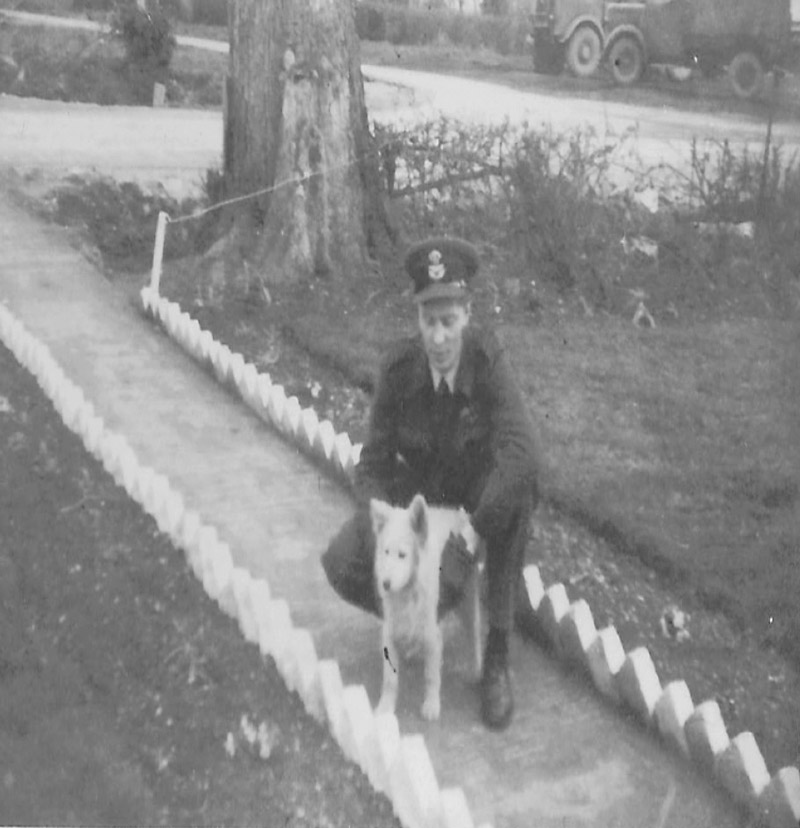
“He was a great commanding officer and he was a regular sort of guy,” Porter remembered.
Porter recalls attending a course at a RAF base when people were surprised he didn’t instinctively stand when the commanding officer entered the room.
“I said, ‘Not in our squadron, that’s 437 Squadron,’” Porter, then in his early 20s, remembered saying. “We would never stand up when Jacky walked in the room. He was just a regular guy, and he called us by our first name.
“We’d follow him anywhere,” Porter added. “He was, by far, the best person I had ever seen in that area.”
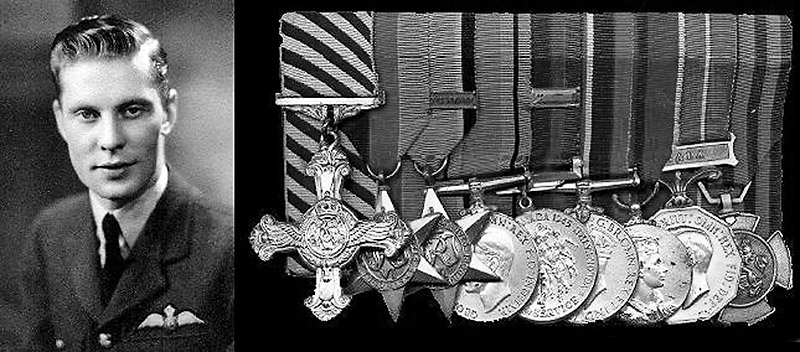
During Sproule’s Second World War service, he was recognized with numerous medals.
Among them, Netherlands awarded him the Bronze Lion for extreme bravery and leadership. Sproule was commended for the high efficiency he displayed in the short time from formation of his transport squadron to airborne operations. “Wing Commander Sproule led the squadron on the first sortie of the operations and throughout … has displayed good leadership and determination which contributed materially to the success of many sorties.”
Sproule also received the United Kingdom’s Distinguished Flying Cross. He was hit while on a supply mission to France, and successfully landed his aircraft. He was praised for “exceptional skill and great determination in the face of most adverse circumstances.”
Porter said he wasn’t surprised Sproule became a commanding officer in his 20s. There was little choice back then.
“The air force and the army had very few people when the war started, and if you’re already in the air force and you showed some sort of promise, they made you a squadron leader or a wing commander,” he said.
Porter was, in some ways, a grizzled vet by the time the 437 Husky Squadron was formed in 1944.
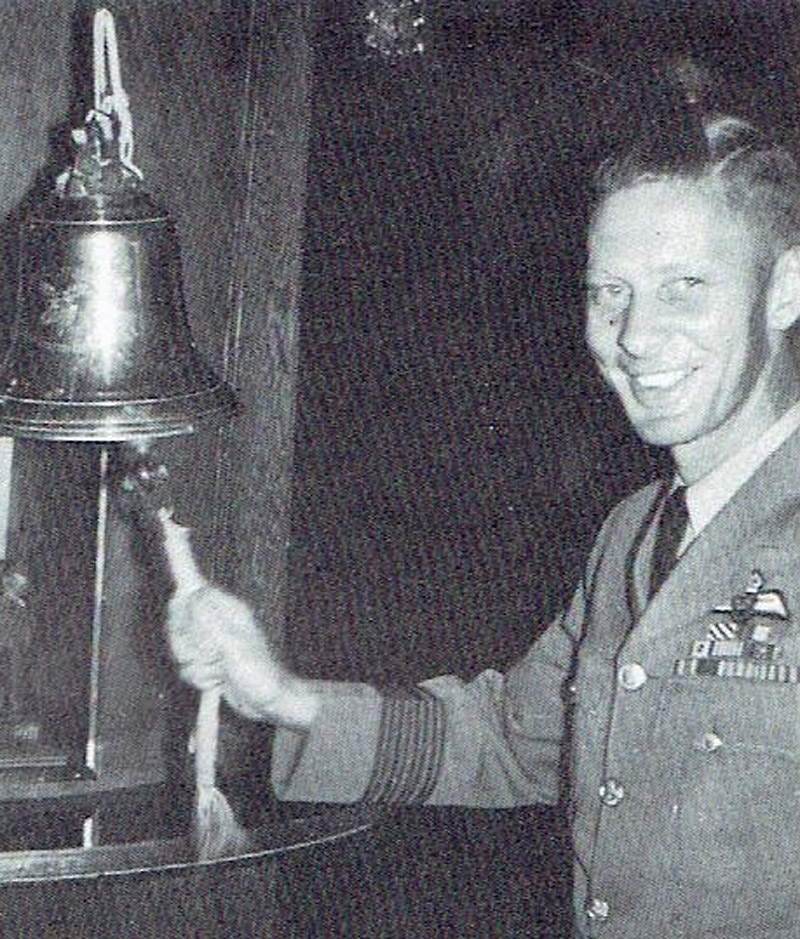
He joined the Royal Air Force in 1937 after learning to fly at the Brandon Flying Club.
When war broke out, he took part in the first raid on Germany.
He became a specialist navigation instructor before joining Trans-Atlantic and Middle East flights with No. 24 Squadron.
During D-Day, he was second-in-command of the airborne invasion with No. 48 Squadron.
After the Second World War, Sproule held a number of postings, including commanding officer of the air force base in Rivers, from 1954-57.
Sproule is remembered fondly for retrieving the Rivers Bell, a gift from the Royal Canadian Navy hung proudly in the Officers’ Mess. The large bell was stolen from Rivers in 1955 by visiting personnel from RCAF Station Moose Jaw.
Sproule took it upon himself to lead a rescue party one weekend, which involved getting inside the Officers’ Mess in Moose Jaw, disabling phones and securing the mess occupants, as military historian Bruce Forsyth wrote.
The bell is now located at the flying school in Portage la Prairie.
In researching his family history, Vandermeer found it incredible to learn what the young men, many of them in their 20s, were tasked with.
He explained Sproule was “well-known” for leading his pilots in the air, rather than sitting around as a “desk commander.”
In his years of research, one of Vandermeer’s most interesting discoveries centered on a photograph his father-in-law took. After flying high-ranking German officials to sign the instruments of surrender to end the Second World War, Holborn happened to snap a photo of some of the men who gathered. Vandermeer believes Holborn flew one of the German officials involved.
Recently, Vandermeer flew to Alaska to board the same aircraft his father-in-law flew in.
“I’m a big guy and I’m not usually that sentimental, but I broke down and wept,” he said.
He believes the aircraft holds a significant role in military history and should be returned to Canada, perhaps held at a museum. To contact Vandermeer for more information, and perhaps to donate to the cause, email him at j.s.vand@gmail.com.
» ifroese@brandonsun.com
» Twitter: @ianfroese