
Documentary detailing impact of Strongquill killing to be screened in Brandon
Advertisement
Read this article for free:
or
Already have an account? Log in here »
We need your support!
Local journalism needs your support!
As we navigate through unprecedented times, our journalists are working harder than ever to bring you the latest local updates to keep you safe and informed.
Now, more than ever, we need your support.
Starting at $15.99 plus taxes every four weeks you can access your Brandon Sun online and full access to all content as it appears on our website.
Subscribe Nowor call circulation directly at (204) 727-0527.
Your pledge helps to ensure we provide the news that matters most to your community!
To continue reading, please subscribe:
Add Brandon Sun access to your Free Press subscription for only an additional
$1 for the first 4 weeks*
- Enjoy unlimited reading on brandonsun.com
- Read the Brandon Sun E-Edition, our digital replica newspaper
*Your next Free Press subscription payment will increase by $1.00 and you will be charged $20.95 plus GST for four weeks. After four weeks, your payment will increase to $24.95 plus GST every four weeks.
Read unlimited articles for free today:
or
Already have an account? Log in here »
Hey there, time traveller!
This article was published 18/11/2017 (3198 days ago), so information in it may no longer be current.
A documentary on the 2001 killing of RCMP Const. Dennis Strongquill will be shown in Brandon on Wednesday.
The John Howard Society of Brandon will offer two free screenings of the film “Highway 45,” first at the Evans Theatre from 3 p.m. to 5 p.m. and later at the Art Gallery of Southwestern Manitoba from 7 p.m. to 9 p.m., as part of Restorative Justice Week.
The film details the impact of Strongquill’s death on his family and how his son in particular, Ricky Strongquill, seeks to reconcile with his father’s killer.
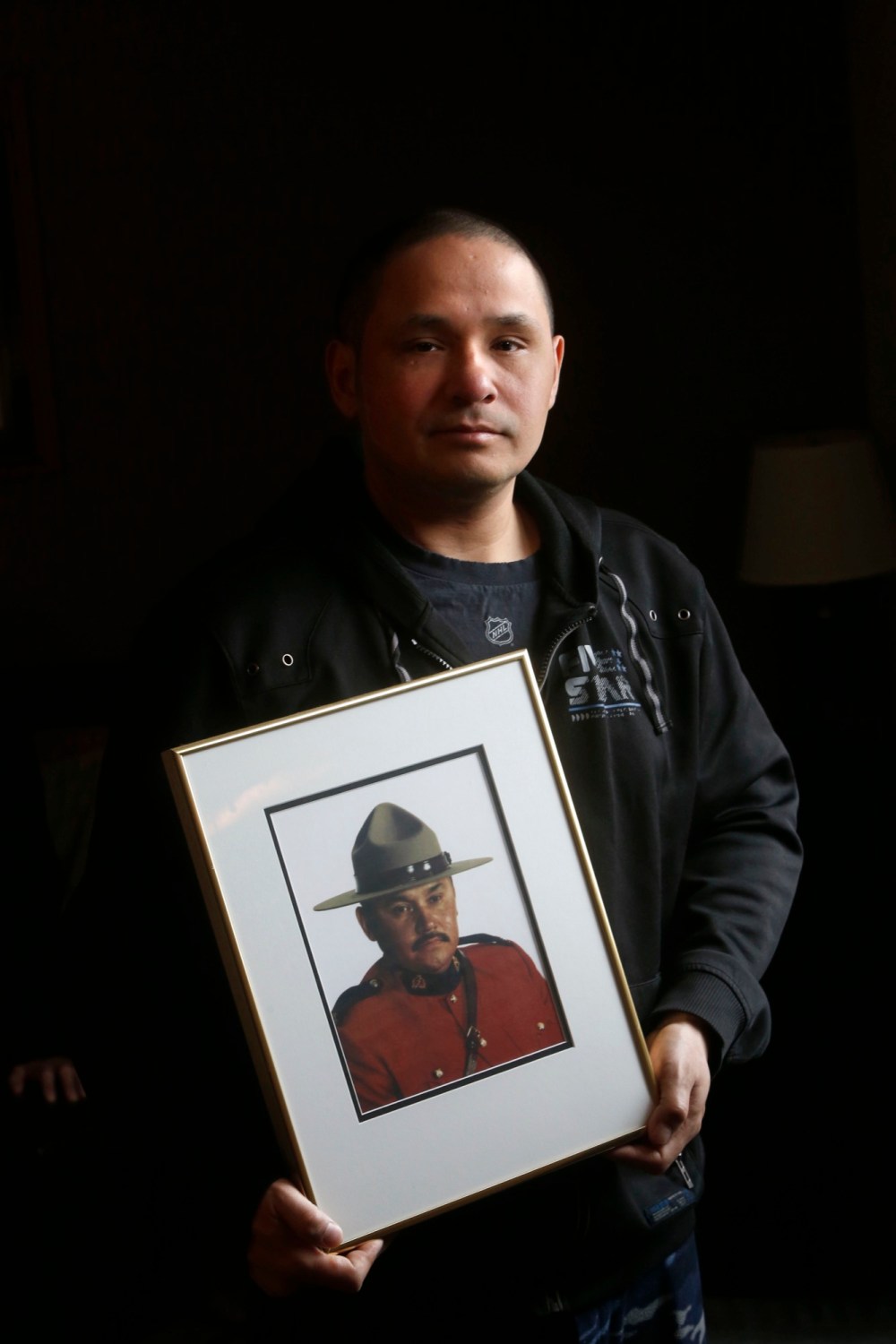
Director Ervin Chartrand will be available after the screening for questions and said he is glad the community will get a chance to see the documentary.
“I had to find a balance to tell this story,” Chartrand said by email. “It was a tragic situation and I had to tread lightly considering the content.”
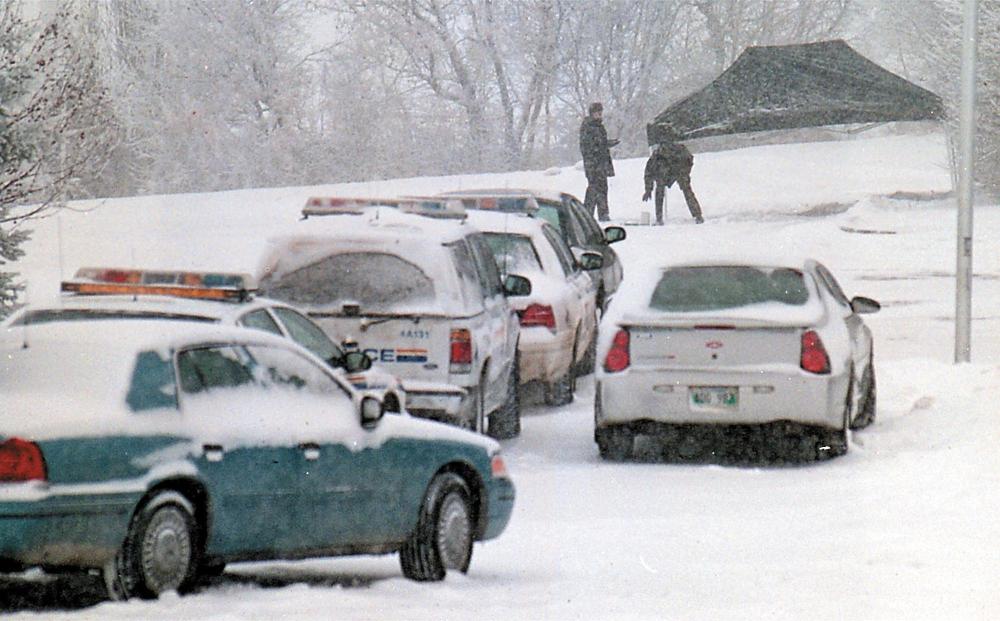
Strongquill was shot in December 2001 during a routine traffic stop near Russell.
Robert Sand, who shot Strongquill, was one of three armed fugitives on the run from Alberta.
Robert’s brother, Danny Sand, was killed days later by a police sniper, while Robert’s girlfriend, Laurie Bell, was later found guilty of manslaughter and sentenced to 10 years in prison. She completed her sentence in 2011.
Robert was convicted of first-degree murder after a jury trial in Brandon and given a life sentence with no chance of parole until 2026.
The filmmakers reached out to Dennis’s family, friends and partner at the time of the incident, Brian Auger.
Chartrand later learned from Winnipeg Free Press reporter Mike McIntyre, who wrote the book “Nowhere to Run: The Killing of Constable Dennis Strongquill,” that Strongquill’s son Ricky was speaking with Robert.
“I guess Ricky corresponding with Robert Sand surprised me that he was on this forgiveness journey,” Chartrand said.
The film premiered in Winnipeg on Nov. 4 and Chartrand said there were close to 20 RCMP officers present, along with Ricky and his family.
“I think what you’ll see is a tragic story and the people who were affected by the tragedy,” Chartrand said. “You’ll also see hope and forgiveness.”
Michelle Funk, the John Howard Society’s restorative justice facilitator in Westman, said the week is meant to be a celebration of restorative justice and all of the ways it can be used, including in a major tragedy.
Contrary to public perceptions that restorative justice is soft on crime, Funk said the process can allow for mutual understanding and healing.
“It holds the offender accountable, and it gives the victim a voice in the process, and it helps to heal the whole community,” Funk said.
“It’s tougher to have to face what you did and own up to it than hide behind it and have a defence lawyer speak for you.”
The film hasn’t been free of controversy, however.
Speaking to the CBC, Ricky Strongquill described how angry and disgusted he felt seeing images of Danny Sand’s dead body.
Funk did not comment on Ricky’s remarks, but said the hope is the film will lead to a discussion afterwards.
Chartrand, meanwhile, said he was shocked by Ricky’s reaction.
“When we had the premiere he was happy and grateful to have been a part of the documentary,” Chartrand said.
Chartrand said he likes to show the “dark side of things and the raw nature of crime and violence,” as well as stories of hope and survival.
He said his intention was never to give one side of the story more attention than the other.
“I’m not upset with Ricky and my personal opinion, I can see how this film triggered a lot of built up emotions,” Chartrand said.
“I’m just the filmmaker, and I had all the facts and I made a documentary that I thought was well balanced.”
» mlee@brandonsun.com
» Twitter: @mtaylorlee