
Taking the path less travelled
Advertisement
Read this article for free:
or
Already have an account? Log in here »
We need your support!
Local journalism needs your support!
As we navigate through unprecedented times, our journalists are working harder than ever to bring you the latest local updates to keep you safe and informed.
Now, more than ever, we need your support.
Starting at $15.99 plus taxes every four weeks you can access your Brandon Sun online and full access to all content as it appears on our website.
Subscribe Nowor call circulation directly at (204) 727-0527.
Your pledge helps to ensure we provide the news that matters most to your community!
To continue reading, please subscribe:
Add Brandon Sun access to your Free Press subscription for only an additional
$1 for the first 4 weeks*
*Your next subscription payment will increase by $1.00 and you will be charged $20.00 plus GST for four weeks. After four weeks, your payment will increase to $24.00 plus GST every four weeks.
Read unlimited articles for free today:
or
Already have an account? Log in here »
Hey there, time traveller!
This article was published 21/12/2017 (3054 days ago), so information in it may no longer be current.
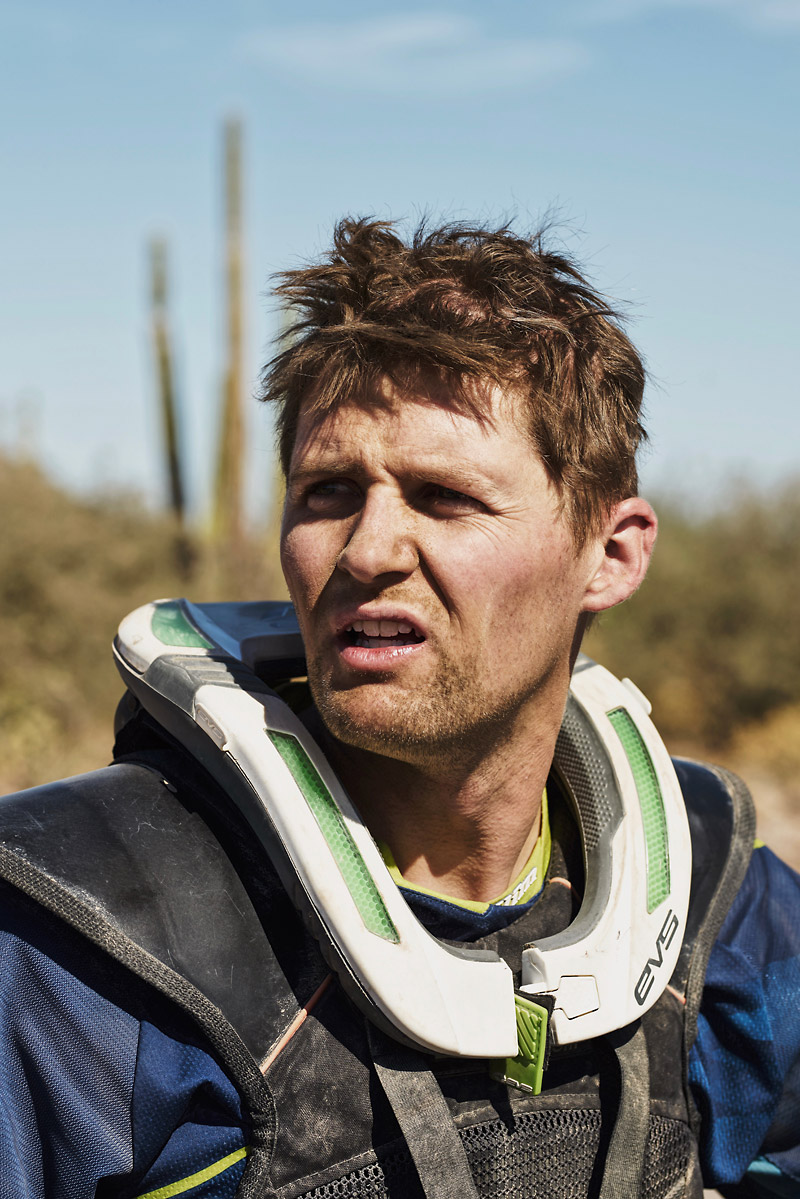
Tristan Dietrich willingly subjected himself to a grueling and shockingly dangerous desert race where death isn’t out of the question.
“I don’t know how many times a person may come across a near-miss where you could have died,” he said, “but you go through numerous of those conditions every hour.”
It’s a befitting explanation for the Mad Max-esque lunacy of the Baja 1000.
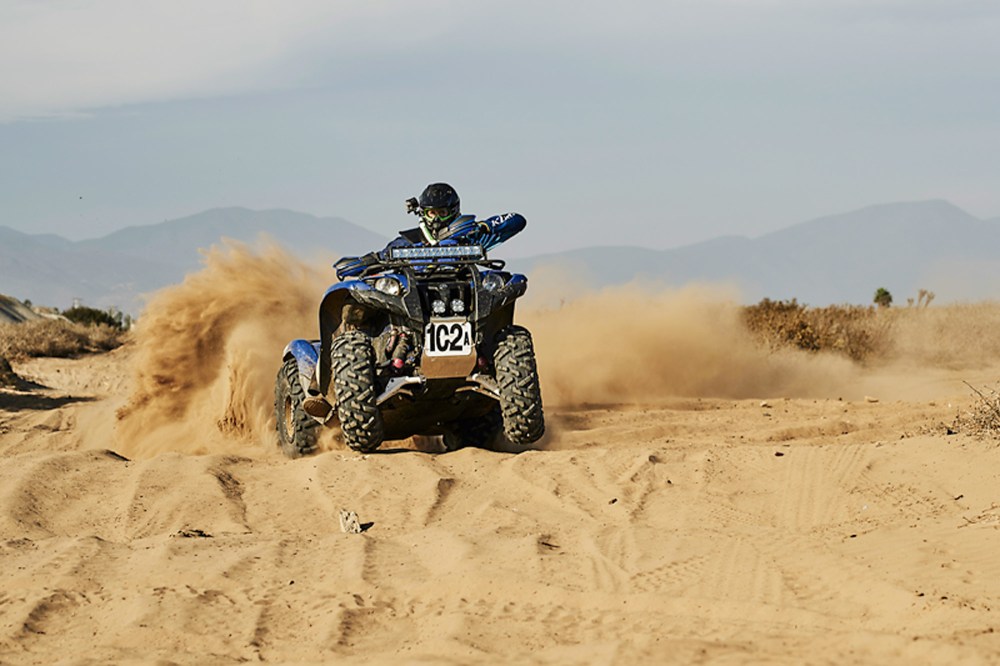
“Either you’re travelling at a high rate and then all of a sudden the ground drops out below you because somebody dug a big trench, or you smoke a rock because you couldn’t see it from the dust,” said the Souris resident, 34, who works as an area manager for a water technology company.
“Nevermind, you got 900 horsepower trophy trucks, chasing you down, and will literally run you over.”
The race is lethal. In 2016, three people died — two motorcycle racers and an eight-year-old spectator.
The hundreds of people who romp through the desert in souped-up trucks, four-wheelers and motorcycles understand the risk. They’re enticed by the thrill, flirting precariously close to death.
Other endurance races, they’ll tell you, aren’t dealing with oncoming traffic, clouds of dust or fan-built booby traps like trenches and fences.
For a dozen years, the famed Baja 1000 has been on Dietrich’s mind. This was at a juncture in his life, in his early 20s, when he’d put thousands of miles on his ATV a year. Allured by the mental and physical challenge of the off-road race, a loop through the sun-cracked Mexican landscape.
The Baja 1000 became “one of those things I wanted to do, but didn’t know how to do it.”
The dream of the married father of two was to race it in 2017 for the 50th anniversary. To prepare, he fine-tuned his quad over the years, experimenting with different motors and frames so it would endure unpredictable terrain.
Yet, his entry into the 50th race arose organically. He stumbled upon a company while researching the race, called Baja Pits, which became his pit stop every 45 miles or so. He booked it without picking out a team.
In a few months, he scrambled to get everything together. By the end, he found a fellow longtime Baja 1000 enthusiast in Swift Current, Sask., native Dan Nickol to be his second rider. His chase drivers, essentially his support team, consisted of his brother Nick and a friend of his wife’s, Kylee Tonita. A third helping hand was Dakota Radcliffe, a Souris high schooler.
Together, they drove down for a race, and an experience, they wouldn’t forget.
They set off for the race in the early morning of Nov. 14.
“Honestly, it was a battle,” Dietrich recalls.
Within 30 minutes of traversing a terrain filled with trenches, washouts and rocks, an A-arm, a lower control arm, on his ATV broke. Dietrich hit a booby trap he didn’t see.
For dozens of miles, his machine limped along the desert. The riders he passed earlier, passed him. It wasn’t until the third Baja Pits when the team connected with a neighbouring pit service capable of making repairs.
Around 10 a.m., the trophy trucks were given free reign.
“(The people at the) Baja Pits basically said, ‘You’re in the dust zone now, be careful.’”
Ahead of him were 180 miles of evenly spaced hills along the track, each three feet deep. Driving through would feel like rocking in a paint shaker, is how he described it.
Yet behind him, and approaching fast, were oversized trucks in the neighbourhood of 5,800 lbs. apiece.
He pushed it as fast as he could, trying to outrace these mechanized monstrosities leaving a concentrated dust tornado in its wake.
“I was pretty scared and I was pushing the machine pretty hard to get there before the trophy trucks.”
By the end of this section, he was so gassed he was yanked off his ride. That’s when his colleague took over, and it didn’t take five minutes until a helicopter above signaled the arrival of a heap of trophy trucks.
“You could see this dust cloud coming and it’s like nothing I’ve seen in my life,” Dietrich said. “It just looks like the apocalypse.”
His riding partner, Nickol, had no choice but to pull over. It took hours until they were in the clear.
Nearly 24 hours and some 500 miles into their race, it was obvious they wouldn’t win their class. They fell too far behind.
In the dead of night, he encountered a layer of slit bed, which Dietrich likened to riding on fresh powder snow which doesn’t pack down. Other riders, unlike his ATV, would get stuck in it. He saw buggies grounded.
He was going to pull them out, “just me and a little quad,” Dietrich said.
“I could have kept driving. That’s what everyone else did. But at this point I knew we weren’t really in contention to win,” he said. “I wasn’t even thinking at the time; I was just saying, ‘Man, these guys need help, I need to help.’”
For hours, he drove on and stopped to help riders he met. All this while his body was weighed down from exhaustion.
He gave a mounted light on his helmet to a dirt biker travelling without.
A Canadian running the race on his own needed motivation to keep going.
He gave gas to a dirt bike, sitting there for seven hours, whose fuel tank had depleted.
At one point, Dietrich got into a tango with a trophy truck, jockeying for positioning with this beast of a machine.
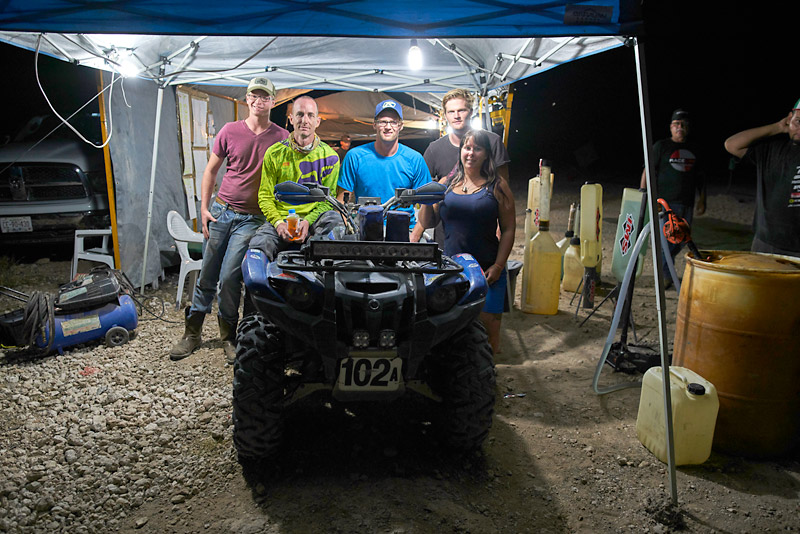
His pal took over the ATV for his third leg that second afternoon, when, at mile 897 by their count, they suddenly lost compression in their motor. They could not finish, after approximately 36 hours of desert racing.
“It was a pretty tough pill to shallow when he phoned us,” Dietrich said.
Yet, they took solace.
“We went down to feel this race, to actually beat the crap out of yourself and fight through it and we did that and we were still asking for more.”
Plus, if this were any other year, the amount of miles they rode would be enough to finish. But not in the 50th edition, where the course ran a longer 1,144 miles.
Dietrich was asking himself every day before the Baja 1000 roared why he’d put himself through this.
“I don’t want to say it’s defeating death, you know, it’s all about living to me,” he said. “On my death bed, I would never say I wish I didn’t run the Baja 1000. It’s going to say I wish I did the Baja 1000.”
Returning to this race won’t be easy. The investment, counting ATV upgrades, entry fee, travel expenses, pit service, phone rentals and insurance is in the low tens of thousands. Sponsors helped reduce the cost.
It might take a few years to return, but Dietrich hopes to tame the beast again.
This race was the exact jolt he needed to shake up his life.
“I needed a change,” he said, “and this was a big change.”
» ifroese@brandonsun.com
» Twitter: @ianfroese