
Gone Gardenin’ — Star of Bethlehem shines best in late summer months
Advertisement
Read this article for free:
or
Already have an account? Log in here »
We need your support!
Local journalism needs your support!
As we navigate through unprecedented times, our journalists are working harder than ever to bring you the latest local updates to keep you safe and informed.
Now, more than ever, we need your support.
Starting at $15.99 plus taxes every four weeks you can access your Brandon Sun online and full access to all content as it appears on our website.
Subscribe Nowor call circulation directly at (204) 727-0527.
Your pledge helps to ensure we provide the news that matters most to your community!
To continue reading, please subscribe:
Add Brandon Sun access to your Free Press subscription for only an additional
$1 for the first 4 weeks*
- Enjoy unlimited reading on brandonsun.com
- Read the Brandon Sun E-Edition, our digital replica newspaper
*Your next Free Press subscription payment will increase by $1.00 and you will be charged $20.95 plus GST for four weeks. After four weeks, your payment will increase to $24.95 plus GST every four weeks.
Read unlimited articles for free today:
or
Already have an account? Log in here »
Hey there, time traveller!
This article was published 15/03/2018 (2981 days ago), so information in it may no longer be current.
While many of our house plants provide us with greenery and flowers during the winter, certain plants only put on a show during the regular growing season; during the winter they take a rest. Now that the days are getting longer, such plants show signs of life as they react to the anticipated arrival of spring.
One such plant is star of Bethlehem, and we saw it offered for sale at garden centers in late summer and early fall. Star of Bethlehem is a lovely bushy plant that has either blue or white flowers, depending on the variety.
A member of the campanula family, star of Bethlehem is just one of hundreds of varieties and forms of campanula, but almost all of the pot plants on the market are forms of Campanula isophyllia.
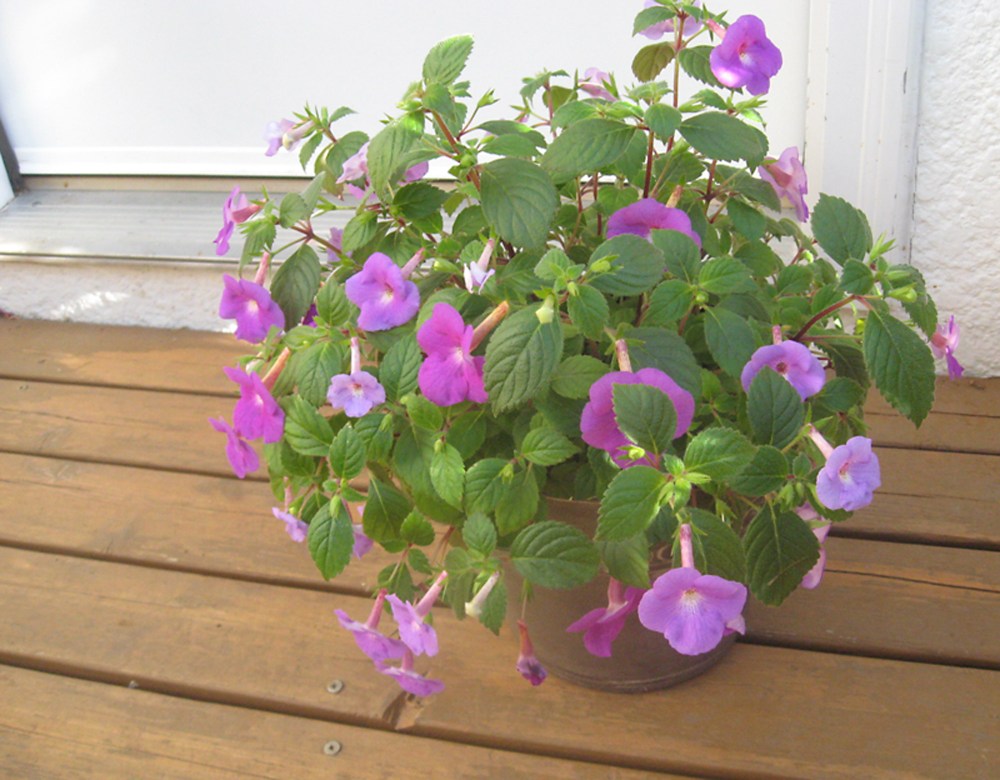
In late summer a star of Bethlehem is usually in full bloom because it begins to flower in mid-summer and continues to bloom well into the fall. The plant has a long bloom period lasting more than three months, making it one of the longest blooming plants for the indoor garden.
Star of Bethlehem has roundish leaves — some are heart-shaped — with toothed edges. The foliage is dark green and many four- to five-centimetres wide bell-shaped flowers grow from the leaf axils along the length of the stems, so the plant is literally covered with bloom.
It is a fast growing plant and will continue to produce buds as long as the plant continues to produce new growth. As fall advances the plant begins to flag and eventually blooming will cease.
Some older varieties of star of Bethlehem are trailing but newer hybrids are more upright, having been developed for the potted plant trade. These new hybrids are bushy, compact plants with an upright growth habit.
Star of Bethlehem is a cool weather plant; it should be kept in the coolest location possible. It needs strong indirect light with some direct sun to keep it bushy and compact.
The soil should be kept moderately moist and proper drainage is a must as the plant will object to sitting in a saucer of water for a long period of time — it doesn’t like wet feet. During the growing season the plant should be fertilized every couple of weeks with a balanced 20-20-20 soluble fertilizer in the water.
The star of Bethlehem is attractive to aphids so diligent observation is recommended to catch any infestation at the onset. Also, this is not a self-cleaning plant so spent blossoms must be removed to kept the plant looking attractive.

After the last of the blooms have faded in the late fall, the plant should be cut back almost to soil level. The appearance of roots on the soil surface is an indication that the plant needs to be divided and repotted.
Reduce the amount of water the plant receives after the plant is cut back; it should get just enough water to keep the soil somewhat moist. Star of Bethlehem will go into a semi-dormant state and will put forth little new growth until late winter, when ample new growth will be produced and the plant will get ready to burst into bloom by mid-summer.
Another plant that takes a winter rest is cupid’s bower. This plant is grown from small rhizomes (unlike star of Bethlehem which is propagated by cuttings), but like star of Bethlehem it is a bushy upright plant that also produces blue-violet flowers.
The funnel-shaped flowers are larger than those of the star of Bethlehem but they are produced in similar quantities so the plant can appear to be entirely covered with flowers when the plant is in full bloom. It also likes moist soil, bright light with some direct sun, and appreciates being fed during the growing season.
Cupid’s bower will also need to be deadheaded to keep it looking its best. The plant will begin to flag and become leggy in the fall and at that time water can be withheld.
The foliage will gradually die down and when the tops have dried off the pot can be stored away in a warm dark location for the winter. In the early spring bring the pot out of storage and into the light and give it some water and gradually new growth covers the soil surface and in a couple of months it will be in full bloom.
Cupid’s bower is a very forgiving plant. Although it is best to bring the pot out of storage in late spring, if you forget, the plant will simply bloom later. If the plant has not been divided or repotted in two or three years, when it is brought out of storage this task should be performed.

Simply dump the pot while the soil is still very dry. You will notice dozens of tiny rhizomes. Separate the rhizomes from the soil and pot up several pots with them by planting the rhizomes – quite close together but not touching – on the surface of fresh soilless mix, covering them with a couple of cm of planting medium and watering them in. (Don’t forget to sprinkle insecticidal dust on the soil surface to keep fungus gnats away.)
Although the outdoor garden is the focus of our attention during the summer, it is nice to have a blooming plant or two indoors during the outdoor gardening season. After all, we do spend some time indoors in the summer time and both cupid’s bower and star of Bethlehem provide colour to our indoor surroundings.
Albert Parsons lives, writes, and gardens in Minnedosa.
» wtw@brandonsun.com