
Sioux Valley women advocate for action
Advertisement
Read this article for free:
or
Already have an account? Log in here »
We need your support!
Local journalism needs your support!
As we navigate through unprecedented times, our journalists are working harder than ever to bring you the latest local updates to keep you safe and informed.
Now, more than ever, we need your support.
Starting at $15.99 plus taxes every four weeks you can access your Brandon Sun online and full access to all content as it appears on our website.
Subscribe Nowor call circulation directly at (204) 727-0527.
Your pledge helps to ensure we provide the news that matters most to your community!
To continue reading, please subscribe:
Add Brandon Sun access to your Free Press subscription for only an additional
$1 for the first 4 weeks*
*Your next subscription payment will increase by $1.00 and you will be charged $20.00 plus GST for four weeks. After four weeks, your payment will increase to $24.00 plus GST every four weeks.
Read unlimited articles for free today:
or
Already have an account? Log in here »
Hey there, time traveller!
This article was published 08/06/2019 (2491 days ago), so information in it may no longer be current.
SIOUX VALLEY — In the fall of 1981 a two-spirited Sioux Valley Dakota Nation woman was attacked and left dead on her family’s doorstep.
The case went cold and her killers were never brought to justice.
A memorial sits nestled beside a lilac bush in the south end of Sioux Valley in memory of the 36-year-old woman.
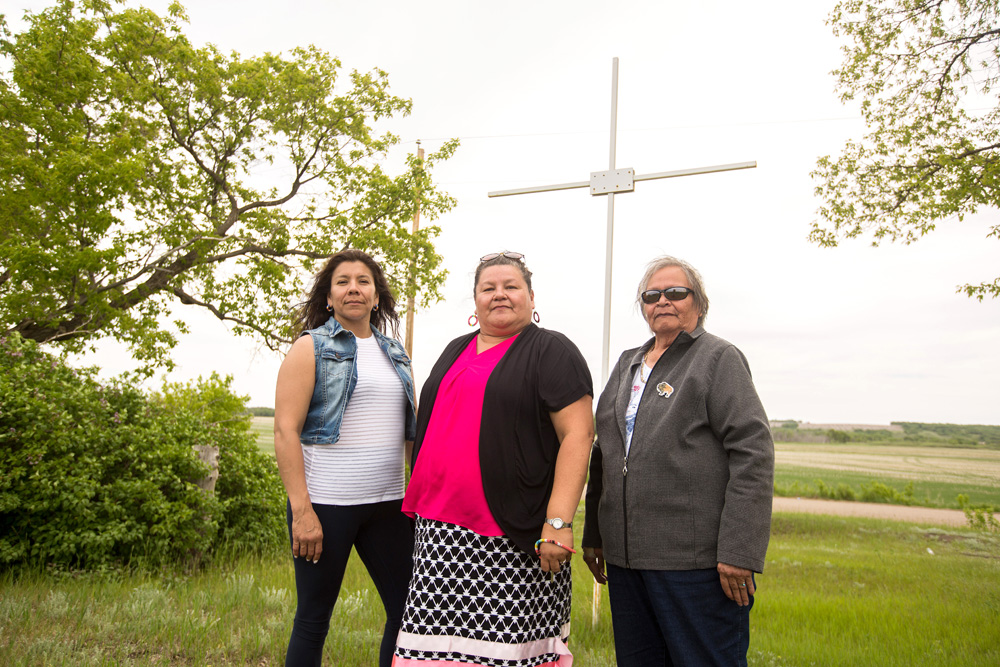
Heather Merrick is one of more than 1,200 Indigenous women who are known to have been killed or have gone missing, according to “Reclaiming Power and Place: The Final Report of the National Inquiry into Missing and Murdered Indigenous Women and Girls” that was released earlier this week.
Sioux Valley councillor Eleanor Elk remains frustrated to this day because Merrick’s family has not been able to get closure.
The community held a walk in honour of Merrick and other missing and murdered Indigenous women and girls on May 3.
“It’s in memory of the ones that never came home,” Elk said.
The final report helps highlight that Indigenous people are resilient survivors, she said, while drawing attention to the difficult path they face in healing from the wounds created by colonial actions such as the residential schools and the ’60s Scoop.
The Indigenous experience in Canada has been one of intergenerational trauma, Elk said, leaving many women and children vulnerable and marginalized.
“For Indigenous women, we’ve had no control over our bodies, our voice, we’ve always been shut down,” Brandon Friendship Centre president Debbie Huntinghawk said.
The report gives a voice to the voiceless and will help in hopefully creating change and a safer world for a vulnerable demographic.
Huntinghawk expects that the report will generate change, but that it will take generations to see the full impact.
The final report is 1,200 pages long and makes 231 recommendations, listed as “calls for justice.”
“It’s a lot to implement, but it’s a start,” Huntinghawk said. “Not everyone is going to be happy, but I think we’re starting to be heard loud and clear now.”
The first step on the path to healing now that the report has been released is to have everyone understand what has happened to Indigenous women so they can, in turn, understand the systemic racism that has culminated in this tragedy, Elk said.
Elk is haunted by memories and stories of women killed in Westman whose families will likely never find resolution.
She has first-hand experience with women who have ended up missing or murdered and the effect their loss has on their families and communities.
The councillor worked as a spiritual care advisor at the Brandon Regional Health Centre and in 2011 was present when murder victim Crystal Elk was brought to the facility.
“Even now when I close by eyes I can still see her lying there, that’s maybe something that will never go away,” Elk said.
Her voice cracks when describing the pressure she felt to be strong for the family, while recognizing how emotionally draining the experience was on herself.
It is a heart breaking struggle shared by families across Canada.
“We have so many that are never found,” Elk said.
These women leave behind legacies with family, friends and the community, Dakota Tiwahe executive directorCarol McKay-Whitecloud said, adding that the feeling of their absence reverberates across society and generations.
She hopes the report, recommendations and demonstrated proof of this spurs Canadians to action in addressing the problem.
“Not just the government, but Canadians in general and the institutions and communities,” McKay-Whitecloud said. “Everybody, in general, makes a conscious effort to make the changes that need to happen.”
Among the calls from the report is a hope that Canadians will read it, learn about Indigenous history and take steps to confront racism and other forms of discrimination when they see it. The commissioners say a complete shift in how Canadians view and treat Indigenous people is needed, as are changes in both policing and the justice system. The report also pushed for a host of calls to address the social problems behind some of the risks Indigenous women face, including better access to housing and food, funding for shelters for women who are homeless and transit options for women in remote and rural communities.
An important piece in addressing the issues that result in Indigenous people ending up missing and murdered is ensuring that they feel safe accessing public services like law enforcement and health care facilities.
It will take hard work to build that trust back, she said, especially in light of the history of colonization.
“Definitely, it has affected our community. … It’s a countrywide epidemic,” McKay-Whitecloud said. “Everybody has let them down, all the institutions.”
Part of that history of social and institutional treatment has made many feel like “second class citizens.”
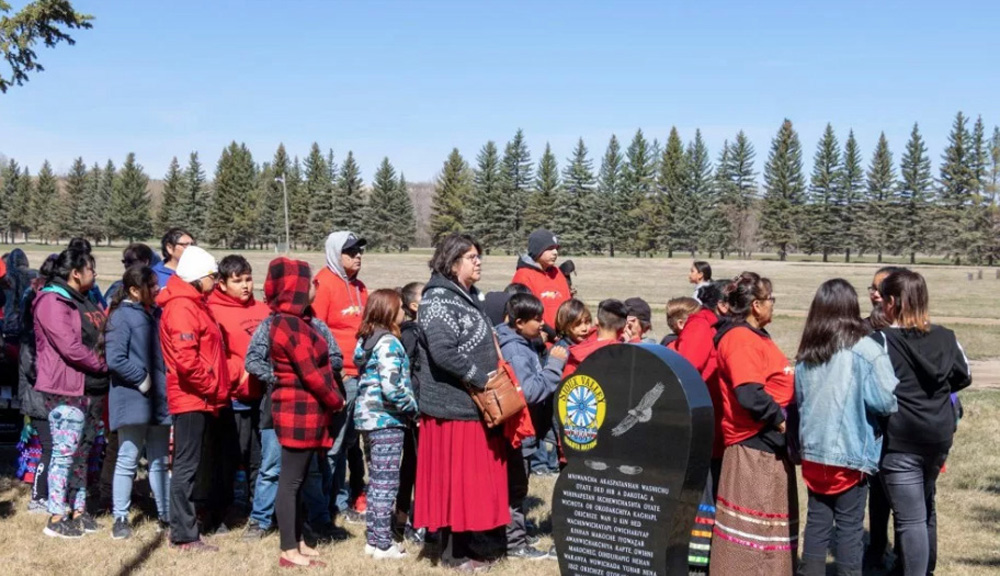
Sioux Valley Chief Jennifer Bone has not received a copy of the report and said that she wishes that it had been given to First Nations before it was publicly released.
“Those of us that live in First Nation communities know all that, and those are the arguments that we have been making constantly,” Bone said.
These priorities and issues have been voiced loudly and repeatedly, Bone said, adding that she wants to see action.
For now, she is waiting to see what is done in reaction to the report and whether the recommendations are implemented.
“To me, reconciliation is working with us and helping to heal our people from all the trauma that has been going on for years,” Bone said.
MOVING FORWARD
In their final report, the commissioners concluded that the thousands of Indigenous women and girls who were murdered or disappeared in Canada are part of a “genocide” against Indigenous Peoples, through actions and inaction by governments that are rooted in colonialism. They included a full separate 46-page report on genocide to explain how they reached what chief commissioner Marion Buller called an “inescapable conclusion.”
The final report said quantifying the total number of those affected is not possible.
“The sad part of it is some of it gets covered up,” McKay-Whitecloud said. “Some people haven’t been doing their due diligence.”
The report concluded that colonial violence, racism, sexism, homophobia and transphobia against Indigenous women, girls, LGBTQ and two-spirit people has become embedded in everyday life, resulting in many Indigenous people becoming accustomed to violence.
It also says Canadian society shows an “appalling apathy” in addressing the issue, adding that the inquiry “finds that this amounts to genocide.”
Following Monday’s formal presentation of the report, Trudeau has faced questions about the inquiry’s use of the term “genocide” and whether his government agrees with it, to which he replied that he accepts the findings of the commission.
Bone called the term genocide a “strong statement but true.”
Many Indigenous women face barriers including poverty, lack of support systems and abuse that leaves those who are vulnerable and stuck in dangerous situations that leave them feeling emotionally, spirituality and physically trapped, Huntinghawk said.
“We need to make space for Indigenous women because we matter.”
She wants to see Canadians approach the calls to action with open minds and hearts, and work together to break through these struggles to create better communities.
“It’s an eye-opener for all of Canada, now that there is an actual report with all the recommendations,” McKay-Whitecloud said.
Now comes the difficult task of unlearning behaviours that have been present since Confederation.
It is essential to aid in empowering the Indigenous community to overcome this tragedy, including support in revitalizing the culture, language, and pride in being Indigenous, Bone said.
“We’re starting all over.”
The report has left the women The Brandon Sun spoke with hopeful for what the world now holds for future generations once the cycle of trauma can be broken.
Elk said that although we can’t fix what has already happened, “we need to prevent further happenings.”
» ckemp@brandonsun.com
» Twitter: @The_ChelseaKemp with files from The Canadian Press