
Archeological teams to excavate, map wrecks of Franklin expedition
Advertisement
Read this article for free:
or
Already have an account? Log in here »
We need your support!
Local journalism needs your support!
As we navigate through unprecedented times, our journalists are working harder than ever to bring you the latest local updates to keep you safe and informed.
Now, more than ever, we need your support.
Starting at $15.99 plus taxes every four weeks you can access your Brandon Sun online and full access to all content as it appears on our website.
Subscribe Nowor call circulation directly at (204) 727-0527.
Your pledge helps to ensure we provide the news that matters most to your community!
To continue reading, please subscribe:
Add Brandon Sun access to your Free Press subscription for only an additional
$1 for the first 4 weeks*
*Your next subscription payment will increase by $1.00 and you will be charged $20.00 plus GST for four weeks. After four weeks, your payment will increase to $24.00 plus GST every four weeks.
Read unlimited articles for free today:
or
Already have an account? Log in here »
Hey there, time traveller!
This article was published 16/08/2019 (2425 days ago), so information in it may no longer be current.
OTTAWA – Canadian archeologists are on their way to a remote area in the Arctic Circle for another chance to dig up the secrets held by the Franklin expedition wrecks, Parks Canada announced Friday.
The task of exploring and excavating the two shipwrecks is the “largest, most complex underwater archeological undertaking in Canadian history,” Parks Canada said in a release.
Archeological teams will travel to the wreck of HMS Terror and use an underwater drone and other tools to create 3D structural maps of the ship.
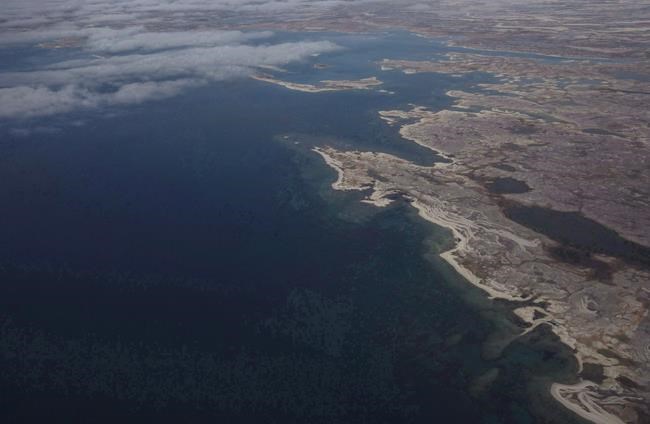
Work on the expedition’s other ship, HMS Erebus, will involve searching the officer cabins and lower deck for artifacts.
Parks Canada said there may be thousands of artifacts aboard the wrecks that will help enrich the country’s knowledge of the expedition.
Based on an existing agreement, those artifacts would become shared property of Canada and the Inuit.
The two ships are the remains of an expedition launched by British explorer John Franklin in 1845, leaving England with a crew of 134 sailors.
Seeking the Northwest Passage, the two ships eventually became trapped in the ice near King William Island, in what is now Nunavut.
Some of the crew members attempted to walk to safety starting in 1848, but all eventually perished.
Many searches were launched since the ships were lost, seeking to find the wrecks and unravel the mystery of the ill-fated expedition.
It wasn’t until 2014, though, that an expedition supported by a broad partnership of Canadian government agencies, Inuit, the Government of Nunavut and other groups discovered HMS Erebus.
Two years later, an expedition launched by the Arctic Research Foundation discovered HMS Terror.
Since then, the focus of Parks Canada, Inuit and other partners has been on protecting and conserving the wrecks, while exploring them in stages.
The wrecks are designated as a national historic site but for now access is restricted. Parks Canada is working with a committee responsible for advising on the wrecks to figure out how visitors might be able to experience the ships in ways that maintain their integrity.
Related Articles
First interior shots of HMS Terror released
Advertisement Advertise With Us