
Diamond prices depend on the ‘four Cs’: carat, cut, clarity and colour
Advertisement
Read this article for free:
or
Already have an account? Log in here »
We need your support!
Local journalism needs your support!
As we navigate through unprecedented times, our journalists are working harder than ever to bring you the latest local updates to keep you safe and informed.
Now, more than ever, we need your support.
Starting at $15.99 plus taxes every four weeks you can access your Brandon Sun online and full access to all content as it appears on our website.
Subscribe Nowor call circulation directly at (204) 727-0527.
Your pledge helps to ensure we provide the news that matters most to your community!
To continue reading, please subscribe:
Add Brandon Sun access to your Free Press subscription for only an additional
$1 for the first 4 weeks*
*Your next subscription payment will increase by $1.00 and you will be charged $20.00 plus GST for four weeks. After four weeks, your payment will increase to $24.00 plus GST every four weeks.
Read unlimited articles for free today:
or
Already have an account? Log in here »
Hey there, time traveller!
This article was published 26/11/2019 (2282 days ago), so information in it may no longer be current.
Jonathan Goldberg meets customers every day who are searching for an engagement ring that will wow their partner at his Toronto jewelry business Kimberfire.
But before many can even think about the ring’s size or cut, they are often fretting about something else: the price.
It’s not hard to understand why. Engagement rings can cost anywhere from a few thousand to hundreds of thousands of dollars.
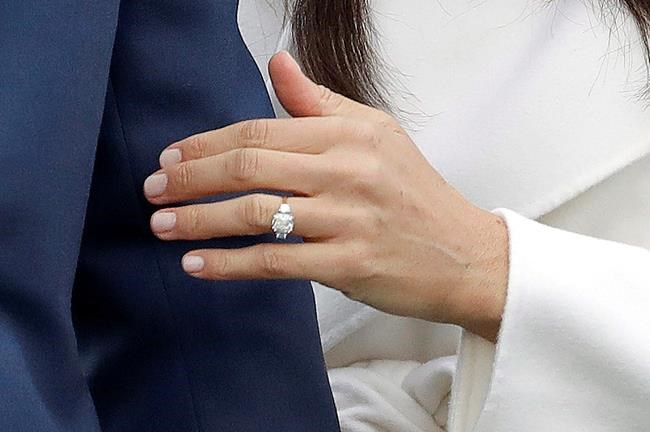
In a ploy to get people to spend more during the years surrounding the Great Depression, diamond company De Beers suggested dropping two months of salary on an engagement ring.
But Goldberg says, “We haven’t seen anyone calculate that in our office.”
These days he recommends engagement ring shoppers focus less on a decades-old rule and more on balancing what they are willing and able to spend with their partner’s preferences.
Reliable numbers on what consumers spend on engagement rings in Canada are hard to come by, but in the U.S, the average cost US$5,900 US, while one-third of people spend between $1,000 and $3,000, according to a survey from the Knot, a wedding services marketplace.
That price is largely dependent on the “four Cs” — carat, cut, clarity and colour.
A larger and whiter diamond, for example, carries a higher cost. So does one with fewer imperfections, warns Goldberg.
“That being said, you hit a point on colour and clarity, where it’s already a white, clean diamond, so there’s really no point going higher and spending more on that only to get a smaller diamond,” he says.
Cut is also an area where you can easily run up your bill. According to Goldberg, rounded diamonds are generally “the most expensive of all” in part because it is the most popular shape.
Cushion cuts are generally more affordable, but be careful with that shape, if it’s size you’re after.
“Round will actually look larger versus most of the other shapes,” he says. “One carat round will look larger than one carat cushion. You’ll generally have to go heavier on the cushion to get that same appearance.”
You can also opt for a diamond grown in a lab instead of being mined. Goldberg doesn’t see many people requesting them yet, but says it is getting cheaper and easier to make them every year, keeping costs down for consumers. A quick web search shows plenty being sold for engagement purposes for about $2,000 or less.
Jeweller Lux Jewels told the Vancouver Courier earlier this year that nine out of 10 engagement rings it has sold have featured lab-grown diamonds.
A 2019 report from the International Grown Diamond Association also shows that 66 per cent of millennials shopping for an engagement ring will consider a lab-grown diamond and 23 per cent say they will definitely buy a ring with lab-grown diamonds.
The diamond is just the beginning. The price of bands can also vary dramatically.
Platinum is the most expensive because it is usually much more dense and heavy, says Goldberg. If you’re looking to save, he says white or yellow gold will generally cost less. Thinking twice about adding diamonds to the band can also keep the price down.
Goldberg recommends shopping around and doing some research before you head to the store.
“You can’t just go to the lowest overhead provider,” he says.
“Make sure that you’re going to someone that has a stated emphasis on quality, on ethical sourcing, on transparency, so that you know exactly what you’re buying and that it’s still a brand that…will actually stand behind their product because you’ll have it for a long time.”
This report by The Canadian Press was first published Nov. 26, 2019.