
Lefley persevered, succeeded despite early challenges
Where are they now? Brandon Wheat Kings alumni
Advertisement
Read this article for free:
or
Already have an account? Log in here »
We need your support!
Local journalism needs your support!
As we navigate through unprecedented times, our journalists are working harder than ever to bring you the latest local updates to keep you safe and informed.
Now, more than ever, we need your support.
Starting at $15.99 plus taxes every four weeks you can access your Brandon Sun online and full access to all content as it appears on our website.
Subscribe Nowor call circulation directly at (204) 727-0527.
Your pledge helps to ensure we provide the news that matters most to your community!
To continue reading, please subscribe:
Add Brandon Sun access to your Free Press subscription for only an additional
$1 for the first 4 weeks*
*Your next subscription payment will increase by $1.00 and you will be charged $20.00 plus GST for four weeks. After four weeks, your payment will increase to $24.00 plus GST every four weeks.
Read unlimited articles for free today:
or
Already have an account? Log in here »
Hey there, time traveller!
This article was published 26/11/2019 (2352 days ago), so information in it may no longer be current.
By the time he was 20, three hockey teams had been taken away from Chuck Lefley due to skullduggery by others.
Ultimately it didn’t matter. By the time he was 21, he had won a Stanley Cup.
“I’ve lived a blessed life,” said Lefley, who played seven games with the Brandon Wheat Kings in the spring of 1970. “You look at all the good things that have happened to me and the good hockey teams and the good people I’ve met, and then I’ve had a 40-year farming career right here at home. It’s just been great. There isn’t anything I can complain about, and if I did, I don’t think anybody would listen.”
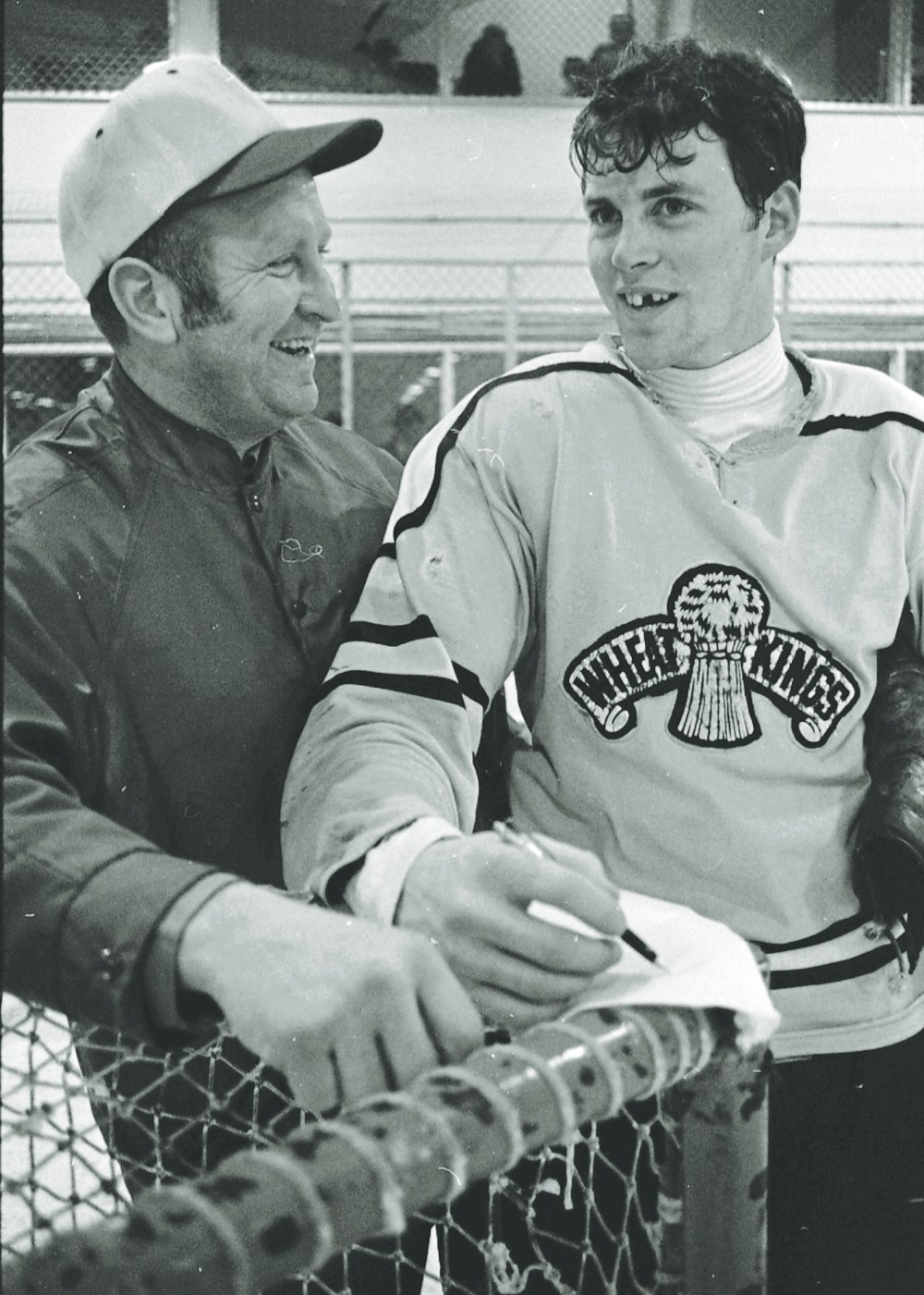
The 69-year-old Lefley grew up on a farm a mile out of the tiny community of Grosse Isle, located near the town of Warren, 27 kilometres northwest of Winnipeg’s Assiniboia Downs.
He was part of a family of nine, with older brother Bryan the first of father Bob and mother Jean’s seven children that also included Lynda, Glen, Mike, Tom and Dale. Chuck came along second, 15 months after Bryan, and the two would spend a lot of time on the ice together as a result.
Lefley started playing hockey at age six when his father drove the two oldest boys into Winnipeg’s north end every Saturday morning to the old Olympic Arena to participate in Vince Leah’s Tom Thumb Hockey League.
Within a year or two, they began driving 11 kilometres north to Warren to play in a new indoor rink that opened in 1957.
By 15, he was skating with the Manitoba Junior Hockey League’s Winnipeg Rangers, who later became the St. Boniface Saints and are now the Virden Oil Capitals.
“When I started playing junior, my brother Bryan paved the way by playing a year before me and I would go and watch them practice,” Lefley said. “I would ride in there with Dad and Bryan and I said to Dad ‘I should be able to do that too.’ Of course he went down and talked to (Rangers coach) Gord Pennell and the others and they allowed me to practise with them when I was 13 or 14. And then the next year, when I was 14 and 15 in January, I played with them.”
He was already tall at six-foot-one but weighed just 145 pounds. To protect their young star, the Rangers put him on a line with two of the toughest players in the league, Brian Cadle and Larry Vander Graff.
Lefley remembers playing at the old Wheat City Arena against outstanding Wheat Kings teams that included Bill Fairbairn and Juha Widing.
“They taught us a lesson or two,” Lefley said. “Who knew that five years later — I didn’t get to play (with the Wheat Kings) in the Wheat City Arena, it was the Manex Arena then — I would end up back there.”
But his path first would take a couple of very unusual detours.
When he was in Grade 11 and his brother was in Grade 12, they were offered full scholarships to Denver University. They headed down to Denver, were set to start classes and began practising with the team, which included future NHLer Keith Magnuson.
But they were unexpectedly called into the dean’s office, and were told their scholarships had been retracted because there were claims originating in Winnipeg that the Rangers had paid them to play junior, making them ineligible for the NCAA.
“That was totally untrue, because all they gave us was gas money to drive back and forth to Winnipeg for practice,” Lefley said. “They thought it would be a way to get Bryan and I out of Denver and back to Winnipeg and play for the newly-formed Jets of the (Western Canada Hockey League). We came home and of course we didn’t (play) on principle. We didn’t know a lot about it but my dad had lots of principles and we were not going to play for them because of what they did to us.”
Instead, they skated with a senior hockey club in Warren and with every minor hockey team they were eligible for.
Coincidentally, the Canadian national men’s hockey team had just moved to the University of Manitoba from the University of British Columbia — all the players were amateurs and in school —and Lefley practised with them at age 17. He was invited to join them full-time in his 18-year-old season, and played in the 1969 world championships in Sweden, where they finished fourth.
“I didn’t realize until years later what an experience that was for me,” Lefley said. “As an 18-year-old, you don’t really appreciate what’s in front of you.”
With Winnipeg and Montreal set to co-host the world championship in 1970, the Canadian team was allowed to add nine semi-pro players to make them more competitive. But when they won some international events leading up to the worlds with players including Phil Roberto, Jim McKenny, Wayne Carleton and Al MacNeil, Lefley said the semi-pro players were suddenly ruled ineligible.
Canada dug in its heels, refused to participate in the worlds at all, and the national team disbanded in January 1970, leaving Lefley without a place to play.
All of the national team’s commitments would be maintained, including their university tuition, but they no longer had a team on which to play.
The Dauphin Kings of the MJHL and the Wheat Kings were both offering him a spot, so he still had options.
Lefley asked his national team coach, Jack McLeod, for his advice on what he should do next.
“He said if you want to play junior, you want to play in the best junior league in Canada,” Lefley remembered. “He said that’s where you should go and we’ll see what you look like.”
Brandon Sun sports editor Bill Davidson had followed the unfolding saga closely, and in the Feb. 14, 1970 issue, noted Lefley was on Brandon’s 25-man active player list.
Exactly one week later, Davidson reported Lefley had signed in Brandon after manager-coach Ron Maxwell held a “booster party” at the North Hill Motel to announce the news.
“I like the rink, I’m happy to be here, and I hope I can help the Wheaties,” Lefley told Davidson at the time.
Behind the scenes, things were more complicated.
When Lefley signed on Feb. 20, the Wheat Kings had already received the green light from the league on Feb. 18 because it was after the Feb. 10 deadline. WCHL president Ron Butlin of Calgary then sent a telegram on Feb. 25 that he had changed his mind and Lefley couldn’t play, but then called 15 minutes before the game and said he could play.
Lefley joined a Brandon team that included Bob Fitchner, Butch Deadmarsh, Terry Marshall, Bob Leslie and Mo Brunel, but was sitting in fourth in the East Division and would face the mighty Flin Flon Bombers in the first round of the playoffs.
His new teammates quickly accepted him.
“Hockey teams are well-knit families I find,” Lefley said. “If you can’t fit on a hockey team, then you’re going to have trouble fitting in anywhere. We’re all in the same boat and trying to row the same way. It’s just the nature of the game, us against them.”
Lefley has kept in touch over the years with some of his Wheat Kings teammates, including Jack Mahon.
“They became (my) lifelong friends,” Lefley said.
Most of Lefley’s games with the Wheat Kings were on the road, but he does remember playing an extremely tough Estevan Bruins team.
“We played them in the Manex, and the smaller the rink, the better they liked it,” Lefley said. “That was something I’ll remember.”
But he would soon have bigger problems than the Bruins.
When the Western Canadian Junior Hockey League formed for the 1966-67 season, it was an outlaw circuit that had been envisioned by Edmonton Oil Kings owner Bill Hunter due to what he saw as a competitive imbalance in Western Canada, compared to the East, at the top level of junior hockey.
He made the move against the wishes of the sport’s governing body, the Canadian Amateur Hockey Association, which promptly suspended the seven teams from participating in any CAHA events.
The two sides were still trying to iron out some of those differences when they met in the spring of 1970 in Regina. Importantly, Brandon didn’t have a representative at the meetings.
The other owners met informally, and Davidson reported that Lefley was on the agenda.
On March 15, Butlin suddenly announced that with the playoffs near, Lefley was ineligible to play anymore because he didn’t meet the signing deadline. As Davidson wryly noted, it was a reversal of a reversal of a reversal.
Wheat Kings director Glen Lawson pressed the other owners to hold a hearing, but Davidson reported that some of them were suddenly hard to track down and the meeting never happened.
Lefley was done with the Wheat Kings after posting 12 points in seven games, and Brandon would be swept by a powerful Flin Flon club led by Reggie Leach.
“I never would have thought I should or would make any kind of stir,” Lefley said. “Why would you do something like that over me? That’s silly.”
Lefley actually accompanied the team to Flin Flon just in case his ban was overturned.
He wouldn’t wait for long for the next detour in his hockey path.
Lefley said the draft isn’t what it is now, but 20-year-olds back then knew they were eligible. (The rule changed to include anyone aged 18 in 1979.)
He and his national team friend Steve Carlyle would joke that it would be nice to be picked by the expansion Pittsburgh Penguins for all the opportunity that would be available. Instead, both went to the Montreal Canadiens, with Lefley selected sixth overall.
“Now that I think on it, maybe I was disappointed because I automatically thought that naturally I won’t get to play,” Lefley said. “Now in retrospect, it was the best thing that ever happened to me. I learned an awful lot there”
Montreal had won four of the six previous Stanley Cup championships, and boasted a roster that included Jean Beliveau, Yvan Cournoyer, Pete and Frank Mahovlich, Jacques Lemaire, Henri Richard, Guy Lapointe, John Ferguson, Serge Savard and rookie goalie Ken Dryden.
“You can only imagine me and other young guys there for the first time,” Lefley said. “It was a storied franchise. You hear about it all the time, but until you’re there and you live it, you don’t quite understand how they did what they did. Once you’re there and you watch and you listen and you do as you’re told, it becomes a way of life.”
Not surprisingly, he spent most of the season in the American Hockey League with the Montreal Voyageurs, playing one regular-season game and one playoff game in the NHL. Nevertheless, 14 months after being declared ineligible in the WHL, Lefley, who was watching from the stands, was a Stanley Cup champion when the Habs beat the host Chicago Blackhawks 3-2 in Game 7 on May 18, 1970.
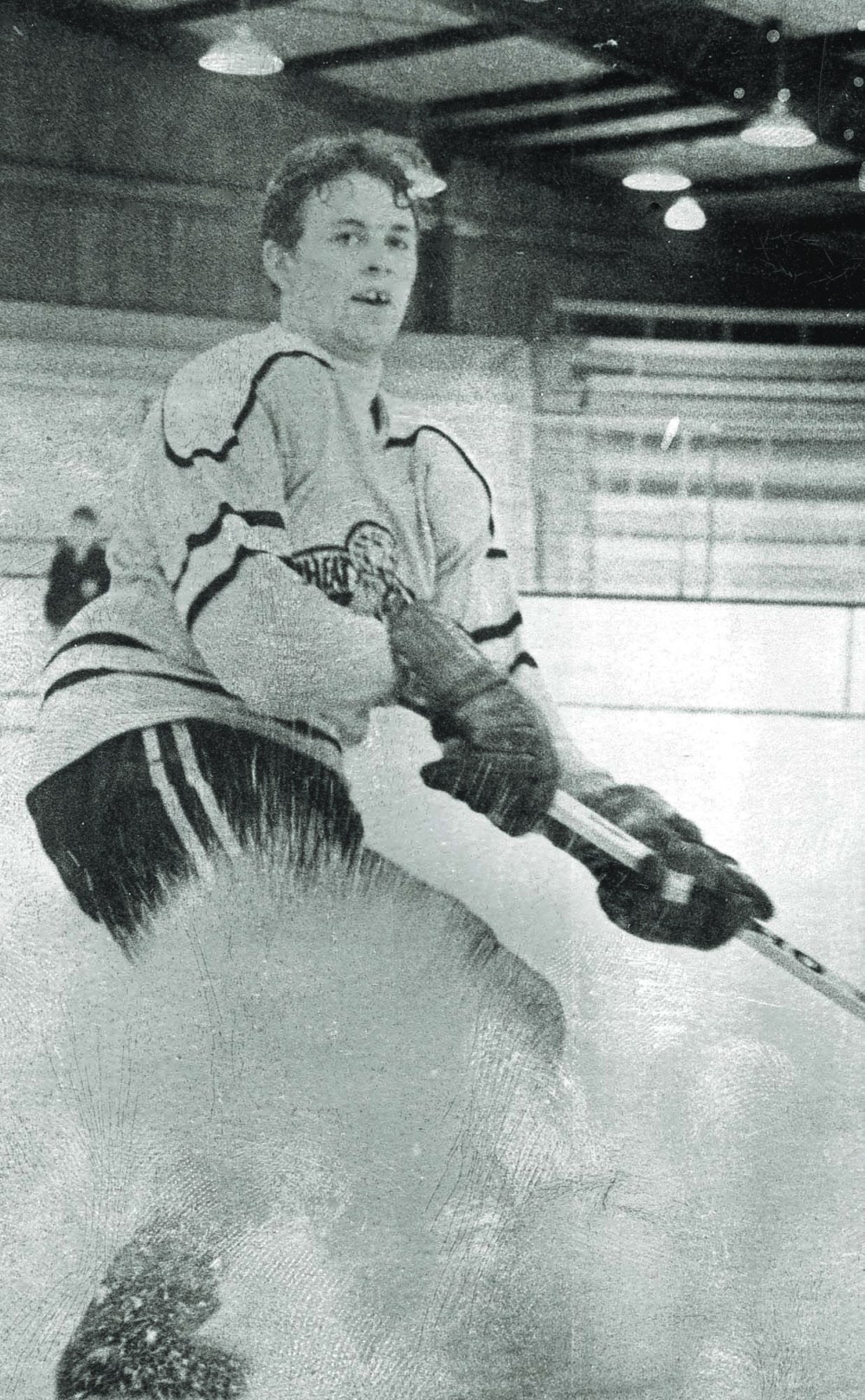
Lefley bounced between the NHL and the AHL for another season, finally securing full-time work in Montreal in the 1972-73 season.
In 65 games, he scored 21 goals and added 45 assists, and on May 10, 1973, won his second Stanley Cup when the Canadiens beat the Blackhawks in six games.
“I thought when I was with the national team and put on our country’s sweater that really made me feel like something,” Lefley said. “I can only liken it to winning a Stanley Cup with a Canadiens sweater on.”
After posting 54 points in 74 games in 1973-74, Lefley was hurt and off to a poor start the next season when he was dealt to the St. Louis Blues on Nov. 28, 1974 for defenceman Don Awrey.
Lefley scored 24 goals that season, and exploded for 43 goals and 42 assists in 75 games in 1975-76 on a line with Derek Sanderson and Claude Larose.
“(Sanderson) was one of the most talented centres I’ve ever played with and just an honestly good guy who had some trouble,” Lefley said. “I credit him for those 43 goals. If he could have got me 53, he would have. That was the kind of centreman he was.”
Lefley said he’s just as happy that Sanderson, who waged a very public battle with alcoholism, is now clean and a successful hockey agent in Boston.
After two full seasons in St. Louis, Lefley decided it was time to retire and returned to the farm in Grosse Isle. He was eventually coaxed out of retirement to play with Jokerit in Finland — joining a young player named Jari Kurri — and then spent the next season with Düsseldorfer EG in Germany with his brother Bryan.
The Blues then demanded he return — he had three years on a contract remaining when he “retired” — so Lefley came back to the NHL for the 1979-80 season.
“Everything went south again and mutually we decided to part ways,” Lefley said.
It was an easy transition away from the game for Lefley, who says everybody has a shelf life and he had reached his. Lefley and his younger brother Glen had bought their father’s farm the year before he retired, so he left the game with a plan.
“There was no trauma for me, there was nothing,” Lefley said. “Honestly, I just got to be here for every seeding and every harvest rather than having somebody else help Glen do it while I was away playing hockey.”
They had cattle but for the last 10 or 15 years have stuck to crop, including wheat, canola and soybeans. Next year will be a momentous one for him, because it will be his final crop before he retires for good.
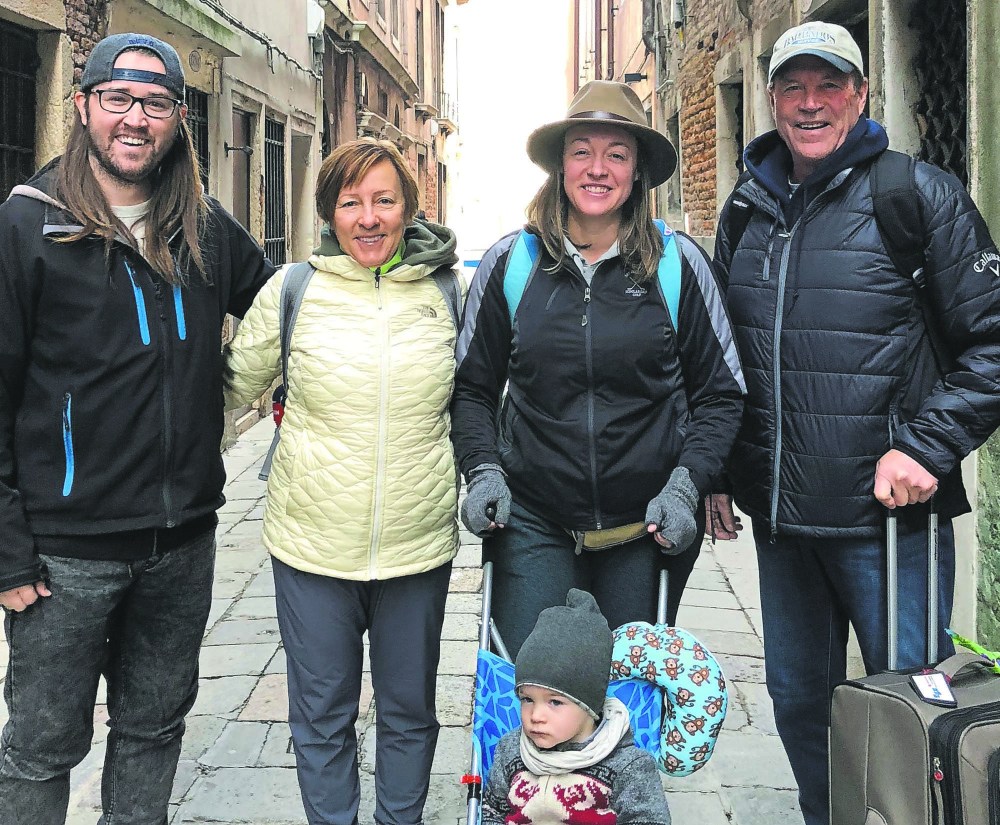
After he returned home, Lefley had the good fortune to meet his wife Sandy — the pair married in 1982 — and they have a daughter Sarah, son-in-law Chris and grandson Kit in Portage la Prairie.
He stayed involved in hockey — playing, coaching, organizing and even fundraising for a new arena in Warren to replace the one he played in. He still skates twice a week, and has been inducted into both the Manitoba Hockey Hall of Fame and the Manitoba Sports Hall of Fame.
“It’s just something that you don’t think about, yet it happens,” said Lefley, who was especially touched by his inclusion in the Sports Hall in Selkirk in 2014. “… I’ve never had feelings like that before. It was neat.”
Perhaps the most remarkable part of Lefley’s path is that it kept going sideways when he was a teenager, but somehow each misstep led to a better place.
“It started with Father Bauer,” Lefley said, referring to the longtime manager and coach of Canada’s national team.
“You get surrounded by good people and they teach you good things and want to do nothing but help you. You just don’t think that any obstacle is too great to overcome. Some of these things sound kind of bad and probably they were very daunting but they didn’t seem to even bother me because of the attitude that you’re taught to have by the people who brought you up and coached and managed you all the way through.”
» pbergson@brandonsun.com