
Pair in alleged Via plot urge Supreme Court to deny hearing in terror case
Advertisement
Read this article for free:
or
Already have an account? Log in here »
We need your support!
Local journalism needs your support!
As we navigate through unprecedented times, our journalists are working harder than ever to bring you the latest local updates to keep you safe and informed.
Now, more than ever, we need your support.
Starting at $15.99 plus taxes every four weeks you can access your Brandon Sun online and full access to all content as it appears on our website.
Subscribe Nowor call circulation directly at (204) 727-0527.
Your pledge helps to ensure we provide the news that matters most to your community!
To continue reading, please subscribe:
Add Brandon Sun access to your Free Press subscription for only an additional
$1 for the first 4 weeks*
*Your next subscription payment will increase by $1.00 and you will be charged $20.00 plus GST for four weeks. After four weeks, your payment will increase to $24.00 plus GST every four weeks.
Read unlimited articles for free today:
or
Already have an account? Log in here »
Hey there, time traveller!
This article was published 09/01/2020 (2276 days ago), so information in it may no longer be current.
OTTAWA – Two men who were found guilty of terrorism offences in a high-profile case argue there is no need to revisit an appeal court’s decision to order a new trial.
In newly filed legal submissions, Raed Jaser and Chiheb Esseghaier urge the Supreme Court of Canada to reject a federal application for a hearing on whether the lower court of appeal was right to overturn their convictions.
Jaser and Esseghaier were found guilty in 2015 of terror-related charges arising mainly from an alleged al-Qaida-inspired plot to crash a Via Rail passenger train.
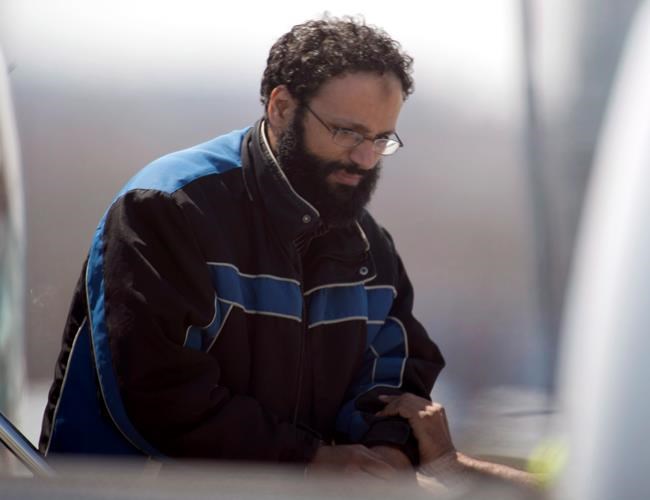
Both men appealed their convictions. Counsel for Jaser and a court-appointed lawyer for Esseghaier argued the jury that convicted them was improperly constituted.
In August last year, the Ontario Court of Appeal ordered a fresh trial for the men.
The appeal court said Jaser was improperly denied his preferred option for jury selection. It also said that if Jaser should have a new trial, Esseghaier was also entitled to one.
Following the decision, the Public Prosecution Service of Canada said it would proceed with a new trial, but noted it had 60 days to decide whether to seek permission to appeal from the Supreme Court.
In a subsequent submission to the top court, federal lawyers noted Jaser and Esseghaier were convicted of the most serious terrorism offences in Canadian law after nearly nine months of pre-trial motions and a three-month jury trial.
“Overturning these convictions on the basis of a technical error that had no appreciable effect on the conduct of the trial is a triumph of form over substance,” the submission said.
“Where, as here, there is no actual demonstrable prejudice to the fairness of the trial, the verdict properly reached by the trier of fact after a long and arduous trial should not so easily be set aside.”
The Supreme Court is expected to decide in coming weeks whether to hear the case.
Both Esseghaier and Jaser say the court should dismiss the federal application and let their new trial go ahead.
“The Crown has failed to identify any error of law in the decision of the Court of Appeal, much less one that raises an issue of national importance,” says Esseghaier’s submission.
He takes issue with the suggestion the serious nature of the alleged offences should prompt the Supreme Court to grant leave to appeal.
“The Crown has not advanced any argument as to why only serious cases involving overturned convictions, as opposed to convictions that are upheld on appeal, are sufficient to satisfy its new proposed test for leave,” Esseghaier’s brief says.
“Profoundly serious cases are, sadly, not an uncommon occurrence in the Canadian criminal justice system.”
In his submission to the court, Jaser also rejects the notion that the gravity of the alleged offences would warrant a high court hearing.
“The seriousness of the allegations cannot transform an unimportant legal issue into an important one.”
This report by The Canadian Press was first published Jan. 9, 2020.