
London police to use face scan tech, stoking privacy fears
Advertisement
Read this article for free:
or
Already have an account? Log in here »
We need your support!
Local journalism needs your support!
As we navigate through unprecedented times, our journalists are working harder than ever to bring you the latest local updates to keep you safe and informed.
Now, more than ever, we need your support.
Starting at $15.99 plus taxes every four weeks you can access your Brandon Sun online and full access to all content as it appears on our website.
Subscribe Nowor call circulation directly at (204) 727-0527.
Your pledge helps to ensure we provide the news that matters most to your community!
To continue reading, please subscribe:
Add Brandon Sun access to your Free Press subscription for only an additional
$1 for the first 4 weeks*
- Enjoy unlimited reading on brandonsun.com
- Read the Brandon Sun E-Edition, our digital replica newspaper
*Your next Free Press subscription payment will increase by $1.00 and you will be charged $20.95 plus GST for four weeks. After four weeks, your payment will increase to $24.95 plus GST every four weeks.
Read unlimited articles for free today:
or
Already have an account? Log in here »
Hey there, time traveller!
This article was published 24/01/2020 (2496 days ago), so information in it may no longer be current.
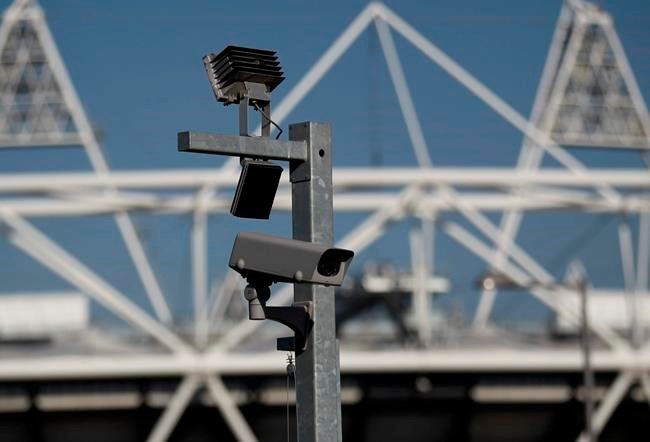
London police will start using facial recognition cameras to pick out suspects from street crowds in real time, in a major advance for the controversial technology that raises worries about automated surveillance and erosion of privacy rights.
The Metropolitan Police Service said Friday that after a series of trials, the cameras will be put to work within a month in operational deployments of around 5-6 hours at potential crime hotspots. The locations would be chosen based on intelligence but the police did not say where, the number of places, or how many cameras would be deployed.
Real-time crowd surveillance by British police is among the more aggressive uses of facial recognition in wealthy democracies and raises questions about how the technology will enter people’s daily lives. Authorities and private companies are eager to use facial recognition but rights groups say it threatens civil liberties and represents an expansion of surveillance.
London’s decision to use the technology defies warnings from rights groups, lawmakers and independent experts, Amnesty International researcher Anna Bacciarelli said.
“Facial recognition technology poses a huge threat to human rights, including the rights to privacy, non-discrimination, freedom of expression, association and peaceful assembly,” Bacciarelli said.
London police said the facial recognition system, which runs on technology from Japan’s NEC, looks for faces in crowds to see if they match any on “watchlists” of up to 2,500 people wanted for serious and violent offences, including gun and knife crimes and child sexual exploitation.
“As a modern police force, I believe that we have a duty to use new technologies to keep people safe in London,” Assistant Commissioner Nick Ephgrave said in a statement.
The British have long become accustomed to video surveillance, with cameras used in public spaces for decades by security forces fighting terror threats. Real-time monitoring will put that tolerance to the test.
London is the sixth most monitored city in the world, with nearly 628,000 surveillance cameras, according to a report by Comparitech.
London’s move comes after a British High Court ruling last year cleared a similar deployment by South Wales police, which has been using it since 2017 to monitor big events like soccer games, royal visits and airshows. That system deleted people’s biometric data automatically after scanning.
Britain’s privacy commissioner, Elizabeth Denham, who had warned police not to take that ruling as a blanket approval, struck a cautious tone on Friday.
She said that while London police have stated they’re putting safeguards and transparency in place to protect privacy and human rights, “it is difficult to comment further on this until we have an actual deployment and we are able to scrutinize the details of that deployment.”
Signs will warn passersby about the cameras and officers will pass out leaflets with more information, the police said, adding that the system isn’t linked to any other surveillance systems.
London police previously carried out a series of trial deployments that they say identified 7 out of 10 wanted suspects who walked past the camera while only incorrectly flagging up 1 in 1,000 people. But an independent review last year by University of Essex professors questioned that, saying the trials raised concerns about their legal basis and the equipment’s accuracy, with only 8 of 42 matches verified as correct.
Pete Fussey, a University of Essex professor who co-authored the report, said NEC has upgraded its algorithm since then, but there’s evidence that the technology isn’t 100% accurate, pointing to a recent U.S. government lab’s test of nearly 200 algorithms that found most have ethnic bias.
“If you’re using the algorithm you should be aware of its shortcomings,” he said. “It’s vanishingly unlikely that NEC’s algorithm will be effective across all ethnic categories.”
___
For all of AP’s tech coverage, visit: https://apnews.com/apf-technology