
Crisis line workers ready to listen
Advertisement
Read this article for free:
or
Already have an account? Log in here »
We need your support!
Local journalism needs your support!
As we navigate through unprecedented times, our journalists are working harder than ever to bring you the latest local updates to keep you safe and informed.
Now, more than ever, we need your support.
Starting at $15.99 plus taxes every four weeks you can access your Brandon Sun online and full access to all content as it appears on our website.
Subscribe Nowor call circulation directly at (204) 727-0527.
Your pledge helps to ensure we provide the news that matters most to your community!
To continue reading, please subscribe:
Add Brandon Sun access to your Free Press subscription for only an additional
$1 for the first 4 weeks*
- Enjoy unlimited reading on brandonsun.com
- Read the Brandon Sun E-Edition, our digital replica newspaper
*Your next Free Press subscription payment will increase by $1.00 and you will be charged $20.95 plus GST for four weeks. After four weeks, your payment will increase to $24.95 plus GST every four weeks.
Read unlimited articles for free today:
or
Already have an account? Log in here »
Hey there, time traveller!
This article was published 03/04/2020 (2362 days ago), so information in it may no longer be current.
In times of stress, there is no one-size-fits-all response, and if calling a crisis line sounds like an extreme action, think again.
“I know that sometimes people think that with a crisis line you have to be experiencing something pretty acute,” said Klinic crisis program manager Sandy Fotty.
“Crisis is often defined as an acute experience that that is outside of what is normal for someone. What we believe is that a crisis is anything that’s making you feel off-balance, not yourself, not able to cope with something. It doesn’t have to be the biggest thing you’ve ever experienced.”
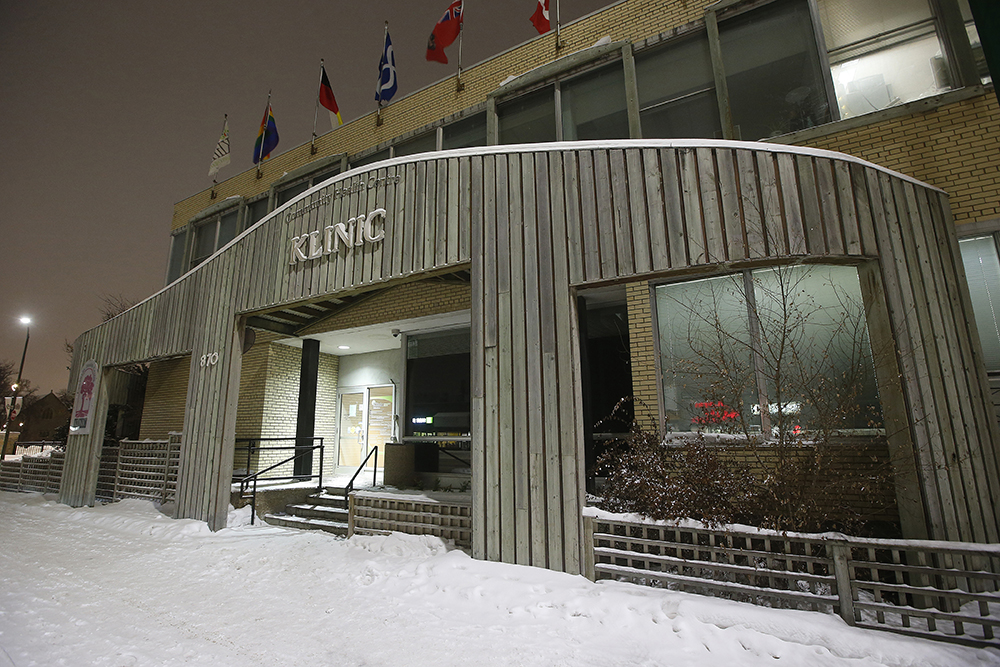
If a person isn’t feeling like they’re doing well, talking to someone over a phone line and telling their story can help.
Klinic, which offers primary health-care services in Winnipeg, manages several telephone crisis lines: the Manitoba Suicide Prevention and Support Line, a line for farmers in distress, a gambling line, a distress line for the Workers Compensation Board of Manitoba, two sexual assault crisis lines and a seniors abuse support line, among others. In sum, people in all situations in life can experience something that throws them off balance.
Some of these phone lines are on the province’s list of COVID-19 support services, and calls are up by roughly 10 per cent. That uptick is remarkable, said Fotty, because normally numbers are stable.
“Even when people are calling about something different, they are affected right now. Whether it’s anxiety or relationships or those kinds of things, COVID is showing up in the conversations,” she said.
“Many people are mentioning that in how they are doing right now. If someone is experiencing anxiety, that anxiety is heightened with all the changes to their normal day-to-day life.”
Similarly, for people who were experiencing isolation prior to the pandemic, an increase in that feeling is real.
“For relationships that are strained, there’s that much more pressure,” Fotty said.
“This is new territory for all of us. What we can also offer is a bit of connection. We’re all still out here and trying to figure this out. Nobody has all of the answers right now. None of us knows exactly what to do. We’re trying to validate that experience, as well.”
Fotty said phone-line workers are not offering advice, but want to hear what people’s experiences are.
“What their story is. And offer some support. If we know about resources that might be helpful, we can offer those. But really, what we’re doing is sort of sitting with people and trying to figure out how to get through the next day, how to get through the next day or two. How are they coping? What resources do they have available to them now? Those have changed. Resources have changed.”
Jerra Fraser is a sexual assault crisis program counsellor with Klinic. She said that sexual assault crisis line is open 24 hours a day, seven days a week.
“We’re getting updates on what’s still available for services. We’re really prioritizing survivors still get what they need,” Fraser said.
“We haven’t forgotten about you even though there are other kinds of trauma.”
Fraser stressed no one should feel alone.
“We’re thinking of you and finding ways to best serve you, and do so creatively,” she added. “If someone is going through any part of this process, they can phone us at any point. They can take a break and call us and then not be alone in that moment.”
Fraser said there will be a response to this pandemic unique for everyone.
“There’s been such a spectrum of responses. All of them are really normal and human and make sense. Just like trauma responses, to compare to sexual assault trauma responses, they’re all individual. There’s not one way this is going to look.”
Resiliency is a theme Fraser said she sees showing up. People who have healed from trauma, or overcome difficulties, have the skills. All coping skills from the past, which have worked, can be applied to current circumstances.
“Even though stress responses may be heightened right now, I’ve just been so amazed and inspired by how resilient folks are and how able they are to access their internal resources, too.”
Fraser also suggested that people monitor their media intake. Trust your physical response, she said. Some people need information, others need to create boundaries. It’s all an individual response and reaching that balance of being informed and getting maxed out for the day.
There are two staff in the crisis-line room, as well as a full complement of volunteers. At any given time, that can mean four to 10 people. The pandemic has stressed these lines. A caller may get a busy signal, Fotty said to keep trying. In June or July, Klinic is relocating into a new building, with a new phone system.
“What we know right now is we are taking the most calls we possibly can,” she said.
“All the staff are trained to answer all of the lines. Volunteers come ready from our training to answer any of the lines, because really what we’re talking about is an experience that someone’s having, whether they’re having difficulty or struggling.”
Fotty says phone-line staff are amazing, and they support each other.
“There’s a general camaraderie in our crisis room that carries them through. This crisis is what they’re trained for, and they’re just really shining right now.”
The Brandon Sun contacted Donna Cona, a firm that manages the First Nations and Inuit Hope for Wellness Help Line. The firm referred the Sun to Indigenous Services Canada, which is the client. They, in turn, indicated they would be unable to answer questions about the phone line by deadline.
» mletourneau@brandonsun.com
» Michele LeTourneau covers Indigenous matters for The Brandon Sun under the Local Journalism Initiative, a federally funded program that supports the creation of original civic journalism.
IF YOU NEED TO TALK…
• Klinic Crisis Line (24/7)
204-786-8686 or 1-888-322-3019
TTY: 204-784-4097
• Manitoba Suicide Prevention and Support Line (24/7)
204-784-4097 or 1-877-435-7170
• Kids Help Phone (24/7)
1-800-668-6868 or text: HOME to 686868
• First Nations and Inuit Hope for Wellness Help Line (24/7)
1-855-242-3310 or chat online: hopeforwellness.ca
• Manitoba Farm, Rural and Northern Support Services
1-866-367-3276
• Sexual Assault Crisis Line (24/7)
1-888-292-7565
TTY: 204-784-4097
» Source: Province of Manitoba