
Rail line opens up the area
Advertisement
Read this article for free:
or
Already have an account? Log in here »
We need your support!
Local journalism needs your support!
As we navigate through unprecedented times, our journalists are working harder than ever to bring you the latest local updates to keep you safe and informed.
Now, more than ever, we need your support.
Starting at $15.99 plus taxes every four weeks you can access your Brandon Sun online and full access to all content as it appears on our website.
Subscribe Nowor call circulation directly at (204) 727-0527.
Your pledge helps to ensure we provide the news that matters most to your community!
To continue reading, please subscribe:
Add Brandon Sun access to your Free Press subscription for only an additional
$1 for the first 4 weeks*
- Enjoy unlimited reading on brandonsun.com
- Read the Brandon Sun E-Edition, our digital replica newspaper
*Your next Free Press subscription payment will increase by $1.00 and you will be charged $20.95 plus GST for four weeks. After four weeks, your payment will increase to $24.95 plus GST every four weeks.
Read unlimited articles for free today:
or
Already have an account? Log in here »
Hey there, time traveller!
This article was published 11/06/2020 (2195 days ago), so information in it may no longer be current.
The Binscarth Herd Part 1, published in last week’s Westman This Week, consisted of the “Among the Farmers – The Binscarth Herd” report, which appeared in the March 1886 Nor-West Farmer. The Binscarth Herd was owned by the Scottish, Ontario and Manitoba Land Company (SO&M), which had purchased three townships in Manitoba, two townships between Russell and Binscarth and with a further township southeast of Birtle. The Binscarth Herd Part Two discusses the Scottish, Ontario and Manitoba Land Company.
Colonization companies such as the SO&M were somewhat common in Western Canada in the 1880s with almost 30 colonization companies on the Prairies at the time. However, there were only two in Manitoba, the SO&M and the Shell River Colonization Company which owned a tract of land north of Russell.
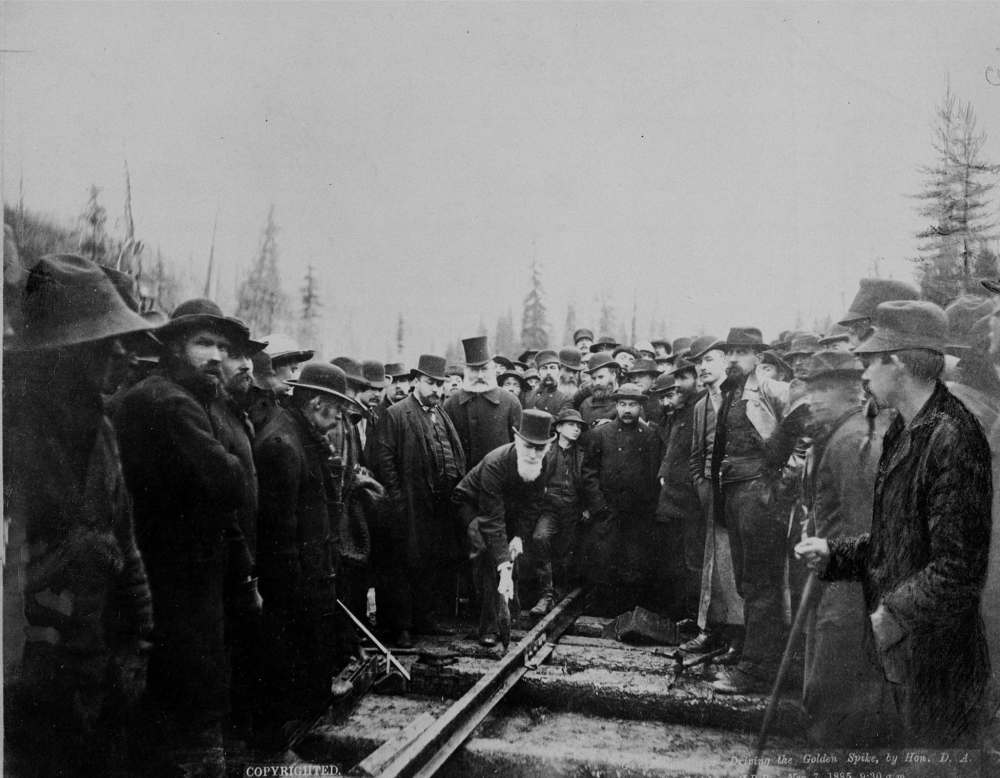
Colonization companies such as the SO&M came into being as a result of the pressures the Government of Canada was facing in 1881. The agreement between the Canadian Pacific Railway and the government for the building of a railway to BC resulted in the government agreeing to pay the CPR a subsidy of $25 million, plus granting the CPR 25,000,000 acres of land in addition to the land needed for the railway’s right of way and the sites for railway stations. The CPR was also to receive, free of charge, segments of the railway to the Pacific already built by the government such as the line from Emerson to Winnipeg. In addition to this expense, the government also had to bear the expense of surveying the Prairies which was necessary to prepare the Prairies for settlement and to set aside the CPR land grant. Furthermore, the government had to bear the expense of promoting immigration to Western Canada, which required an extensive effort to find and recruit settlers in Eastern Canada, the U.S. and in Europe.
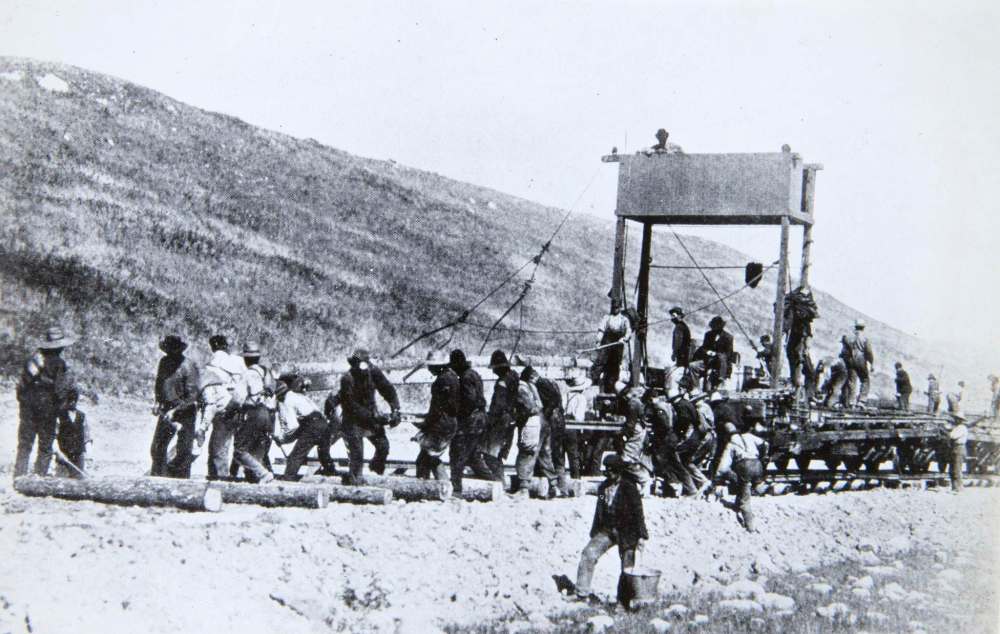
Both the Conservative and Liberal parties had promised the taxpayers of Canada that the railway to connect British Columbia with Eastern Canada would not cost the taxpayer a single penny in taxes. How the Government of Canada was to meet its obligations to CPR, pay for the surveying of Western Canada and pay for an immigration promotion program was then the issue.
The government was hoping that the sale of Dominion lands in Western Canada would provide the necessary funds to pay for the above outlays. However, it was apparent in 1881 that the immigrants, particularly those with money to buy land, were not flocking in large numbers to Western Canada. So where was the government to find the money needed to meet its Western Canadian commitments? At the time, it was unthinkable that the government borrow money to meet its commitments. The only saleable asset the Government of Canada had were the Dominion lands in the west, and this was not selling all that well.
The result was that the government came up with a complicated plan to make land some distance from the CPR mainline attractive to colonization companies willing to purchase it and bring in settlers. The attraction was the price was to be discounted.
In a December 1881 Order in Council, the government placed land in the west into one of four classes:
Class A – Land within 24 miles, either side, of the CPR mainline and CPR branch lines. This land was to be held for the CPR.
Class B – Land within 12 miles, either side, of projected rail lines to be built by other railways.
Class C – Land south of the CPR mainline.
Class D – Lands other than those in Classes A, B and C.
The Order in Council set out that even-numbered sections in Classes A, B and C were to be held exclusively for homesteads and pre-emptions. Pre-emption referred to the practice of allowing settlers who had gained title to their homestead quarter section, then being allowed to purchase a vacant homestead quarter that adjoined their homestead for $2.50 an acre, if a quarter was available. In the Class D lands, the even-numbered sections would not be available for homesteading and pre-emptions, if these sections were affected by a colonization agreement.
This colonization agreement was an agreement between the government and a colonization company concerning a tract of Class D land on the following terms:
The odd-numbered sections within the tract were to be sold to the company at $2 per acre, payable, 20 per cent in cash at the time the agreement was signed, with the balance being paid in four equal annual instalments dating from the date the agreement was signed. As well the company was to pay the government five cents per acre for the survey of the land within the tract.
In return, the company was to colonize the tract within five years of signing the contract. This colonization was to consist of placing two settlers on homesteads on each even-numbered section and two settlers on each odd-numbered section. In the event that the company had advanced money to a homesteader in the company’s or individual’s tract, the company or individual was allowed to take security on the homestead, a significant concession as generally the homesteader until the title was gained to the homestead was not able to use the homestead to secure a loan.
Furthermore, if the company brought in sufficient settlers to fill the above conditions, the government would pay a rebate to the company which would bring the purchase price of the odd-numbered sections down to $1 per acre. The intention behind this scheme appears to have been that the colonization company would sell the odd-numbered sections in the tract to the settlers at $2 an acre and as the tract filled up, the government rebate would bring the price the company paid for this land down to $1 per acre yielding a profit to the company of $1 per acre.
Almost 30 agreements were signed under this scheme, however many companies signing these agreements either brought in very few settlers or none at all. Some settlers were brought onto homesteads a significant distance from an existing railway such as the 101 homesteaders enticed by the Temperance Colonization Company to take up homesteads around what became Saskatoon. This area at the time was 150 miles away from the CPR mainline. Many of these settlers turned to ranching as a result.
The problem with this scheme appears to have that most homesteaders realized that they needed to be close to a railway which could provide economical transport to market for most of the products they would be producing. Cattle were the exception as they could be driven some distance to a railway point, grazing along the way. Freighting grain by wagon was only economical over shorter distances. As well, one has to remember that in the pioneer era, grain prices were generally the best in the fall before the Great Lakes froze over for the winter, bringing transport of grain by water to the east to a halt. Between the pressure of harvesting, fall plowing and getting ready for winter, taking more than a day to take a load of grain to a grain buyer was just not possible for most settlers. So most land owned by colonization companies was not particularly attractive to settlers.
While a settler could perhaps obtain a homestead quarter within a colonization company’s tract on the regular homestead terms, the settler in the 1880s could obtain a homestead in Class A, B or C under the homestead terms and this land would be much closer to a railway than land owned by a colonization company. A settler could obtain more land from the colonization company for $2 per acre, while in Class A, B or C a pre-emption quarter if available would cost $2.50 an acre. Generally, in the 1880s pre-emptions were available for most settlers as settlement was so sparse. Many settlers then would think that the potential savings of 50 cents an acre for a further quarter section was a poor bargain considering the remote location of colonization company land.
From the settler’s point of view, the only benefit of working with a colonization company was the possibility of securing an advance from the colonization company.
Colonization companies were not a success and reference is made in one book on Prairie settlement to the companies being rescued from the brink of disaster in 1886 by generous terms offered by the Government of Canada. However, no elaboration is made as to what these terms were.
The SO&M was no exception. The SO&M had acquired two townships between Binscarth and Russell and a third township east of Birtle under the terms of the 1881 Order in Council. However, the company by 1885 was in negotiations with the Dominion Government over the three townships as the SO&M had, by then, realized that the flow of immigrants into Manitoba had declined to such an extent that the company was unlikely to meet the conditions of the agreement with the government and so earn the rebate on the land price paid to the Dominion Government. The negotiations were successful from the SO&M’s point of view as the negotiations resulted in the SO&M getting out of the 1881 agreement with the government and acquiring title to 23,746 acres in the three townships for the price of $3.27 per acre with the right to acquire another 1920 acres at $1 per acre plus SO&M retained the Binscarth Stock farm and facilities. The SO&M was interested in selling the Binscarth Stock Farm as a going concern. There is an exchange in the letters to the editor in the 1889 Nor-West Farmer over the merits of Shorthorn cattle between Mr. Smellie of the Binscarth Stock Farm and a cattleman in the Shell River country north of Russell. So the Binscarth Stock Farm appears to have remained active as late as 1889. Mr. Smellie left Binscarth in the mid-1890s to retire in Vancouver so perhaps the stock farm had been sold at that time by the SO&M.
SO&M was formed in 1879 to speculate in land and develop properties in Ontario and Manitoba. By 1886, SO&M owned various properties and farmlands in addition to the land at Binscarth: a commercial building in Ottawa, building lots in Toronto, land west of Morris, land in the Manitou area, land near Rock Lake, land northwest of Morden near Tobacco Creek and building lots in Brandon. There is an SO&M ad in an 1886 Nor-West Farmer that lists the company as having 100,000 acres available for sale. Just what happened to the SO&M after 1886 is unknown, but probably the company faced difficult circumstances until 1895 when farming in Western Canada encountered better times and immigration to Western Canada began to increase, all leading to the greatest boom Western Canada has ever experienced.
Some of the principals in the SO&M were also involved in the Canada Northwest Land Company (CNWLC) which was active in Manitoba in 1883, however this company had purchased 2,000,000 acres from the Canadian Pacific Railway and is not considered to be a colonization company. Ultimately the CNWLC was no more successful than the colonization companies and wound up back in the hands of the CPR in 1893, just in time for the boom of 1895.
It is interesting to note that the SO&M rather than promote grain farming chose to promote cattle, with its herd of Shorthorn cattle making available to settlers good quality livestock. Mr. Smellie in talking the SO&M into this course of action, had accurately gauged the issues of grain farming on the Prairies at the time; the risk of frost due to the grain varieties in use at the time being long to maturity, drought, variable grain prices and so on. The Shorthorns in the Binscarth herd were selected for their ability to produce milk as well as meat, an important consideration for a settler. With good milk cows, the settler and their family could produce butter for sale or trade at the general store they frequented and have milk for the table as well. The bull calves could be raised up and sold as butcher steers in several years’ time.
It is difficult at this time to gauge the impact the Binscarth Stock Farm had on the development of the Manitoba cattle industry. Probably it had some positive impact as it was bringing in good quality animals into Western Manitoba for breeding in 1885 and making available the offspring for sale to settlers and others in Manitoba and likely Saskatchewan.
Without access to these animals, settlers may have had to settle for animals of lesser quality.
» The Manitoba Agricultural Museum is open year-round and operates a website at http://mbagmuseum.ca/ which can provide visitors with information on Museum. As Manitoba celebrates 150 years as a province, tell your story of Manitoba agriculture! The Manitoba Agricultural Museum needs you to contribute your farming story by showcasing yourself, one of your ancestors or someone you know and telling your/their story! More information on this project can be found at http://mbagmuseum.ca/farmersofmanitoba.