
Mental fatigue tops harvest safety concerns
Advertisement
Read this article for free:
or
Already have an account? Log in here »
We need your support!
Local journalism needs your support!
As we navigate through unprecedented times, our journalists are working harder than ever to bring you the latest local updates to keep you safe and informed.
Now, more than ever, we need your support.
Starting at $15.99 plus taxes every four weeks you can access your Brandon Sun online and full access to all content as it appears on our website.
Subscribe Nowor call circulation directly at (204) 727-0527.
Your pledge helps to ensure we provide the news that matters most to your community!
To continue reading, please subscribe:
Add Brandon Sun access to your Free Press subscription for only an additional
$1 for the first 4 weeks*
*Your next subscription payment will increase by $1.00 and you will be charged $20.00 plus GST for four weeks. After four weeks, your payment will increase to $24.00 plus GST every four weeks.
Read unlimited articles for free today:
or
Already have an account? Log in here »
Hey there, time traveller!
This article was published 08/09/2020 (2054 days ago), so information in it may no longer be current.
While there are countless physical hazards at play during a regular harvest season, some Westman producers said they are particularly concerned about mental fatigue and the impact it is having on farmers’ safety this fall.
Keystone Agricultural Producers president Bill Campbell told the Sun earlier this month that a lot of farmers are feeling extra pressure to get their work done early this year after a October blizzard severely compromised their 2019 harvest.
Campbell admitted that he is not immune from this mentality, and said he has been putting in some 20-hour days on his grain farm located roughly 50 kilometres south of Brandon to try to get ahead of any severe weather that’s on the horizon.
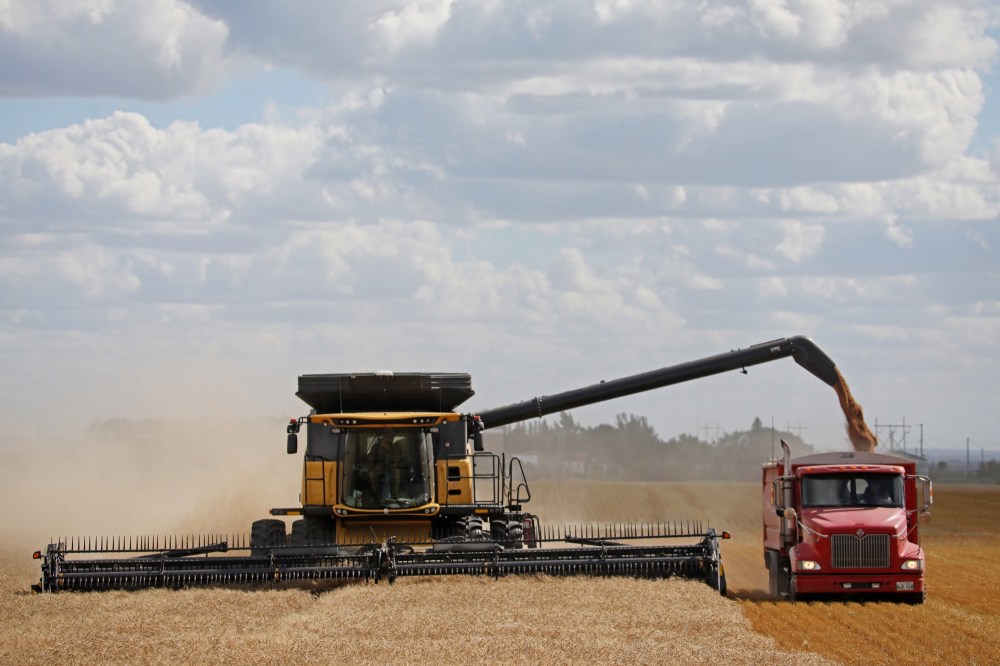
“There’s always been that pressure and those that will push it harder to try and extend themselves,” he said on Sept. 1. “But that snowstorm just really brought to light how impactful that can be on your bottom line.”
Producer Neil Galbraith recently admitted that the stop-and-start nature of this year’s weather is affecting productivity on his own farm, situated approximately 22 kilometres northwest of Minnedosa.
While the month of August provided consistently sunny conditions, September’s scattered rain is less than ideal and is adding extra mental strain to an already stressful season.
“I noticed I’m feeling more tired than I have in other falls when it’s sunny and you can combine five or seven or 10 days in a row,” he said on Saturday. “Whereas now you can only combine one or two days and then it rains and you have all this tough grain and what do you do with it? That makes you fatigued.”
Galbraith said this situation is made worse by the fact that he’s still waiting to receive his repaired grain dryer from an American factory that is being affected by the COVID-19 pandemic.
“A bunch of people either got COVID or wouldn’t come to work and they had to train new people,” he said. “So here we are, Sept. 5, and we might see our dryer in a week. But then it’s got to get certified by the Office of the Fire Commissioner before we even use it.”
Due to all these mitigating factors, Canadian Agricultural Safety Association health specialist Robert Gobeil said the non-profit’s biggest concern for the current harvest season is mental fatigue.
Not only can this added stress negatively impact an individual’s overall mental health, but it can also result in potentially fatal accidents where, for example, large farming equipment comes into contact with live power lines.
“People just aren’t thinking straight and they’ve gone under that low wire 99 times before, but it’s that 100th time where something happens,” Gobeil said “It’s just a matter of staying alert at all times.”
According to CASA’s Canadian Agricultural Injury Reporting data, 85 producers across the country die on average per year, with 70 per cent of those fatalities stemming from large machinery mishaps.
Gobeil went on to say that one of the best ways to avoid these accidents during this stressful period is to simply plan ahead when it comes to scheduling.
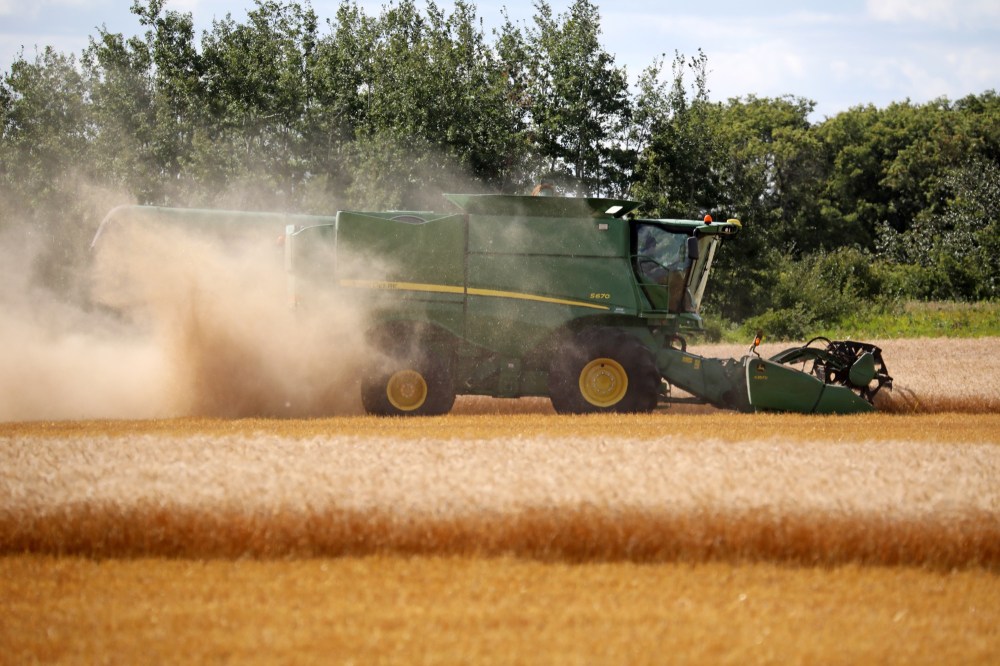
“If you have employees or workers manning the equipment, don’t expect miracles from them,” he said. “If you have to go around the clock, maybe put in two 12-hour shifts: one 12-hour shift with one person and have a relief pitcher come in for the next.”
Meanwhile, Galbraith recommends maintaining constant communication with your workers to help avoid any major accidents during crunch time.
“We have two-way radios in our combines and trucks and in the house and we keep talking to everybody,” he said. “And in the dark we all wear high-visibility jackets … and that helps if somebody is outside their combine.”
Right now, Campbell said it is too early to really tell whether this current harvest will be improvement over last year. Even though the KAP president thinks he will have a better idea of what the future holds after Labour Day, he warns his fellow producers about jumping the gun and getting burned out because of what they think might happen.
“We’ve got to ensure that we don’t take short cuts and that we’re focused on what we’re doing so that we don’t lose fingers or limbs,” he said. “The last thing we want to see this fall is a STARS ambulance heading out in the countryside to rescue farm workers.”
Any Westman producer in need of confidential counselling can contact the Manitoba Farm, Rural & Northern Support Services hotline at 1-866-367-3276. The line is active Monday to Friday, 10 a.m. to 9 p.m.
» kdarbyson@brandonsun.com
» Twitter: @KyleDarbyson