
Indigenous leaders say healing program must go on
Advertisement
Read this article for free:
or
Already have an account? Log in here »
We need your support!
Local journalism needs your support!
As we navigate through unprecedented times, our journalists are working harder than ever to bring you the latest local updates to keep you safe and informed.
Now, more than ever, we need your support.
Starting at $15.99 plus taxes every four weeks you can access your Brandon Sun online and full access to all content as it appears on our website.
Subscribe Nowor call circulation directly at (204) 727-0527.
Your pledge helps to ensure we provide the news that matters most to your community!
To continue reading, please subscribe:
Add Brandon Sun access to your Free Press subscription for only an additional
$1 for the first 4 weeks*
- Enjoy unlimited reading on brandonsun.com
- Read the Brandon Sun E-Edition, our digital replica newspaper
*Your next Free Press subscription payment will increase by $1.00 and you will be charged $20.95 plus GST for four weeks. After four weeks, your payment will increase to $24.95 plus GST every four weeks.
Read unlimited articles for free today:
or
Already have an account? Log in here »
Hey there, time traveller!
This article was published 07/10/2020 (2131 days ago), so information in it may no longer be current.
Indigenous organizations are requesting the federal government not allow programming — intended to help survivors of Indian residential schools heal from egregious historical events — to lapse.
As part of the 2007 Indian Residential Schools Settlement Agreement, which ended a class-action suit involving roughly 86,000 Indigenous children enrolled in the Canadian residential schools system, a healing fund was set up.
At $5 billion, the agreement was Canada’s largest class-action suit.
The agreement included a Common Experience Payment for all eligible former students of Indian Residential Schools, an Independent Assessment Process for claims of sexual or serious physical abuse, measures to support healing such as the Indian Residential Schools Resolution Health Support Program and an endowment to the Aboriginal Healing Foundation commemorative activities, as well as the establishment of a Truth and Reconciliation Commission.
The federal government renewed funding for the health support program in 2018, with $248.6 million over three years.
That fund is set to expire March 31.
The Assembly of First Nations (AFN), a national advocacy organization, has called for its continuation, and has released a 30-page report to that effect.
It includes the voices of survivors:
“We all needed counsellors, but we had none. The majority of us struggled to live normal lives. Most ended up having dysfunctional families. They are the product of this situation. They need to learn to function normally in their own lives. The effects had snowballed to the next generation.”
“I may be able to tell my children what happened to me in (Indian residential school) someday.”
“Trauma has always left me numb … Feeling the terror and pain of it paralyzes and numbs me.”
“Grief consumes me. I have lost so much — so many family members, my children lost their language because I thought it would be better for them not to know and be known by other kids as ‘Indian.” I tried to protect them from that.”
“Accepting myself as I am and accepting others as they are, too; and being part of a group for comfort, security, confidentiality, togetherness, love, acceptance, caring, honesty, courage and learning to feel again.”
“I still think about it once in a while, but not all the time like before. I feel different now. I am more open and happy.”
Along with the voices of survivors, the assembly presents numerous statistics, such as that between 2011 and 2019, more than 889,394 survivors and families reached out for cultural and emotional support 5.8 million times.
“As there is no predetermined timeframe for healing, survivors, their families, support workers and community organizations are now pressing for the continuation of this essential program,” the report states.
“After enduring the most shameful chapter of Canadian history, fighting for the truth and recognition of the horrors experienced in these schools, and the conclusions disclosed in the Truth and Reconciliation Commission of Canada, the future of the program cannot remain ambiguous.”
The AFN also cites a federal government report.
“(A)lmost all (93 per cent) of community leaders and health directors/staff surveyed indicated that the program supported the community in its efforts to heal from the legacy of residential schools,” the government states.
“(Eighty four) per cent indicated that as a result of the IRS RHSP, community members speak more openly about the legacy of the schools; 78 per cent indicated that community members seek help from counsellors, community workers and elders; 68 per cent reported an increase in attendance at community cultural events; and 50 per cent reported an increase in the number of community members who seek help to address their alcohol or drug use.”
Closer to home, the Southern Chiefs’ Organization weighed in.
“There is no arguing with this kind of evidence, especially when we see the damaging impacts of residential school over multiple generations,” Grand Chief Jerry Daniels stated in a separate news release.
“This programming is critical and is being accessed by those who need it. It would be an incredible injustice for the Trudeau government to stall the healing process.”
The organization is especially concerned about elders.
“Currently, there is a survivor’s crisis exacerbated by the isolation caused by the COVID-19 pandemic. Elders in their seventies and eighties have time to reflect on the past and to relive their experiences, reawakening previous traumas and painful memories,” according to the SCO release.
Daniels stated he cannot stress enough this healing program or something similar must exist, “always and forever,” for survivors and their families.
“Anything short of that amounts to nothing less than betrayal by the federal government,” he said.
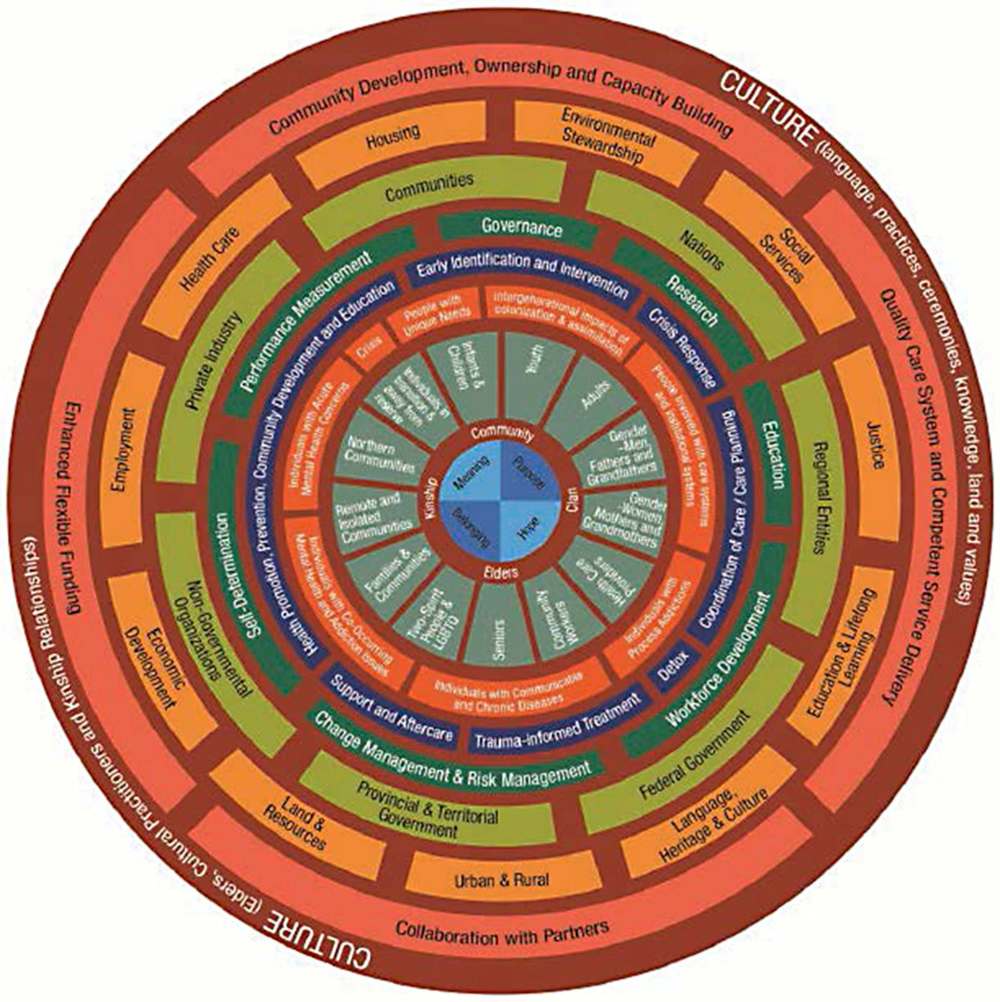
The AFN report lists a variety of recommendations to improve healing services, including transitioning the program from the federal government to First Nations governments and organizations. It recommends developing a new program framework “of healing and wellness based on culture and on the strengths of community development, ownership and capacity building (embedded in community).”
Read the AFN’s full report at bit.ly/2Sus6VX
» mletourneau@brandonsun.com
» Michele LeTourneau covers Indigenous matters for The Brandon Sun under the Local Journalism Initiative, a federally funded program that supports the creation of original civic journalism.