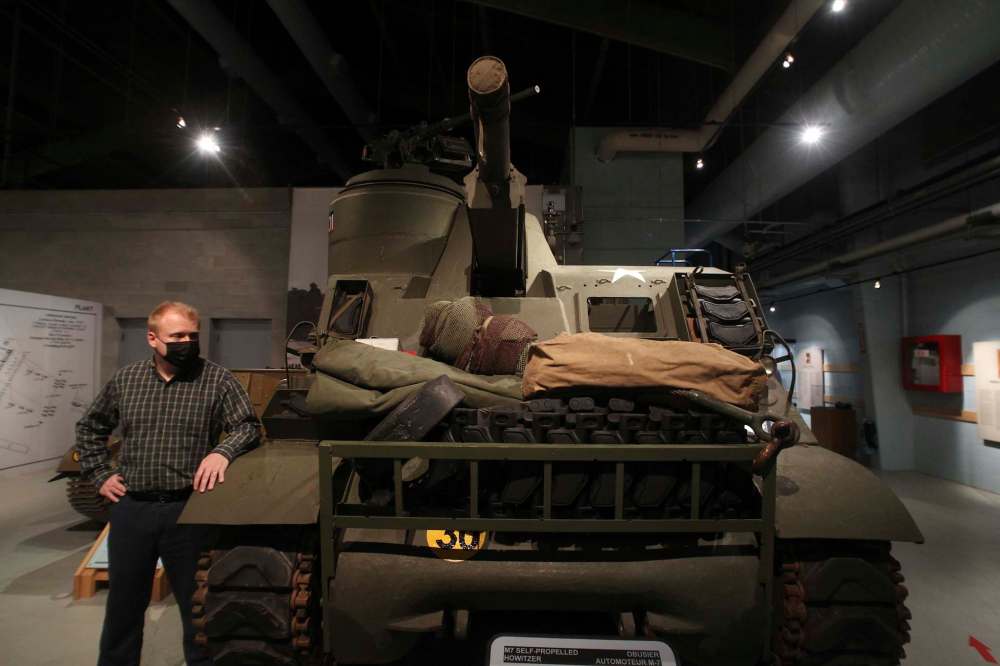
Artillery museum renewed during level red
Advertisement
Read this article for free:
or
Already have an account? Log in here »
We need your support!
Local journalism needs your support!
As we navigate through unprecedented times, our journalists are working harder than ever to bring you the latest local updates to keep you safe and informed.
Now, more than ever, we need your support.
Starting at $15.99 plus taxes every four weeks you can access your Brandon Sun online and full access to all content as it appears on our website.
Subscribe Nowor call circulation directly at (204) 727-0527.
Your pledge helps to ensure we provide the news that matters most to your community!
To continue reading, please subscribe:
Add Brandon Sun access to your Free Press subscription for only an additional
$1 for the first 4 weeks*
*Your next subscription payment will increase by $1.00 and you will be charged $20.00 plus GST for four weeks. After four weeks, your payment will increase to $24.00 plus GST every four weeks.
Read unlimited articles for free today:
or
Already have an account? Log in here »
Hey there, time traveller!
This article was published 25/02/2021 (1892 days ago), so information in it may no longer be current.
CFB SHILO — The Royal Canadian Artillery Museum has been closed for three months, but staff haven’t been twiddling their thumbs.
They’ve been working to rejig things throughout level red restrictions and have prepared a few new attractions for guests to experience when they’re finally able to visit the museum at Canadian Forces Base Shilo.
Plus, they’ve hired a new senior curator — Jonathan Ferguson, who completed his two weeks’ quarantine upon arriving from Ontario to begin his first day in person Feb. 15.
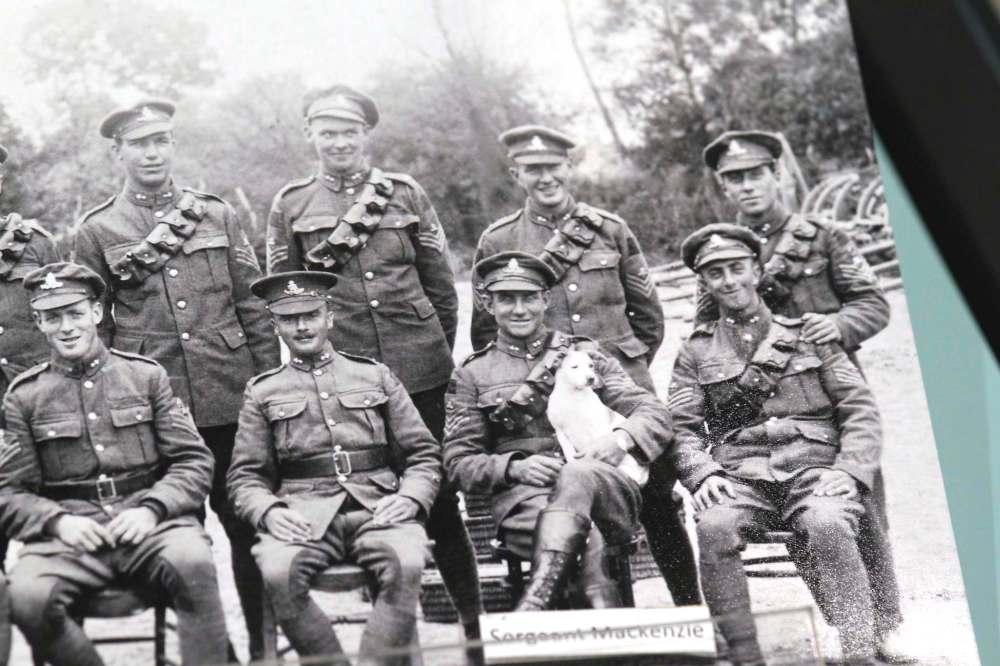
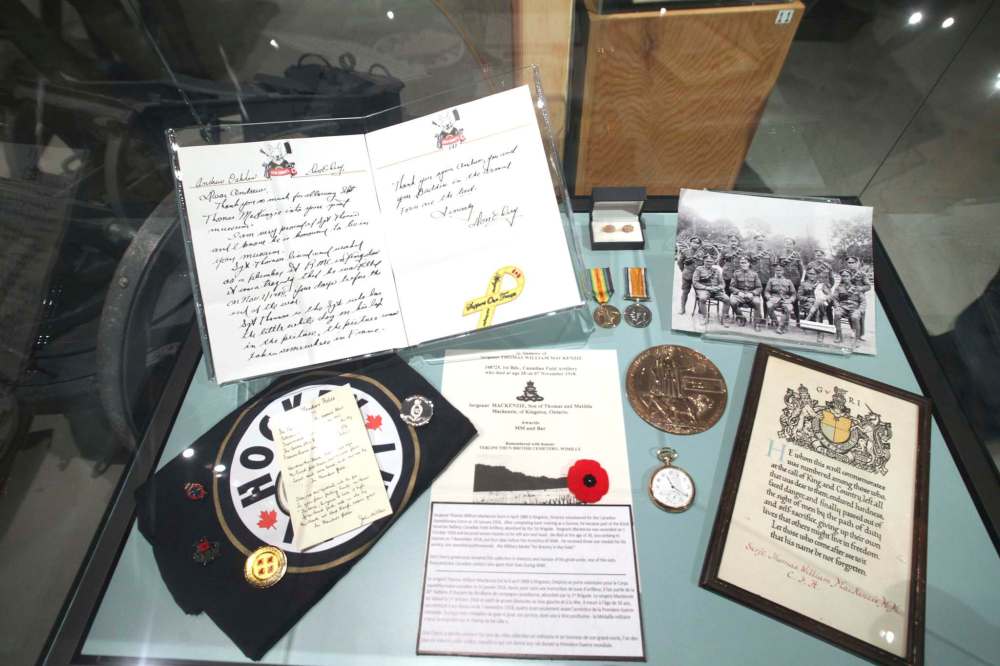
The first big addition is a display donated by Don Cherry of “Hockey Night in Canada” fame.
The display centres on Cherry’s great-uncle, Sgt. Thomas MacKenzie, a veteran of the First World War who died during the campaign.
MacKenzie, born April 6, 1888, volunteered for the Canadian Expeditionary Force on Jan. 24, 1916, and went overseas with the Canadian Field Artillery, under which he served in the 82nd Howitzer Battery.
He was wounded in October 1918 when he incurred several injuries to his left arm and head, and died on Nov. 7, 1918, succumbing to his injuries at age 30. His date of death is notable as it came just four days before Armistice Day.
The display includes a letter from Cherry, a photograph of MacKenzie and various medals.
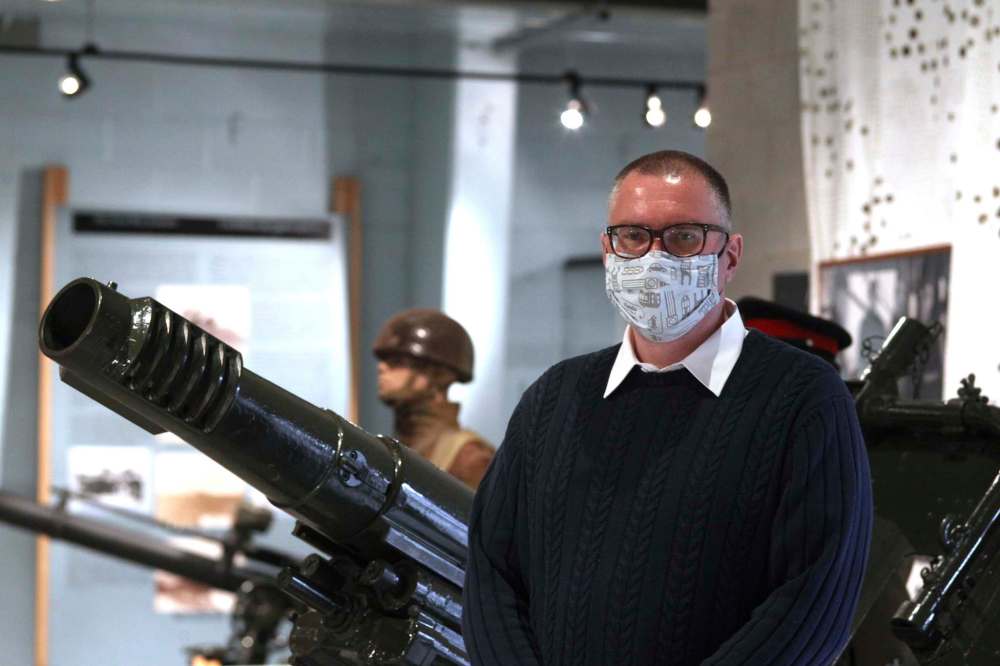
“It’s certainly an interesting collection,” museum director Andrew Oakden said, adding that although it’s similar to a previous display they had in its place, the link to Cherry makes it a stronger draw.
The museum’s Second World War gallery has been rejigged, with new antique machinery shifted into the space.
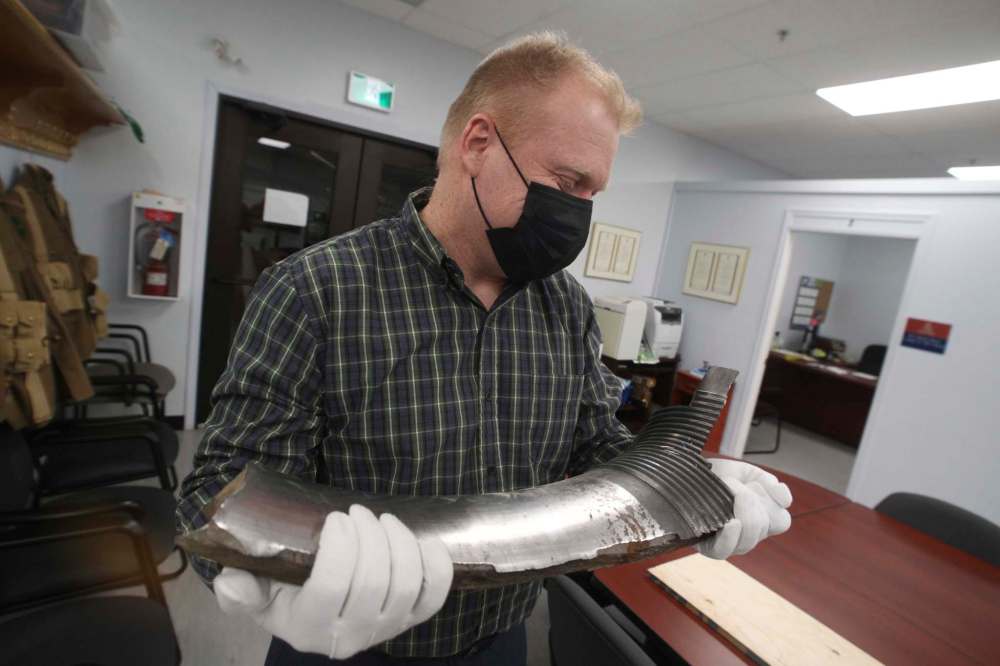
One recent addition, which will go on display sometime this summer, is a M777 Howitzer fragment — a jagged piece of a gun barrel damaged after a live 155 mm shell got stuck and was detonated inside during a field exercise in February 2020.
The bent metal is a unique addition because it’s from a piece of machinery currently in use, Oakden said, noting it’s one of few modern artifacts they have on site.
The twisted barrel fragment was donated by the 5th Regiment in Quebec.
A new display called “Ubique 150” is also being compiled to open later this year. The exhibit will help mark the 150th anniversary of the formation of the A and B batteries of the post-Confederation Canadian army.
Meanwhile, Ferguson plans to settle into his new role and establish his influence as senior curator.
Ferguson carries a background in both archaeology and the reserves — experience he’s caring forward into his new role.
“In archaeology, our challenge is to use remains from the past to understand past peoples,” he said, adding it’s all too easy to focus on the technical aspects of objects.
“I’m going to be trying to look at the stories of the people connected with the artifacts. I hope to be able to help bring some of those experiences out as well so it’s not just focused on the hardware but the people themselves.”
Ferguson was previously employed by the Royal Canadian Museum, but like his wife who was also employed by the museum, he found his job impacted as a result of the COVID-19 pandemic.
The museum in Shilo proved an ideal fit, he said, pointing to both the community as a good place for his family and the job as an excellent place to pursue his professional interests.
As of the writing of this story last week, the museum was still closed to the public, but Oakden said he expected to receive clearance to reopen soon.
» tclarke@brandonsun.com
» Twitter: @TylerClarkeMB