
‘We want people to trust us’
Advertisement
Read this article for free:
or
Already have an account? Log in here »
We need your support!
Local journalism needs your support!
As we navigate through unprecedented times, our journalists are working harder than ever to bring you the latest local updates to keep you safe and informed.
Now, more than ever, we need your support.
Starting at $15.99 plus taxes every four weeks you can access your Brandon Sun online and full access to all content as it appears on our website.
Subscribe Nowor call circulation directly at (204) 727-0527.
Your pledge helps to ensure we provide the news that matters most to your community!
To continue reading, please subscribe:
Add Brandon Sun access to your Free Press subscription for only an additional
$1 for the first 4 weeks*
- Enjoy unlimited reading on brandonsun.com
- Read the Brandon Sun E-Edition, our digital replica newspaper
*Your next Free Press subscription payment will increase by $1.00 and you will be charged $20.95 plus GST for four weeks. After four weeks, your payment will increase to $24.95 plus GST every four weeks.
Read unlimited articles for free today:
or
Already have an account? Log in here »
Hey there, time traveller!
This article was published 26/02/2021 (1902 days ago), so information in it may no longer be current.
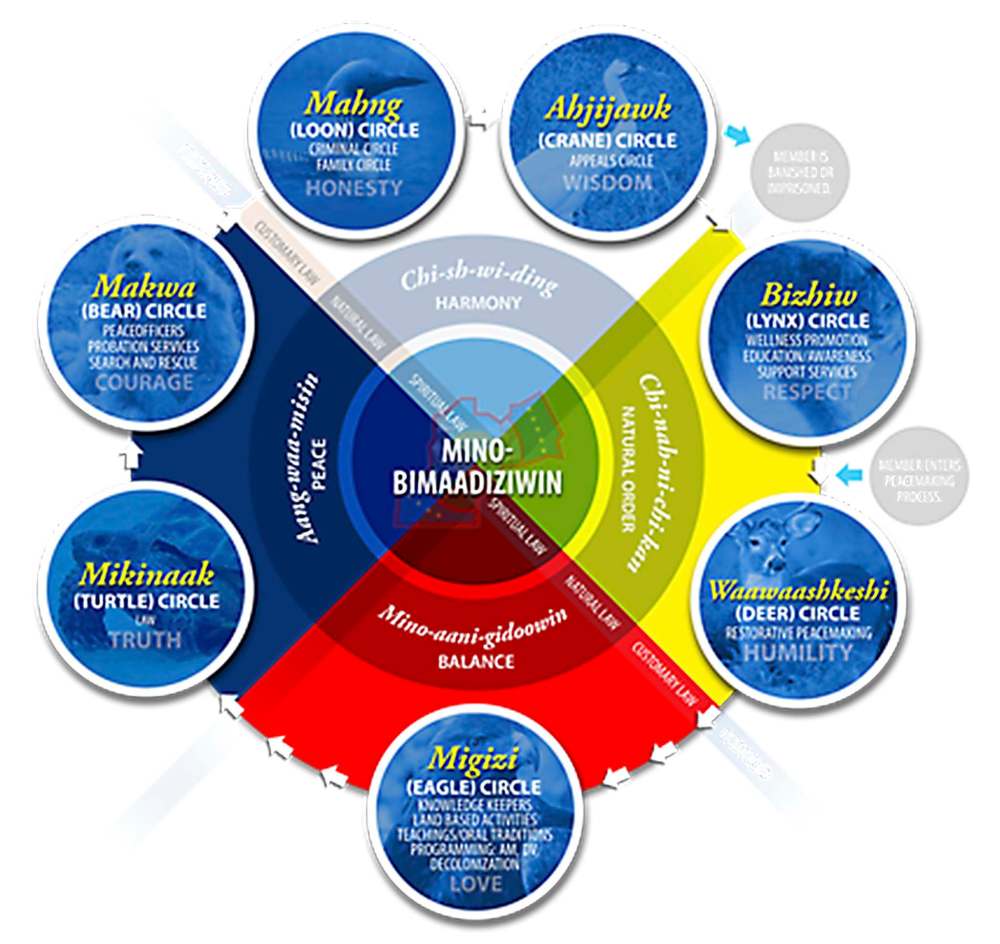
The Government of the First Nations of Treaty 2 Territory (FNT2T) has established a Territorial Peacemaking Circle, which it says will be a better alternative for their communities than the federal government’s proposed Bill C-22.
Last week, the feds introduced the new bill to repeal mandatory minimum penalties for certain drug offences — penalties the Liberals say have disproportionately harmed Indigenous and Black offenders and those struggling with addictions.
The legislation would also allow for greater use of conditional sentences, such as house arrest, counselling or treatment, for people who do not pose a threat to public safety.
In Manitoba and in Treaty 2 territory, Indigenous people represent 80 per cent of the inmate population.
“For the urban areas, it’s (Bill C-22) great because there’s the resources and the housing needed to accommodate some of these probation orders or CSOs (conditional sentence orders),” said Chantell Barker, peacemaking keeper for First Nations in Treaty Two territory.
“But for our First Nation communities, there’s the lack of resources, lack of healing centres, lack of addiction treatment centres, lack of housing. So it doesn’t really help our First Nations communities unless they’re going to provide us with the resources.”
FNT2T hired Barker in December to help develop an alternate justice system for its First Nations, of which there are 11. The Treaty 2 First Nations had already decided a new system was needed, they just didn’t know what that could look like.
But with Barker’s years of experience — including working for Manitoba Justice for a decade as a parole officer and creating a widely recognized program for Indigenous people in correctional centres and jails across Manitoba — she knew what that could look like.
Manitoba Justice, recognizing existing programming were not working for Indigenous people, had asked her to create programming that would work.
“I worked with about 5,000 Indigenous people involved in the justice system. The common theme that I would hear when working with them doing programming, and looking at decolonization and healing, was the unresolved traumas and the intergenerational traumas passed down from residential school, day school, the ’60s scoop, etc.,” said Barker.
She also noted many offences were related to addictions.
That became a mandated program at Manitoba Justice and was recognized by the federal government as evidence-based program.
Healing the root causes and breaking cycles passed down from residential schools is at the heart of her work.
“We’ve got our mandate from the Governing Council (of Treaty 2). Now, I can move forward. They passed the resolution for me to proceed with the peacemaking system. I did a presentation to the Knowledge Council and the Governing Council, and the Youth Council, the Men’s Council and got their support, in that this is the direction that they want to go with,” said Barker, adding the work will take place with each of the 11 First Nations individually.
The term “peacekeeping” is a shift from the term “justice.”
“The term justice with Indigenous people — they don’t have a good history. We want people to trust us. We see justice as power and control. And that is not how Indigenous people see the world. They see the world as one and as a collective, and that we’re all equal,” said Barker.
The idea is to restore peace, balance, harmony and natural order back into the communities that were founded on the concept of restorative justice and healing circles, sharing circles and making amends.
“And it’s all being done in the community by the community, because right now we have a foreign system coming into the communities making decisions and then leaving, and then leaving the community to deal with the issues and with no resources to deal with those issues,” Barker said.
The peacemaking system stems from the Anishinaabe legal framework that’s based on spiritual law, natural law, customary laws, and human laws.
“We have that as the foundation. Then we have the clan circles. In the clan system, when you look back at traditional Anishinaabe ways of governing, that’s what it was based on. So we’re bringing back those traditional clan systems, but we’re going to call them circles in Treaty 2 and utilize those skills that each of those clans have, each circle,” said Barker. “We see circles as the government would see departments.”
The circles are centred around the spiritual law, the great law — Mino-Bimaadiziwin.
Barker thinks it will take at least four years to develop the entire system, but there are ways to start small now.
“Probably with the youth first because there is already legislation that looks at alternative dispute resolution. It is going to take us some time to get there, but I know there are things we can already do, like we can do our own community laws and restorative justice processes directly in the community,” she said.
The work can begin with first-time offenders, but as the peacemaking system gets going, laws can be created for higher assault, for example.
“The first two, three circles we can do within a year and a half because it’s community-based. But as we start to create the circuit courts and those laws, then that will be probably the second half,” said Barker.
“The system doesn’t work, especially if they go into the correctional centre. They just learn new acquaintances, new tools, new ways of doing crime. It’s not really rehabilitation or healing. At least with this Bill (C-22), now we can bring them home, keep them home and with the resources we have now, try to help them until we can get more structured,” said Barker.
Treaty 2 is also looking at creating community wellness centres, as well as healing lodges for more serious addictions and crimes.
Engagement with the Justice department has already begun, and the leadership has sent a request to meet with the federal Minister of Justice.
Read more about Barker’s work experience with the justice system and subsequent work at bit.ly/3ssSWNX
» mletourneau@brandonsun.com
» Michele LeTourneau covers Indigenous matters for The Brandon Sun under the Local Journalism Initiative, a federally funded program that supports the creation of original civic journalism.