
Is the grass greener in NCAA?
From passion to profession
Advertisement
Read this article for free:
or
Already have an account? Log in here »
We need your support!
Local journalism needs your support!
As we navigate through unprecedented times, our journalists are working harder than ever to bring you the latest local updates to keep you safe and informed.
Now, more than ever, we need your support.
Starting at $15.99 plus taxes every four weeks you can access your Brandon Sun online and full access to all content as it appears on our website.
Subscribe Nowor call circulation directly at (204) 727-0527.
Your pledge helps to ensure we provide the news that matters most to your community!
To continue reading, please subscribe:
Add Brandon Sun access to your Free Press subscription for only an additional
$1 for the first 4 weeks*
- Enjoy unlimited reading on brandonsun.com
- Read the Brandon Sun E-Edition, our digital replica newspaper
*Your next Free Press subscription payment will increase by $1.00 and you will be charged $20.95 plus GST for four weeks. After four weeks, your payment will increase to $24.95 plus GST every four weeks.
Read unlimited articles for free today:
or
Already have an account? Log in here »
Hey there, time traveller!
This article was published 26/02/2021 (2077 days ago), so information in it may no longer be current.
The University of Texas football team is on another level.
Record-wise, it’s nothing special. The Longhorns posted a decent 7-3 overall record in 2020 after going 8-5 the previous year. They haven’t appeared in one of the NCAA’s many bowl games since 2018. However, the UT athletics program raked in an astounding US$200.7 million in revenue in the 2019-20 fiscal year and even managed to turn more than $20 million in profit.
The school generates 70 per cent of its revenue through football and only comes out in the black in football, men’s baseball and men’s basketball. Texas averages more than 90,000 fans per football game during normal years, drawing more than $40 million in ticket sales for just six games.
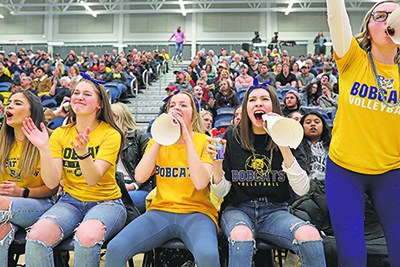
That’s what it takes to be among the most profitable NCAA Division I schools. And to be among the 25, yes, just 25, DI programs that actually turned a profit in the 2018-19 season, per NCAA annual reports.
Every one that makes money has a football team, and massive television deals with major networks broadcasting said team’s sacred Saturday contests.
With that in mind, it doesn’t take an expert to figure out that, on paper, U Sports athletics programs lose money for their universities.
U Sports itself operates at a deficit year after year, while the NCAA famously cracked the $1-billion mark in revenue in 2017.
Comparing the two as businesses, it’s apples to rocket ships.
“It’s a cultural thing and it’s never going to change,” said Brandon University men’s volleyball coach Grant Wilson.
“There’s certain aspects of it I wish (we had). The TV coverage, national TV coverage to have whether it’d be on TSN or Sportsnet, national championships on TV, those things would be huge for our sport in terms of capturing an audience or gaining new young prospects in the world of volleyball … but you look at the States when some of those football games have 100,000 fans. In the States that’s culturally engrained that you support your local team, support your (alma mater), it’s part of your weekly routine.
“… But it’s money-driven down there, which I don’t like. The whole side of the NCAA making a lot of money off of young athletes that don’t get the same benefits … from a business side of it, it’s a different world.”
BENEFITS OF BIG STAGE
Graham Roxburgh recalls a Trinity Western women’s soccer trip to a small NAIA school in Nebraska. Not a big name by any stretch, it won’t appear on any national broadcast and its name wouldn’t resonate with many.
“But the philosophy is they invest in athletics and have a state-of-the-art field house and fantastic soccer facility. It’s very common in lots of small colleges,” Roxburgh said.
“Facilities, mindsets, importance of an athletic department to a university is probably far more advanced and progressive than it is in Canada.”
Indeed, when high schools have nicer football stadiums than some CFL teams — Allen, Texas boasts an 18,000-seat gem — it’s safe to say our passion for sports up north pales in comparison.
While sport culture in the United States is hyper-focused on winning, schools invest in teams and support coaches during their time under (less stable) contracts more.
You can look at the top of the NCAA coaching world and find Alabama football’s Nick Saban at a cool US$9.3 million in 2020 and find out his assistants average closer to seven figures than five. But even on average across many sports, the salaries are eye-popping in comparison to Canada. It’s more than US$100,000 in basketball with a bundle of men in the millions.
For reference, the Brandon University Faculty Association’s collective bargaining agreement, which is public information, outlines coaching salaries start at $62,057. All tenured faculty — all four Bobcats coaches included — fall in a tier with a minimum of $74,670, stepping up to $105,168. After at least 10 years and five at the second tier, that range goes from $97,655 to $136,629. That includes a teaching component, and the general consensus is salaries are higher when coaches are faculty members. Athletic director Russ Paddock said BU is “average” in comparison to Canada West counterparts.
In addition, NCAA coaches also benefit from their support staffs.
Few U Sports teams have full-time assistant coaches, meaning there’s no one in their office to bounce ideas off, no one who knows exactly what they’re going through.
“It’s a really hard grind for a head coach. And the amount of hours we have to put in, we’re in the gym for five hours a day and that’s just gym stuff … During the season they’re 10 to 12-hour days at the very minimum, six days a week,” said Ben Josephson, Trinity Western men’s volleyball coach.
He gets a budget of $12,000 for assistant coaches and fundraises to add to the pot.
“Having more staff on full time would ease the load. Now, I don’t think it’d take the hours off, I just think it’d allow you to do more. The amount of things we have to not do because we don’t have the man power or time, if we added more full-time staff I wouldn’t work less, we’d just be able to offer more to our athletes.”
So NCAA athletes are in a better position to thrive on the field, court or ice, but does that really mean their environment is better?
THE ATHLETE-STUDENT
For every story of a big-time NCAA athlete overcoming a major injury, there are hundreds of potential stars kicked to the curb before realizing their potential.
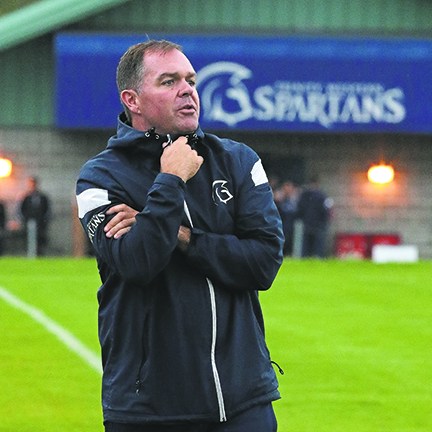
The nature of the business is that athletes are to provide teams value by helping them win and in turn improving their coach’s performance review. They can’t do that with a torn ACL. When they garner a full-ride scholarship, it’s somewhat justifiable to say they are no longer worth anything to their school. They’re athletes first.
BU women’s volleyball coach Lee Carter has no shortage of examples why he wouldn’t want that.
“We’ve never lost a player because of injury,” he said. “You hurt her knee like Kier (Fey) hurt her knee last year and we did everything we could to make her feel like she’s still part of the team.
“Nicole Ban, when she hurt her knee, she worked so hard to get in shape so she could play her last year. She was so fit and playing such good ball because she worked so hard to get back. Then when somebody else gets hurt we can point to Nicole, point to Mary (Thomson), point to Kier, they were able to come back and get pretty close to the same level.”
Saskatchewan women’s basketball coach Lisa Thomaidis notes the Canadian model is partly out of necessity. The talent pool simply isn’t as big to draw from and top-tier teams are built around deep veteran leadership, chemistry and experience. She tells prospective athletes that if the NCAA comes up in conversation.
“You think about the NCAA and it’s such a business. I often talk to recruits about this that it’s not in their vested interest to develop you,” Thomaidis said. “Their time is better spent and pays off if they take that time to find a better athlete and recruit as opposed to the hours upon hours you need to invest into an athlete to see them achieve their potential.
“The opportunity to develop in Canada is so much greater because of the time you can spend and because coaches are better off spending more time developing their athletes because their talent pool is so much smaller.”
On top of that, full athletic scholarships are prohibited in Canada. Teams cannot cover more than an athlete’s tuition and fees, which don’t include books or any living expenses, on or off campus.
It’s essentially written into the rules that athletes and their families need to make some form of sacrifice to compete.
That might be financial via parents’ savings or student loans, or in time commitments of summer jobs and/or part-time work during school, or in the classroom to achieve excellent, academic-scholarship-worthy grades.
But if they don’t maintain a grade-point average of 2.3, they can’t receive athletic financial awards and if they slide below 2.0, they cannot play at all. (The U.S. does have similar academic eligibility rules.)
It’s written into the rules that U Sports competitors are student-athletes. Student comes first.
“When the rules are set up like that, it establishes a bit of a mindset or bit of a philosophy. Could you imagine if U Sports now said full rides were allowed? That would change the approach for a lot of coaches, athletic directors, et cetera,” said Curt Warkentin, associate athletic director at the University of Manitoba, adding he’d expect more, but not all of the top athletes would stay in Canada.
“… Until that happens, the student-athlete is not just a student-athlete that only goes to classes and does their sports … If our athletic departments don’t treat them as real people, we’re inconsistent with the way the rules are made and set up. Our coaches need to be cognizant of performance, cognizant of academics and cognizant of all these other things that are going on in a student-athlete’s life and balance that all. What Canada does is create a more balanced approach to things where we are more balanced.”
QUALITY CONTROL
Comparing the NCAA and U Sports, it’s critically important that the extremes aren’t seen as norms.
While the most prominent display we see is March Madness, it only features 68 of the 351 DI men’s basketball teams.
Beyond the big names, a number of U Sports teams have shown they can compete with DII, and even some smaller DI schools in exhibition play. That trend holds up across a wide range of sports and suggests the difference in true skill level isn’t as great as it’s made out to be.
“The level of play is comparable outside of the mega programs in a lot of sports,” said Winnipeg men’s basketball coach Mike Raimbault. “Carleton has beat some serious blue-blood basketball programs and in lots of their DI games they have some decent success.
“Even the athletes that are coming back from the States, it’d be interesting to see, just because some guy’s gone and played Division I … they’re not all coming back and winning MVP.”
While it’s tough to argue that a billion-dollar business in a country with 10 times the population of Canada isn’t producing more talented teams, there’s a strong case that the U Sports student-athlete experience far outweighs the NCAA’s bright lights, big stage and all that comes with them.
BIG QUESTIONS
The Brandon Sun spoke with 13 university coaches and athletic directors on a wide range of topics surrounding their work. Each part of this series highlights one or two big questions and the top answers.
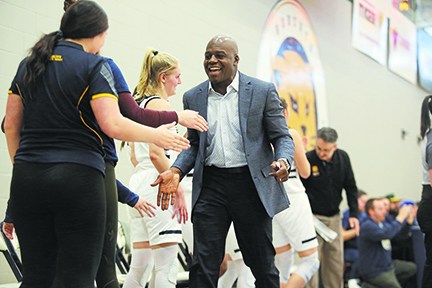
What aspects of the NCAA do you see as beneficial ones for them, or possibly things to strive for in Canada?
Lisa Thomaidis, Saskatchewan women’s basketball: “The professionalism that’s presenting the games: the bigger you make it, people are going to follow it. If we have some bigger crowds it’s going to sustain some costs around the game day presentation.
“We need universities to invest a little bit more in that and I think we’re going to reap the benefits.”
Ben Josephson, Trinity Western men’s volleyball: “I don’t know there’s many six-figure coaches in (U Sports) volleyball.
“Basketball’s going to have a bunch, football probably has a couple but that’s it. That’s starting salary in American volleyball … There’s assistant coaches in six figures all over the place. Talk about a different feel. Now with that comes the pressure.”
What positives come from the Canadian model that might be overlooked?
Lee Carter, Brandon women’s volleyball: “The major difference between Division I and us is our students know they need to work from May until September, they need to make money to go to school, where if you’re on a full ride they can ask you to stay on campus and lift weights. There’s a lot of Division I athletes that only get three weeks at home.
“I think there’s a big opportunity from their first and second year where it just gives their brain a chance to get rid of all the chaff that happened that first year. Then when they arrive they understand the systems a little better, understand where they’re going in school. That first year is so whirlwind for them … the second year it seems so natural that they’ll appear to have improved just because their confidence level has gone up and they understand the systems.”
Ben Josephson: “If I was chasing a paycheque I would not be in Canada coaching volleyball … but what I love about coaching here is a lot of the things we’ve talked about. There’s a sweet spot where there’s a lot of pressure to win but there’s not so much pressure to win that you have to cut corners.
“Letting (rookie assistant coach) Adam (Schriemer) run practice on a Wednesday before we played Alberta, I could never do that if my job was on the line. Right now I get to develop my coaches, my players and it’s a really nice balance.”
Graham Roxburgh, Trinity Western women’s soccer: “Academic rigour and intentionality of being really serious in your studies and academics is probably what sets a lot of the Canadian schools apart from the NCAA. It doesn’t mean NCAA schools are bad academically but Canada has chosen in our culture to be significantly more focused on academic prowess whereas some schools have said as long as we get them degrees, we’re good and want to see them succeed in sport.”
Novell Thomas, Brandon women’s basketball: “The American system is very cutthroat, and how are the experiences among NCAA athletes? If there isn’t a rush to leave or fear of being kicked to the curb, then you might be more invested in your community and more invested in your players as people.”
Shawn Sky, Mount Royal men’s volleyball: “It’s the unknowns and anxiety that are the challenging parts and those parts are never seen. There might be a performance struggle taking place but you don’t know why. Sometimes it’s because that individual is struggling in school and they’re worried about being eligible for their scholarship … or debating whether they’re going to come back next year. There’s so many other human factors to it that people aren’t going to know about, nor should they, and that’s a huge part of what coaching is.”
Lisa Thomaidis: “You really have to invest in them. Ultimately you want to see your players succeed and especially on the women’s side, yes you can play pro for a few years if you’re lucky and if you’re good enough, but at the end of the day you have to be prepared for a career beyond that and I think in Canada we do a much better job of preparing students for that reality.”
Grant Wilson, Brandon men’s volleyball: “It’s that whole definitely of a student-athlete. In the States, it’s more of an athlete-student. We are all aware that when a student steps into our program that academics are first. They have to get good grades to be eligible to play, they are expected to get their degree and we expect them to still have a high level of commitment to athletics. I’m not convinced that in the NCAA those priorities are the same as ours.”
Ben Josephson: “I would hate for us to go too far down that line and start becoming more of a win-at-all-cost based league like NCAA football is.”
TOMORROW: Money matters
» tfriesen@brandonsun.com
» Twitter: @thomasmfriesen