
Winnipegger examines coaching for PhD
Advertisement
Read this article for free:
or
Already have an account? Log in here »
We need your support!
Local journalism needs your support!
As we navigate through unprecedented times, our journalists are working harder than ever to bring you the latest local updates to keep you safe and informed.
Now, more than ever, we need your support.
Starting at $15.99 plus taxes every four weeks you can access your Brandon Sun online and full access to all content as it appears on our website.
Subscribe Nowor call circulation directly at (204) 727-0527.
Your pledge helps to ensure we provide the news that matters most to your community!
To continue reading, please subscribe:
Add Brandon Sun access to your Free Press subscription for only an additional
$1 for the first 4 weeks*
*Your next subscription payment will increase by $1.00 and you will be charged $20.00 plus GST for four weeks. After four weeks, your payment will increase to $24.00 plus GST every four weeks.
Read unlimited articles for free today:
or
Already have an account? Log in here »
Hey there, time traveller!
This article was published 28/02/2021 (1889 days ago), so information in it may no longer be current.
University sport coaching as a profession is precarious for a number of reasons.
Alix Krahn has deeply examined the topic and questions the nature of the job down to its core. The Winnipeg product is in her fourth year of a PhD at York University on the “work and professionalization of university sport coaches.”
“You always hear people say stuff like ‘What do university sport coaches actually do?’ Or whenever somebody talks to a coach they always ask that coach ‘And what else do you do?’ There’s this assumption that sport and work are separate entities,” Krahn said of her inspiration to study the topic.
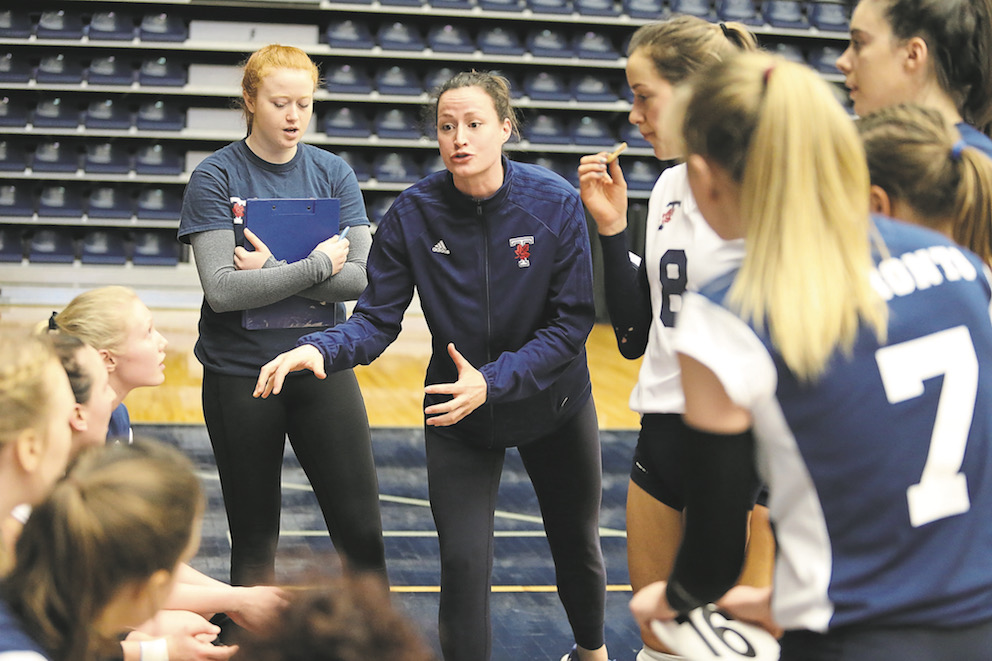
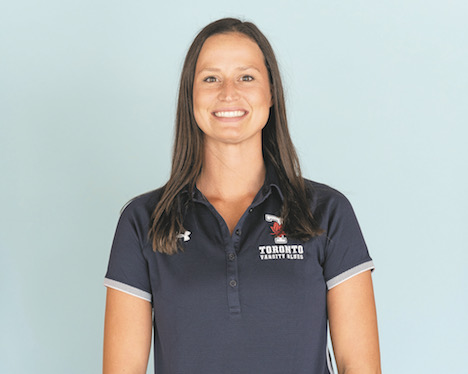
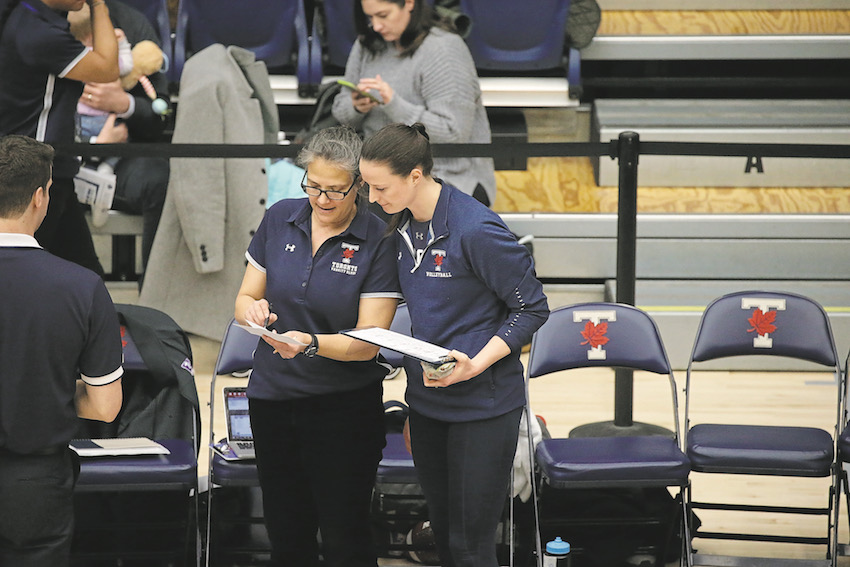
Krahn played four seasons with the University of Winnipeg Wesmen women’s volleyball team, earning academic all-Canadian honours each year. She now works as an assistant coach at the University of Toronto and is head coaching Team Manitoba for the next Canada Games, which were postponed to 2022.
Krahn completed her master’s degree with a thesis on verbal and mental abuse of athletes. Her research and coaching experience led her to realize a lot of the abuse stems from a bigger problem.
“There’s a lot of coaches who don’t have support and nobody really understands what a coach does, (or where) that abusive behaviour might be coming from,” Krahn said.
Transitioning into the PhD work, Krahn noted that sport is primarily seen as a leisure activity. From co-ed softball to kids AAA hockey, it’s what people do when they’re not at work or school. Coaches at most levels are parent volunteers.
PROFESSIONAL STATUS
The thought of one’s leisure activity being another’s job outside of professional sports is somewhat mind-bending.
Krahn breaks that down into a few key questions.
“First and foremost, is sport coaching work? If it is work, what type of work is it (and) how do we define it?” Krahn asks.
This series has outlined the plethora of tasks assigned to a coach.
In summary, they go far beyond running practices and shouting orders on the sidelines in games. U Sports coaches recruit student-athletes to their universities year-round, spend countless hours breaking down film and preparing game plans, commit significant hours to community outreach and fundraising to support their own programs and, in many cases, teach university courses.
A number of coaches estimate only 20-25 per cent of their job is actually coaching.
The next question is a mind-splitter.
“‘Is sport coaching a profession?” Krahn poses. “… Coaching hasn’t actually reached professional status.
“… Technically they’re not (professional) but every coach you talk to will tell you they are.”
That means one thing on a technical level and another in the eyes of society.
Traditional professions included medicine, law and divinity — or religion. That list is expanded today and includes teachers.
Krahn uses medicine as a comparison to coaching,
“There’s a very specific sequence of steps or ways in which doctors were able to solidify or capitalize on the market and say ‘We are professionals in this industry.’” Krahn said. “You have to have a governing body that will agree to govern you and make sure you’re doing things right.
“Within that there’s a set of ethical standards, so the hippocratic oath: Do no harm, and other things that come with being a doctor.
“If you look at coaching, have we done either of those things? It’s murky.”
Anyone with a bachelor’s degree and National Coaching Certification Program (NCCP) certification know the former is a much more rigorous process. While NCCP Level 3 isn’t easy to attain, coaches don’t exactly report to the Coaching Association of Canada the same way a doctor is governed by a provincial college of physicians.
Where the professionalism of coaching is far more noticeable, however, is in public perception.
Nobody questions whether a surgeon is making the correct incision. They seldom doubt an attorney’s understanding of the law or whether an engineer designed the bridge they drive over correctly.
“But how many times have you walked into a gym and heard everyone around you go ‘Why did she do that? Why did he call that timeout?’ … When you walk into a gym, everybody’s a coach. Everybody thinks they know exactly what’s going on,” said Krahn. “…It’s all the way from Timbits soccer to Paul Maurice and the Winnipeg Jets.”
“… We really haven’t been able to convince the public that coaches are in fact experts in their area.”
CLASS OF THEIR OWN
Krahn also points out that universities question that professionalism in the contract structures of their coaches. U Sports schools all look slightly different but can be broken into integrated and non-integrated athletic departments.
Non-integrated means they’re completely separated from the faculty and either fall into a union with other university staff or are under renewable contracts. Those jobs tend to come with lower pay and fewer benefits than professors receive.
Integrated schools like BU have a teaching requirement on top of coaches long list of duties involved in operating a team. With that, they usually fall somewhere in the hierarchy of professors in salary, though at BU coaches cannot reach the rank of a full professor under the current collective bargaining agreement.
“What that means in layman’s terms is the university is going ‘There’s no way we’re paying this person this much money just to coach. We’re going to make them teach,’” Krahn said.
Now these integrated contracts are broken down largely into teaching and coaching components, with a small portion titled something along the lines of “community outreach.” That’ll include recruiting, camps and school visits that result in coaches having a rare and unique presence in the community their professorial peers aren’t required to have.
Krahn has a reason for that, too.
“The first thing nobody thinks about … is the way the university sets up profs’ contracts, they don’t give a s..t about the way the professor teaches. All they care about is ‘Does the professor publish?’ and ‘Do they bring the university money?’” Krahn said.
OLD BOYS’ CLUB
Krahn’s last and possibly biggest question cannot be ignored.
“Is sport coaching work gendered? Is there a gender dynamic there?” Krahn asks. “Because women in university sport coaching is a dying population.”
The short answer is “yes.” Why it’s that way and needs to change takes more room than we have space for.
Krahn found just 16 per cent of U Sports head coaches and 22 per cent of assistants are women. Today, one can make the case on the men’s side that people who have played their game understand it better and therefore will make a better coach. It’s often said that the men’s and women’s games in many sports are vastly different.
You see where this is going. Notre Dame women’s basketball coach Muffet McGraw addressed the issue during the 2019 women’s DI national tournament.
“When you look at men’s basketball and 99 per cent of the jobs go to men, why shouldn’t 100 or 99 per cent of the jobs in women’s basketball go to women?” McGraw asked, though she already had the answer.
“Maybe it’s because we only have 10 per cent women athletic directors in Division I. People hire people who look like them. And that’s the problem.”
Krahn can speak with years of evidence via research and also from personal experience.
She’s a U Sports assistant coach and has been trying to land a head coaching position for a while now. She applied for the recently filled University of Calgary women’s volleyball job and had an interview, but was eventually turned down and told she didn’t have enough head coaching experience.
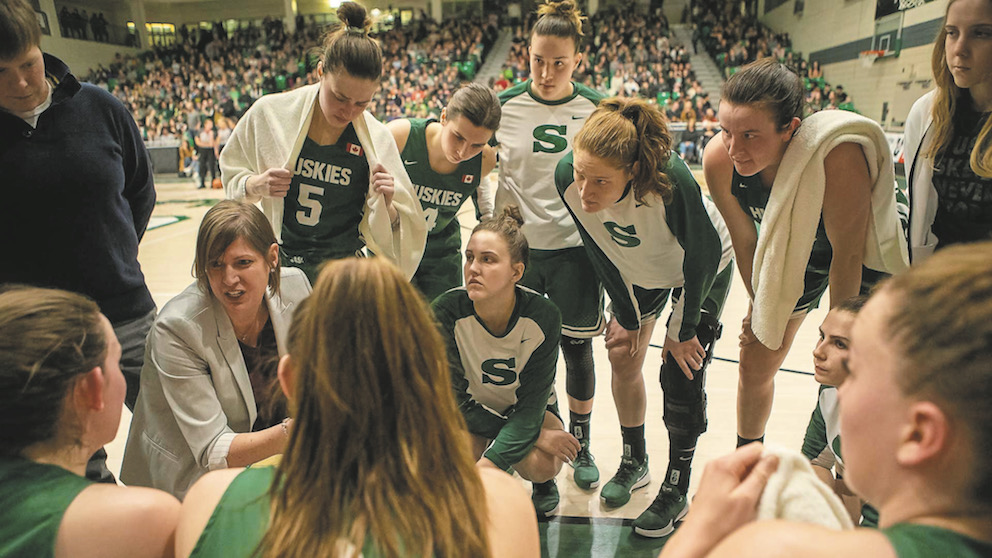
Former University of New Brunswick head coach Christine Biggs was hired after two years on the job and four as an assistant at Alberta.
“The next thing (the U of C athletic director) said to me was ‘Keep working in university sport because I’m sure it’s going to work out for you, and I wouldn’t suggest working in college-level sport because that’s not the same as university,’” Krahn said.
“How do I get this job if folks like you won’t hire me? How do I get that experience?”
Krahn has also seen men land head coaching jobs without a ton of experience.
For the most part, jobs simply don’t come up often. When they do, it’s easy to see how experience as the primary asset leads to a coaching carousel void of diversity. Both those realities make for a tough situation for any young coach hoping to make a career out of it, even those who earn a master’s degree in coaching.
“They tell people we’ll give you the credentials. But then they’re pumping people out into what? What is the job market for coaches? I can tell you right now, it’s precarious at best. I’m using that word precarious very intentionally,” Krahn said.
“… Precarious work is work that’s risky on behalf of the employee. We’re sending coaches out into a market that’s risky for them, especially if they want to be a university sport coach … There’s another supply-and-demand issue.”
TOMORROW: Where do we go from here?
» tfriesen@brandonsun.com
» Twitter: @thomasmfriesen